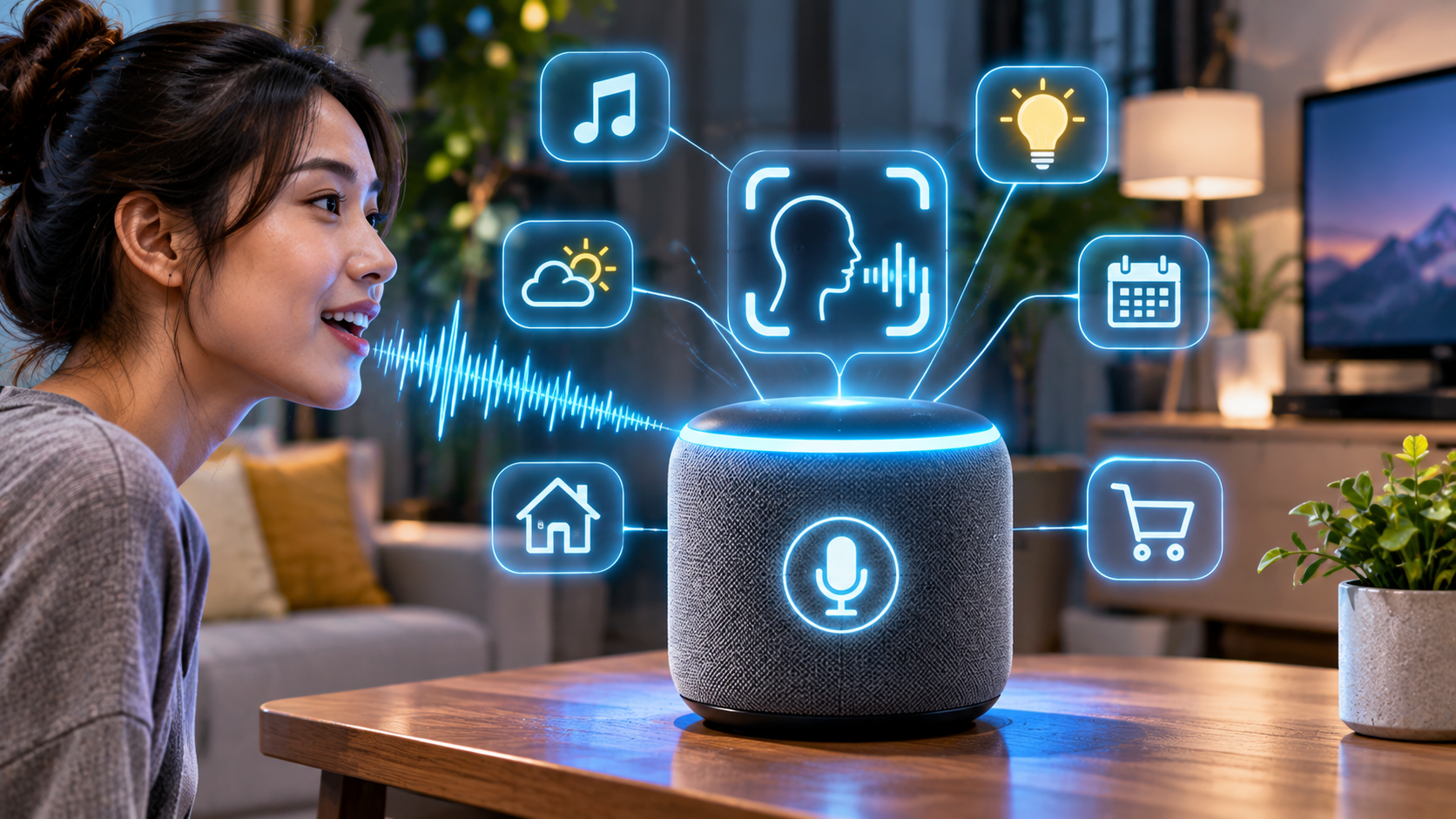
Smart Speaker Voice Recognition has revolutionized the way we interact with technology, making our homes smarter and our lives easier. As these devices become staples in our daily routines, understanding the underlying technology and its evolution offers fascinating insights into their capabilities.
From the early days of voice recognition to the sophisticated systems we use now, advancements in artificial intelligence and machine learning have paved the way for smart speakers to understand and respond to human commands seamlessly. This discussion explores the intricacies of voice recognition technology, its enhancements through machine learning, and the privacy concerns that accompany its rise.
The Evolution of Smart Speaker Voice Recognition Technology
The journey of voice recognition technology has been transformative, evolving from rudimentary systems to the sophisticated smart speakers we know today. Early voice recognition systems were limited, able to recognize only a fixed vocabulary of words. However, as technology progressed, the incorporation of artificial intelligence and machine learning reshaped the landscape, enhancing accuracy, speed, and usability. This evolution has not only made voice recognition more reliable but has also integrated it into everyday life through smart speakers.
Advancements in machine learning and artificial intelligence have played a pivotal role in the evolution of voice recognition technologies. Initially, voice recognition systems relied heavily on rule-based algorithms that required extensive programming of speech patterns. However, with the advent of machine learning, systems could now learn from large datasets, adapting to various accents, dialects, and speech nuances. One significant milestone was the introduction of deep learning, which allowed neural networks to process vast amounts of voice data, significantly improving recognition accuracy. For instance, Google’s Voice Recognition Technology utilizes recurrent neural networks (RNNs) that enhance the natural understanding of speech patterns, allowing for more fluid conversations with users.
Key milestones in voice recognition technology have significantly impacted the functionality of smart speakers. The introduction of the first consumer voice recognition software, “Dragon NaturallySpeaking,” in the 1990s showcased the potential of voice commands for personal computing. In 2011, Apple launched Siri, marking the beginning of voice assistants embedded in smartphones. This was followed by Amazon’s Echo launching in 2014 with Alexa, setting off a wave of smart speaker innovations. The integration of natural language processing (NLP) further refined the capability of smart speakers, allowing them to understand context and intent rather than just s.
“The introduction of deep learning has revolutionized the accuracy of voice recognition technologies, making interactions more seamless.”
These advancements collectively paved the way for current smart speakers to not only execute commands but also engage in general conversations, answer queries, and control smart home devices, making them an integral part of modern living.
Understanding the Underlying Technology of Voice Recognition
The technology behind voice recognition in smart speakers is complex yet fascinating, involving several core components that work seamlessly to provide an interactive user experience. At the heart of this technology lies a combination of digital signal processing, machine learning, and natural language processing, all designed to accurately interpret spoken words and respond appropriately.
The fundamental process of voice recognition begins with sound waves being captured by the device’s microphone. These sound waves are then converted into a digital signal through a process called digitization, which allows the system to analyze the audio data. Once digitized, the data undergoes feature extraction, where key characteristics of the audio are identified, such as phonemes (the smallest units of sound in speech). By using various algorithms, the system matches these features against a large database of known words and phrases to determine what was said.
Natural Language Processing and Speech Synthesis
Natural Language Processing (NLP) and speech synthesis significantly enhance the interaction between users and smart speakers. NLP enables the device to not only recognize words but also understand their context and intent, allowing for more meaningful conversations. This involves several steps, including tokenization (breaking down sentences into words), parsing (understanding grammatical structure), and semantic analysis (interpreting meaning).
Moreover, speech synthesis is the process that converts text back into speech, allowing the smart speaker to respond effectively. By utilizing advanced algorithms, these systems can produce human-like speech, making interactions feel more natural.
The effectiveness of voice recognition systems can be attributed to various algorithms, each tailored for specific tasks. Some notable examples include:
- Hidden Markov Models (HMM): Widely used for speech recognition due to their ability to model time-varying processes effectively. HMMs work by predicting the likelihood of sequences of observable events, making them effective in scenarios where context matters.
- Deep Neural Networks (DNN): These have become a standard in modern voice recognition systems, enabling higher accuracy rates in recognizing complex patterns in speech. DNNs learn from vast datasets, improving their performance over time.
- Recurrent Neural Networks (RNN): Particularly useful for tasks requiring the processing of sequential data. RNNs excel in capturing the context of spoken phrases, which is crucial in understanding user intent.
In real-world applications, these algorithms have proven effective across diverse scenarios, from virtual assistants like Amazon’s Alexa or Apple’s Siri accurately interpreting user commands to customer service systems that automate responses based on user inquiries. This evolution in voice recognition technology continues to shape how users interact with devices daily, making tasks simpler and more intuitive.
The Role of Machine Learning in Enhancing Voice Recognition Accuracy
Machine learning techniques play a pivotal role in improving the accuracy of voice recognition systems. These systems, which interpret and transcribe spoken language into text, rely on complex algorithms that learn from vast amounts of data. By leveraging machine learning, voice recognition technology can continuously adapt and enhance its performance, leading to more accurate and reliable interactions between users and devices.
Machine learning models, particularly those based on deep learning, utilize neural networks to process and understand audio signals. These models are trained using diverse datasets that include various accents, dialects, and speech patterns to ensure they can recognize voices accurately in different contexts. The training data required for effective machine learning in voice recognition typically consists of thousands of hours of recorded speech along with transcriptions. This data is crucial for teaching the model the nuances of human speech, including intonation, pacing, and the emotional tone behind the words.
Challenges in Training Voice Recognition Models
Training voice recognition models presents several challenges, which require innovative solutions to overcome. One significant challenge is the variability of human speech, which encompasses different accents, dialects, and speech impediments. To address this, researchers must collect extensive and diverse datasets that represent a wide range of speakers. This ensures that the model does not become biased toward a specific demographic, thus improving its overall accuracy.
Another challenge is the presence of background noise, which can hinder the voice recognition process. To combat this, advanced noise reduction techniques and signal processing methods are employed during the training phase. This allows the model to learn how to differentiate between the speaker’s voice and ambient sounds, thereby enhancing its ability to accurately transcribe speech in real-world environments.
The computational resources required for training these models can also be considerable. High-performance GPUs and cloud computing resources are often necessary to handle the complex calculations involved in training deep learning models. Researchers continuously optimize algorithms and utilize efficient data processing techniques to reduce training time and resource consumption.
Furthermore, the ethical considerations surrounding data collection and privacy must be addressed. Ensuring that voice data is collected with user consent and used responsibly is crucial for maintaining trust in voice recognition technology. This involves implementing robust data governance policies and transparent practices regarding how data is utilized to enhance model accuracy.
Overall, overcoming these challenges is essential for the continued advancement of voice recognition systems, enabling them to become more accurate and user-friendly in various applications, from smart speakers to virtual assistants.
User Privacy and Security Concerns Related to Smart Speakers
As smart speakers become increasingly integrated into daily life, concerns regarding user privacy and security have intensified. These devices leverage voice recognition technology to interact with users, which raises significant implications for personal data and privacy. With the ability to listen and respond to commands, smart speakers often require access to sensitive information, prompting users to question how their data is collected, stored, and utilized.
Manufacturers are aware of these privacy implications and have implemented various measures to safeguard user data. For instance, companies like Amazon and Google have introduced encryption protocols to protect voice recordings during transmission. Data is stored in secure servers with restricted access, ensuring that only authorized personnel can access sensitive information. Users are typically given the option to review their voice recordings, delete them, or opt out of data collection altogether. Many devices now include physical mute buttons to disable the microphone, allowing users a greater sense of control over their privacy. Furthermore, companies are increasingly transparent about their data policies, providing detailed privacy settings and clear instructions on managing one’s data.
Common Security Vulnerabilities and Mitigation Strategies
Despite these proactive measures, smart speakers are not immune to security vulnerabilities. Understanding these risks is essential for users to take appropriate actions to mitigate potential threats. The following points Artikel common vulnerabilities associated with smart speakers and suggest potential solutions to enhance security:
Users may unknowingly compromise their security through weak passwords or lack of two-factor authentication. Strong, unique passwords should be utilized for all associated accounts to deter unauthorized access. Enabling two-factor authentication adds an additional layer of protection.
Smart speakers may be susceptible to unauthorized access through unsecured networks. Ensuring that the home Wi-Fi network is secured with robust encryption (WPA3) and regularly changing the password can significantly reduce risks.
Malware and phishing attacks can target smart devices. Users should be cautious about the applications they install or the skills they enable on their smart speakers. Keeping the device firmware updated is crucial, as manufacturers often release patches to address security vulnerabilities.
Lastly, the presence of physical vulnerabilities, such as unauthorized access to the device itself, can pose a risk. Placing smart speakers in secure locations and ensuring that they are not easily accessible to guests or visitors can help mitigate this threat.
“Proactive measures and user awareness are essential to maintaining privacy and security in an increasingly interconnected world.”
Comparative Analysis of Major Smart Speaker Brands
The landscape of smart speakers is dominated by a few major players: Amazon Echo, Google Nest, and Apple HomePod. Each brand has its unique approach to voice recognition technology, which significantly influences user experience and satisfaction. Analyzing these brands allows us to understand their strengths and weaknesses in terms of voice recognition capabilities, as well as user feedback regarding their performance.
Voice Recognition Capabilities
Voice recognition technology is a key component of smart speakers, and its effectiveness can vary widely between brands. This section provides a comparative overview of the leading brands concerning their voice recognition capabilities.
- Amazon Echo: Utilizes Alexa, known for its expansive functionality and broad compatibility with various smart home devices. Users appreciate Alexa’s contextual understanding, which allows for follow-up questions without needing to repeat the command. However, some users report occasional misinterpretations, especially in noisy environments.
- Google Nest: Powered by Google Assistant, it excels in natural language processing and contextual understanding, often outperforming competitors in query comprehension. Users frequently express high satisfaction levels, particularly when using Google services like search and navigation. Nonetheless, there are instances of slow response times when executing commands compared to other brands.
- Apple HomePod: Focuses on privacy and integration within the Apple ecosystem. It uses Siri for voice recognition, which is praised for its ability to recognize distinct voices and provide personalized responses. However, users have mentioned limitations in its third-party integrations and fewer skills compared to Alexa and Google Assistant, which can hinder its versatility.
Strengths and Weaknesses
Examining the strengths and weaknesses of each brand’s voice recognition technology sheds light on their overall performance and user satisfaction.
| Brand | Strengths | Weaknesses |
|---|---|---|
| Amazon Echo | Extensive smart home compatibility, strong contextual understanding | Occasional misinterpretations in noisy settings |
| Google Nest | Superior natural language processing, excellent query comprehension | Possible slow responses during command execution |
| Apple HomePod | High privacy standards, personalized voice recognition | Limited third-party integrations, fewer skills compared to competitors |
User Feedback and Satisfaction
User feedback plays a significant role in evaluating voice recognition performance across different models. Here’s a summary of the satisfaction levels reported by users for each brand’s voice recognition.
– Amazon Echo: Many users express high satisfaction, particularly regarding Alexa’s ability to handle diverse queries and commands. Nonetheless, some feedback highlights frustration with misinterpretations during multi-user interactions.
– Google Nest: Users frequently commend the accuracy and responsiveness of Google Assistant, appreciating its ability to understand context. However, a notable portion mentions that it can be slower than desired, especially under heavy command loads.
– Apple HomePod: The feedback indicates a strong preference for Siri’s personalized interactions, with users valuing its ability to discern voices. However, dissatisfaction emerges due to its limited compatibility with non-Apple devices and services.
Overall, understanding the comparative analysis of these major smart speaker brands provides valuable insights into their voice recognition capabilities, strengths, weaknesses, and user satisfaction levels.
Future Trends in Smart Speaker Voice Recognition Technology
As smart speakers become an integral part of our daily lives, advancements in voice recognition technology are expected to revolutionize user interaction. The future of these devices is likely to be shaped by innovations that enhance accuracy, responsiveness, and personalization. With ongoing developments in artificial intelligence, machine learning, and natural language processing, the next generation of smart speakers promises a more intuitive and seamless user experience.
The evolution of voice recognition technology is driven not only by technological advancements but also by changing user expectations. Users are increasingly looking for devices that can understand and respond to various accents, dialects, and even emotions. This shift is pushing companies to invest in more sophisticated algorithms and data-driven approaches to improve the accuracy of voice recognition systems.
Emerging Technologies Shaping Voice Recognition
Several emerging technologies are poised to influence the next iteration of voice recognition capabilities in smart speakers. These include:
– Advanced Natural Language Processing (NLP): NLP is expected to evolve, allowing devices to understand context, nuance, and intent better. This will enable more conversational and human-like interactions.
– Emotion Recognition: The integration of emotion detection technology will allow smart speakers to discern user emotions through voice tone and inflection. This could lead to more personalized responses—offering comfort in distress or enthusiasm during celebrations.
– Context-Aware Computing: Future smart speakers may not only respond to commands but also anticipate needs based on context. For example, the device could suggest a dinner recipe when it detects you’re home after a long workday.
– Multi-Modal Interaction: As smart speakers become part of a broader ecosystem, they may incorporate visual elements, allowing users to interact through voice and visual interfaces. Imagine asking your speaker to display a recipe while you cook.
– Privacy and Security Enhancements: With growing concerns about data privacy, future advancements are likely to include more robust security measures, ensuring users feel safe when using voice-activated features.
The combination of these technologies will not only enhance the user experience but also redefine how we interact with our environments through voice. As users demand more from their devices, the innovation in voice recognition will continue to accelerate, paving the way for smarter, more responsive, and more human-like interactions in the near future.
Practical Applications of Voice Recognition in Smart Home Systems
Voice recognition technology has become a cornerstone of modern smart home systems, enhancing user experiences by allowing seamless interaction with various devices through natural language commands. This technology offers a hands-free, intuitive approach to managing home automation, making everyday tasks simpler and more efficient.
Integrating voice recognition into smart home ecosystems has transformed how users interact with their home environments. With the rise of smart speakers and voice assistants, users can control an array of devices—from lighting to security systems—simply by speaking. This level of integration streamlines operations and enhances convenience, enabling users to maintain a comfortable living space with minimal effort.
Common Tasks Accomplished through Voice Commands
Voice recognition technology allows users to perform a wide variety of tasks effortlessly. Here are some common functionalities that can be achieved using smart speakers:
- Control Lighting: Users can easily turn lights on or off, dim them, or change colors with simple voice commands like “Hey Siri, dim the living room lights.”
- Adjust Thermostats: Voice commands can be used to set the temperature, providing comfort without needing to manually adjust thermostats, as in “Alexa, set the thermostat to 72 degrees.”
- Manage Entertainment: Users can play music, pause playback, or switch between songs and playlists using voice commands such as “Google, play my workout playlist.”
- Control Appliances: Smart home appliances, such as ovens and coffee makers, can be operated by voice, enabling tasks like “Turn on the coffee maker” or “Preheat the oven to 350 degrees.”
- Get Information: Smart speakers can provide real-time updates about the weather, news, or traffic, responding to prompts like “What’s the weather like today?”
Voice recognition technology holds significant potential to streamline home automation processes, improving overall convenience. By facilitating simple but effective interactions with various devices, it effectively reduces the complexity often associated with managing multiple smart home products.
“Voice recognition technology transforms everyday tasks into simple commands, making home automation intuitive and accessible for everyone.”
This evolution in home management not only enhances user experience but also aligns with the growing trend of interconnected devices in a smart home ecosystem. As technology continues to advance, the ability to perform complex tasks with just our voice will only strengthen, paving the way for even greater convenience and efficiency in our daily lives.
Challenges and Limitations of Current Voice Recognition Technologies
Despite the remarkable advancements in voice recognition technology, smart speakers continue to grapple with several challenges that hinder their effectiveness. These limitations can significantly impact user experience, making it crucial to explore the technical hurdles that currently exist. Understanding these challenges is essential for developing more sophisticated systems that better serve diverse user bases.
Voice recognition systems face significant technical challenges, particularly concerning accents, dialects, and background noise. As the technology aims to cater to a global audience, variations in speech patterns pose a considerable obstacle. Accents, which can differ even within the same language, often lead to misinterpretations by voice recognition systems. For instance, a user from the southern United States might pronounce words differently than someone from the northern regions, resulting in the system misrecognizing commands. Moreover, dialects present unique phrases and vocabulary that can confuse standard models trained primarily on mainstream speech patterns.
Background noise further complicates voice recognition accuracy. Environments with considerable ambient sounds, such as bustling households or public spaces, interfere with the speaker’s voice, which can lead to miscommunication. For example, a child playing nearby or traffic noise can mask commands issued to a smart speaker, rendering the system unable to understand the user’s intent.
To improve performance, ongoing research is focused on developing adaptive algorithms that can learn and distinguish various accents and dialects over time. Machine learning models are being trained on diverse datasets that encompass a wide range of speech patterns, effectively increasing the system’s ability to comprehend different linguistic nuances.
Furthermore, advancements in noise-cancellation technologies aim to filter out background sounds, allowing smart speakers to focus on the primary voice input. Researchers are also exploring the use of multi-microphone arrays that enhance directional audio capture, further improving the system’s ability to parse commands in noisy environments.
In summary, while current voice recognition technologies have made significant strides, addressing the challenges of accents, dialects, and background noise remains a priority. Continued investment in research and development will pave the way for smarter systems that resonate with users across various linguistic and environmental contexts.
Final Summary
In summary, Smart Speaker Voice Recognition not only demonstrates incredible technological advancements but also poses unique challenges that require careful consideration. As we look towards the future, the potential for improvements and innovative applications remains vast, promising even more intuitive interactions and smarter homes.
Quick FAQs
What is voice recognition technology?
Voice recognition technology is a system that can identify and process spoken language, allowing users to interact with devices using their voice.
How accurate is voice recognition in smart speakers?
The accuracy of voice recognition varies by brand and model, but leading smart speakers achieve high accuracy rates, especially in controlled environments.
Can smart speakers recognize different languages?
Many smart speakers support multiple languages, though the effectiveness can depend on the specific model and settings.
What happens to my voice data?
Voice data is typically processed to improve recognition accuracy and may be stored temporarily or permanently, depending on the manufacturer’s privacy policy.
How do smart speakers handle background noise?
Smart speakers utilize advanced algorithms and noise-cancellation technology to minimize the impact of background noise on their voice recognition capabilities.