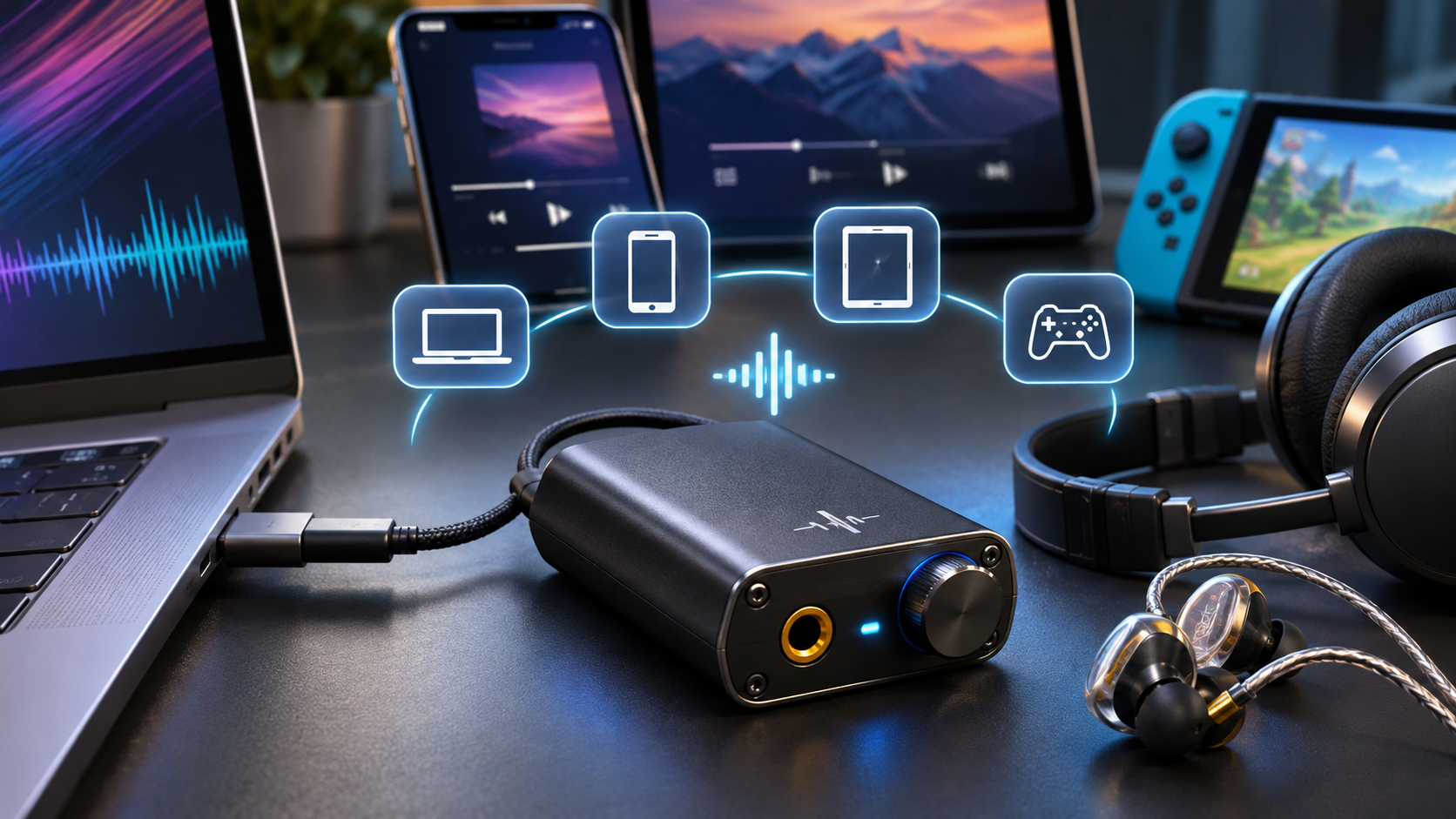
Portable DAC amplifiers have revolutionized the way we experience audio on our devices, ensuring that we enjoy high-quality sound wherever we go. These compact devices not only enhance audio quality but also provide users with a range of connectivity options, making them essential for anyone serious about their sound experience.
Understanding how these amplifiers work and what devices are compatible can significantly improve your listening pleasure. From smartphones to laptops, the right DAC amplifier can transform your audio experience, but it’s crucial to grasp the intricacies of device compatibility and connectivity options to make the most of your setup.
Understanding the Basics of Portable DAC Amplifiers
Portable DAC amplifiers are essential tools for audiophiles who want to enhance their listening experience on the go. These compact devices convert digital audio signals into analog output, ensuring that music sounds as close to the original recording as possible. With the rise of high-resolution audio files and portable music players, understanding how these amplifiers work and their key features is crucial for anyone looking to improve audio quality.
A portable DAC amplifier consists of several key components: a digital-to-analog converter (DAC), an amplifier section, and various outputs for headphones or speakers. The DAC takes the digital audio signal from devices such as smartphones, laptops, or digital music players and translates it into an analog signal that can be understood by speakers or headphones. The amplifier then boosts this analog signal to a level that can drive the connected audio equipment. The result is clearer, more detailed sound compared to standard audio outputs found in many portable devices.
Key Components and Their Functions
The functionality of portable DAC amplifiers relies on various components working in harmony. Each element plays a specific role in enhancing audio quality.
- Digital-to-Analog Converter (DAC): This component is responsible for converting digital audio signals into analog form. The quality of the DAC has a significant impact on sound clarity and detail.
- Amplifier Section: The amplifier increases the power of the analog signal, making it capable of driving headphones or speakers effectively. A well-designed amplifier can deliver a clean and powerful output without distortion.
- Power Supply: Portable DAC amplifiers usually include a built-in battery or can draw power from USB connections. A stable power supply is essential for maintaining audio fidelity during playback.
- Output Connections: These devices typically offer various outputs, such as 3.5mm jacks, 2.5mm balanced outputs, or USB connections for flexibility in connecting to different audio gear.
Examples of Popular Portable DAC Amplifiers
Several portable DAC amplifiers have gained popularity due to their exceptional sound quality and features. Here are a few notable examples:
- AudioQuest DragonFly Red: This compact USB DAC offers high-resolution audio support up to 24-bit/96kHz. It features a powerful built-in amplifier and is compatible with both iOS and Android devices.
- FiiO Q5s: A versatile DAC and amplifier combo with Bluetooth functionality, supporting high-resolution audio formats. It includes dual DAC chips for enhanced sound quality and a variety of output options.
- iFi Hip-DAC: This device is designed for portable use with a battery life of up to 12 hours. It supports a wide range of audio formats and comes with a unique design that includes a smooth volume knob.
- Chord Mojo: Known for its exceptional audio performance, the Mojo supports 32-bit/768kHz and DSD256. Its compact size and lightweight make it perfect for on-the-go audiophiles.
Evaluating Device Compatibility with Portable DAC Amplifiers
When it comes to enjoying high-quality audio, portable DAC amplifiers have become essential tools for audiophiles. However, the effectiveness of these devices largely depends on their compatibility with various audio sources. Understanding the factors that influence this compatibility is crucial for anyone looking to enhance their audio experience.
Several factors play a significant role in determining whether a portable DAC amplifier will work seamlessly with a device. Firstly, the type of output ports available on the device must be compatible with the input options of the DAC amplifier. Common connections include USB, Lightning, and 3.5mm audio jacks. Additionally, the operating system of the device can impact compatibility; for example, Android and iOS devices may require different drivers or software to recognize the DAC. Power requirements also matter—some DACs may need more power than a device can provide, influencing performance and sound quality.
Types of Devices Supporting DAC Amplifiers
A range of devices supports portable DAC amplifiers, allowing users to enjoy superior sound quality across various platforms. Here are some common device types:
- Smartphones: Many modern smartphones, including flagship models from Apple, Samsung, and Google, support DAC amplifiers, enhancing audio playback significantly.
- Laptops and Desktop Computers: Personal computers often come with USB ports and audio output that can work seamlessly with DAC amplifiers, making them ideal for home audio setups.
- Tablets: Tablets from brands like Apple and Microsoft can also use DAC amplifiers to improve audio quality during streaming or gaming sessions.
- Digital Audio Players (DAPs): High-resolution DAPs are designed for audiophiles and frequently have built-in support for external DACs.
- Gaming Consoles: Some gaming consoles allow the connection of DAC amplifiers, offering gamers an immersive audio experience.
While many devices can connect to portable DAC amplifiers, users may face certain limitations. For instance, not all devices have the necessary drivers for optimal performance, which can lead to poor sound quality or incompatibility issues. Some DACs may not support specific file formats, limiting playback options. Additionally, the size and weight of the DAC amplifier can be a consideration for portability, as larger models may be less convenient to carry around.
“Ensuring that both the device and DAC amplifier are compatible in terms of connection types and power requirements is essential for a seamless audio experience.”
Connectivity Options for Portable DAC Amplifiers
Portable DAC amplifiers come equipped with various connectivity options, each designed to cater to the diverse needs of audio enthusiasts. Understanding these options is essential for selecting the right device that aligns with your audio requirements and lifestyle. This discussion will cover the most common connectivity types, their respective benefits, and their drawbacks in terms of audio quality and convenience.
USB Connectivity
USB has become the go-to standard for connecting portable DAC amplifiers to various devices, including smartphones, laptops, and tablets. This connection offers a direct digital audio path, ensuring high-quality sound reproduction.
- Advantages: USB connections provide lossless audio transfer, meaning there is no degradation in sound quality. They support high-resolution audio formats, making them ideal for audiophiles.
- Disadvantages: USB connections can sometimes be less convenient, especially if you’re using devices that require adapters or special cables. Additionally, the range can be limited compared to wireless options.
An example of a portable DAC amplifier with USB connectivity is the AudioQuest DragonFly series, which is renowned for its exceptional audio quality and compact design.
Bluetooth Connectivity
Bluetooth technology allows for wireless connection to various devices, enabling users to enjoy music without the hassle of cables. It’s particularly advantageous for portability and convenience.
- Advantages: The primary benefit of Bluetooth connectivity is convenience; it eliminates the need for physical cables and provides the freedom to move around while listening. Modern Bluetooth codecs, like aptX and AAC, have improved audio quality significantly.
- Disadvantages: Despite advancements, Bluetooth audio quality can still suffer from compression, leading to loss of detail compared to wired connections. Additionally, interference from other wireless devices can affect performance.
Devices like the FiiO BTR5 exemplify Bluetooth connectivity, offering both high-quality sound and user-friendly features such as built-in controls and a compact form factor.
Optical Connectivity
Optical connections utilize fiber optics to transmit digital audio signals, providing a robust solution for high-quality sound transfer without electromagnetic interference.
- Advantages: Optical connections can deliver high-resolution audio without electrical noise interference. They are ideal for connecting to devices like TVs and gaming consoles that support optical outputs.
- Disadvantages: One major drawback is the physical limitation on distance; optical cables can be cumbersome and less flexible than other connection types. Additionally, not all devices have optical outputs, which limits compatibility.
An example of a portable DAC amplifier with optical connectivity is the iFi Hip-DAC, which effectively utilizes optical input while maintaining a compact and portable design.
Understanding the connectivity options for portable DAC amplifiers is crucial for maximizing your audio experience, balancing convenience with sound quality.
The Role of Audio Formats in DAC Compatibility
The choice of audio format plays a significant role in determining the overall performance of portable DAC amplifiers. Each format has its unique characteristics, affecting how the digital-to-analog conversion process unfolds and how audio quality is perceived. Understanding the differences between formats like FLAC, WAV, and MP3 can help users maximize the capabilities of their DAC amplifiers.
Audio formats vary in terms of compression, bit depth, and sample rate, which directly influence the performance of portable DAC amplifiers. Lossless formats, such as FLAC and WAV, retain all the original audio data, ensuring a higher fidelity sound reproduction. On the other hand, lossy formats like MP3 compress audio files by removing some data, which can lead to a decrease in audio quality, particularly in the lower and higher frequencies. When using a portable DAC amplifier, the format chosen can affect the clarity, richness, and detail of the audio output.
Decoding Capabilities of Portable DAC Amplifiers
Portable DAC amplifiers come equipped with varying decoding capabilities that can handle different audio formats. Understanding these capabilities helps users make informed choices regarding which formats to use for optimal performance.
When evaluating the decoding capabilities, consider the following aspects:
- Bit Rate: Higher bit rates are often found in lossless formats and provide greater detail. For example, FLAC files can have bit rates that exceed 1,000 kbps, while typical MP3 files might range from 128 kbps to 320 kbps.
- Sample Rate: This refers to how many samples of audio are captured per second. Formats like WAV and FLAC support higher sample rates (up to 192 kHz), which results in superior audio quality compared to standard MP3 files, which typically max out at 48 kHz.
- Dynamic Range: Lossless formats enable a greater dynamic range due to their ability to retain more audio data. This allows users to experience the full spectrum of sound without distortion or loss of clarity.
- Device Compatibility: Not all DAC amplifiers support every audio format. Users must ensure that their device can decode the specific format they intend to use, particularly for high-resolution audio files.
Selecting the appropriate audio format can significantly enhance the listening experience when using a portable DAC amplifier. Users should prioritize lossless formats like FLAC or WAV if they aim for maximum audio fidelity. However, if storage space or bandwidth is a concern, using a high-bitrate MP3 can still deliver acceptable quality. Ultimately, understanding these nuances can lead to a more satisfying audio experience.
Performance Considerations for DAC Amplifier Compatibility
When selecting a portable DAC amplifier, understanding its performance metrics is essential for ensuring compatibility and maximizing audio quality. Performance considerations can significantly affect how well the DAC amplifier integrates with various headphones and playback devices.
One of the primary factors to consider is how different performance metrics indicate the effectiveness of a portable DAC amplifier. Key metrics include signal-to-noise ratio (SNR), total harmonic distortion (THD), and frequency response. A higher SNR means less background noise, while lower THD values indicate clearer audio. The frequency response helps ensure that the amplifier can reproduce the full range of audio frequencies accurately, resulting in a more immersive listening experience.
Impedance Matching and Its Impact on Audio Output
Impedance matching plays a crucial role in how a DAC amplifier interacts with headphones. The characteristic impedance of headphones affects the power output and overall audio fidelity. When the impedance of the headphones and the DAC amplifier are properly matched, it leads to optimal power transfer, ensuring that the headphones receive the right amount of power without distortion.
For example, if a DAC amplifier has an output impedance of 1 ohm and is connected to headphones with a nominal impedance of 32 ohms, the resulting audio output will be clean and dynamic. If there is a significant mismatch, such as pairing high-impedance headphones (250 ohms) with a low-impedance DAC amplifier, the amplifier may struggle to drive the headphones effectively, leading to a loss of detail and volume.
Here’s a table comparing the performance specs of popular portable DAC amplifiers to highlight these differences:
| Model | Signal-to-Noise Ratio (dB) | Total Harmonic Distortion (%) | Frequency Response (Hz) | Output Impedance (Ohms) |
|---|---|---|---|---|
| AudioQuest DragonFly Cobalt | 120 | 0.005 | 20 – 20,000 | 1 |
| FiiO Q5s | 120 | 0.001 | 10 – 80,000 | 1 |
| iFi Hip-DAC | 113 | 0.1 | 20 – 40,000 | 0.5 |
| Shanling UP4 | 110 | 0.01 | 20 – 40,000 | 1 |
These specifications provide a clear picture of how different DAC amplifiers perform in terms of sound quality and compatibility with various headphones. Prioritizing the right metrics can help users make informed decisions when choosing a portable DAC amplifier, ultimately enhancing their listening experience.
User Experiences and Reviews on DAC Amplifier Compatibility
User experiences and reviews provide valuable insights into the compatibility of DAC amplifiers with various devices. Many audio enthusiasts share their stories, highlighting both the successes and challenges they face when integrating DAC amplifiers into their setups. This section explores common compatibility issues, user troubleshooting methods, and observable trends in feedback that can significantly impact the overall audio experience.
Common Compatibility Issues Faced by Users
When it comes to DAC amplifier compatibility, several issues frequently arise. Users often report connection problems between DACs and various audio sources, leading to degraded sound quality or no sound output. Such issues are crucial to understand, as they can hinder the performance of high-quality audio equipment. Here are some common problems faced by users:
- Incompatibility with specific USB ports on laptops or desktops, affecting power delivery and data transfer.
- Issues with Bluetooth connectivity between DACs and mobile devices, often resulting in audio dropouts.
- Driver incompatibility on Windows systems, leading to a failure to recognize the DAC.
- Sampling rate mismatches between DAC and audio source, causing distortion or playback interruptions.
Troubleshooting Methods Employed by Users
When compatibility problems arise, users have developed a range of troubleshooting strategies to resolve them. These methods can often restore functionality and improve audio performance. Some effective troubleshooting techniques include:
- Checking and updating drivers for the DAC to ensure proper recognition by the operating system.
- Using different USB cables or ports to eliminate connection issues stemming from hardware faults.
- Adjusting audio settings in the device’s sound control panel to match the DAC’s supported sampling rates.
- Testing the DAC with multiple devices to determine whether the issue lies with the DAC or the audio source.
Trends and Patterns in User Feedback
Analyzing user feedback reveals noteworthy trends regarding DAC amplifier performance across diverse setups. Users consistently highlight certain attributes of DACs that can enhance their listening experience. Notable patterns include:
- Users often praise DACs that offer a broad range of compatibility with devices such as smartphones, laptops, and dedicated audio players.
- Feedback indicates a preference for DACs with robust firmware updates, providing ongoing enhancements and bug fixes.
- Many users report improved audio clarity and detail when using DACs that support higher sampling rates, demonstrating the importance of sample rate compatibility.
- Communities emphasize the importance of user-friendly interfaces in DACs, as intuitive controls can significantly ease the setup process.
Future Trends in Portable DAC Amplifier Compatibility
As technology continues to advance, the compatibility landscape for portable DAC amplifiers is poised for significant evolution. Emerging technologies promise to enhance both the user experience and the quality of audio output. By understanding these trends, consumers can make informed decisions about their audio gear, ensuring they stay ahead in the rapidly changing market.
Innovations in audio technology are on the horizon, which will undoubtedly influence the future compatibility of portable DAC amplifiers. Integration with wireless standards, improvements in digital signal processing, and enhancements in battery technology are just a few areas expected to see major advancements. These developments will likely reshape how portable DACs interact with various devices, making them even more versatile and user-friendly.
Technological Advancements Impacting Compatibility
A number of emerging technologies are set to enhance the compatibility of portable DAC amplifiers. These include:
- Bluetooth 5.0 and Beyond: The introduction of Bluetooth 5.0 has already improved audio quality and range for wireless audio devices. Future iterations promise even lower latency and higher fidelity, enabling portable DAC amplifiers to deliver studio-quality sound without the need for wired connections.
- USB-C Integration: The universal nature of USB-C is making it easier for portable DAC amplifiers to connect with a variety of devices, including smartphones, laptops, and tablets. This standardization is likely to become prevalent, streamlining the user experience.
- High-Resolution Audio Support: With increasing adoption of high-resolution audio formats, portable DAC amplifiers will need to support these standards to meet consumer demand for superior sound quality. The development of DAC chips capable of processing higher bit rates and sampling frequencies is essential.
Advancements in connectivity and audio quality will significantly enhance user experiences. As consumers seek higher fidelity audio on the go, manufacturers will focus on meeting these expectations through innovation.
Market Evolution and Consumer Demands
The market for portable DAC amplifiers is expected to evolve in response to changing consumer preferences and technological advancements. As streaming services increasingly offer high-resolution audio, there will be a corresponding demand for compatible portable DACs.
- Increased Personalization: Consumers are looking for personalized audio experiences. Brands may develop customizable DAC amplifiers that allow users to adjust filters and settings according to their preferences, enhancing the overall listening experience.
- Integration with Smart Devices: As smart home technology becomes more integrated, portable DAC amplifiers will likely focus on seamless connectivity with smart speakers, televisions, and other devices, creating a holistic audio experience.
- Focus on Portability and Design: The trend toward minimalism and portability will influence design choices. Manufacturers may produce lighter, more compact models without compromising sound quality, catering to the modern consumer’s lifestyle.
The combination of these trends indicates a promising future for portable DAC amplifiers, with advancements in technology and shifts in the market landscape paving the way for improved compatibility and user satisfaction. As the industry continues to innovate, consumers can anticipate a new era of audio fidelity and convenience.
Last Point
In summary, navigating the world of portable DAC amplifiers and their compatibility with various devices opens up a plethora of possibilities for audiophiles and casual listeners alike. By knowing the factors that influence compatibility, the types of connections available, and the impact of audio formats, users can enhance their sound experience significantly. As technology continues to evolve, keeping an eye on future trends will ensure you stay ahead in the pursuit of audio excellence.
Frequently Asked Questions
What devices can I connect to a portable DAC amplifier?
You can connect a variety of devices including smartphones, tablets, laptops, and some gaming consoles, as long as they support the necessary connection type.
Do I need special cables for my portable DAC amplifier?
While some portable DAC amplifiers come with cables, you might need specific cables depending on your device’s output options, such as USB-C or optical.
Can I use a portable DAC amplifier with wireless devices?
Yes, many portable DAC amplifiers support Bluetooth connectivity, allowing you to use them with wireless devices.
What audio formats work best with portable DAC amplifiers?
Lossless audio formats like FLAC and WAV are ideal for portable DAC amplifiers, as they provide the best sound quality.
How do I troubleshoot compatibility issues?
If you encounter issues, check your device’s settings, ensure connections are secure, and confirm that your audio format is supported by the DAC amplifier.