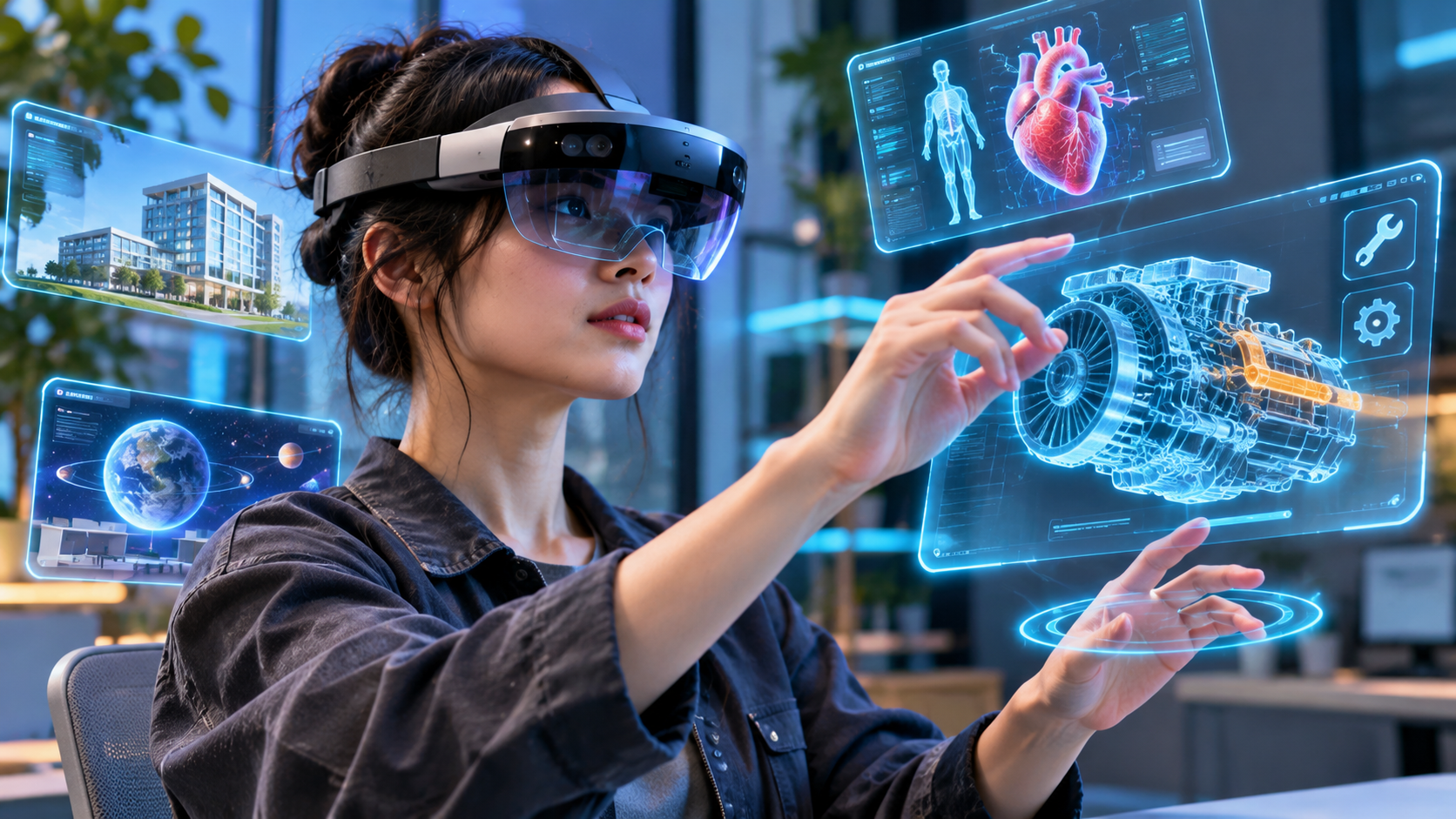
Mixed Reality Device Applications are revolutionizing the way we interact with technology, blending the digital and physical worlds in ways we never imagined. From enhancing educational experiences to redefining entertainment, these applications are at the forefront of innovation across various industries.
As hardware and software evolve, mixed reality devices become increasingly capable, offering immersive experiences that engage users like never before. This technology’s historical development reflects significant advancements, showcasing case studies where mixed reality has been successfully implemented, from healthcare simulations to interactive learning environments.
The evolution of mixed reality device applications in various industries
The journey of mixed reality (MR) technologies has been remarkable, evolving from rudimentary virtual reality systems to sophisticated devices that seamlessly blend the physical and digital worlds. This transformation has catalyzed the growth of mixed reality device applications across various sectors, notably healthcare, education, and entertainment. As these technologies have matured, they have begun to reshape traditional practices and enhance user experiences, marking a significant shift in how industries operate and engage with their audiences.
The historical development of mixed reality technologies can be traced back to the 1960s with the invention of the Sword of Damocles, the first virtual reality head-mounted display system. However, it wasn’t until the 1990s that more immersive experiences began to emerge with advancements in computer graphics and processing power. The introduction of Microsoft HoloLens in 2016 marked a pivotal moment, showcasing the practical applications of MR in real-world scenarios. This, combined with ongoing improvements in hardware, such as lighter headsets and better sensors, and software advancements, like AI and real-time rendering, has significantly influenced the growth of mixed reality devices.
Mixed Reality Applications in Healthcare
Mixed reality applications in healthcare have demonstrated substantial potential in improving patient outcomes and enhancing medical training. The integration of MR technologies allows for innovative approaches to complex medical procedures and patient education.
– Case Study: Surgical Training – One notable application is the use of MR for surgical training. Surgeons can practice complicated procedures using 3D holograms of patient anatomy, enabling them to visualize the surgery before actually performing it. This was notably implemented by the Imperial College London, where mixed reality was utilized to train surgeons in minimally invasive techniques.
– Case Study: Patient Treatment – Mixed reality has also been effective in treating patients with phobias or PTSD. For instance, the use of MR simulations allows patients to confront their fears in a controlled, safe environment, which has been adopted by several clinics in the United States.
Mixed Reality Applications in Education
In the educational sector, mixed reality provides immersive learning experiences that deepen understanding and engagement among students. By blending digital information with physical environments, MR fosters a more interactive and stimulating learning atmosphere.
– Case Study: Interactive Learning Environments – Institutions like Stanford University have incorporated MR into their curriculum, allowing students to explore complex scientific concepts through interactive simulations. For example, biology students can examine 3D models of cells and organs, enhancing their learning experience significantly compared to traditional textbooks.
– Case Study: Language Learning – MR applications have also been developed to assist in language learning. Programs that utilize virtual tutors and interactive environments enable users to practice language skills in context, which has shown to improve retention and fluency.
Mixed Reality Applications in Entertainment
The entertainment industry has been at the forefront of adopting mixed reality technologies, transforming how audiences experience content. From gaming to immersive storytelling, MR has created new avenues for interaction and engagement.
– Case Study: Gaming – The Pokémon GO phenomenon exemplifies the successful integration of mixed reality in gaming. By overlaying digital characters onto the real world through mobile devices, players engage in physical activity while exploring their surroundings. This blend of physical and virtual has generated significant user engagement and revenue.
– Case Study: Virtual Concerts – Mixed reality has also revolutionized live events, as seen in virtual concerts that enable audiences to experience performances from the comfort of their homes. Artists like Travis Scott have utilized platforms such as Fortnite to reach millions of fans, blurring the lines between gaming and live entertainment.
The evolution of mixed reality applications across these industries illustrates the transformative impact of technology on our daily lives, paving the way for innovative solutions that enhance learning, treatment, and entertainment experiences.
The role of mixed reality devices in enhancing user experiences
Mixed reality devices are becoming increasingly essential in creating engaging and immersive experiences across various fields, including gaming, education, and tourism. By combining elements of virtual reality and augmented reality, these devices facilitate interactive environments that captivate users and encourage deeper involvement with the content. This discussion explores how mixed reality enhances user experiences, illustrated with practical examples and user feedback.
Immersive environments and user engagement
Mixed reality devices leverage advanced technology to create environments where users can seamlessly interact with both digital and physical elements. This dual interaction significantly enhances user engagement by making experiences more tangible and realistic. For instance, in gaming, titles like “Half-Life: Alyx” utilize mixed reality to immerse players in a fully interactive world where they can manipulate objects and navigate spaces as if they were physically present. Players often report heightened emotional responses due to the immersive nature of these experiences, leading to longer play sessions and a stronger connection to the game’s narrative.
Another notable application is in virtual tours. Museums and historical sites employ mixed reality technologies to enrich visitor experiences. For example, the British Museum’s augmented reality app allows users to view artifacts in their original contexts, providing a deeper understanding of history. Feedback from users indicates that such applications significantly enhance educational value and personal enjoyment during visits.
Technological features contributing to enhanced user experiences
The technological features of mixed reality devices play a crucial role in improving user experiences. Key elements include:
- Spatial Awareness: Mixed reality devices, such as Microsoft’s HoloLens, incorporate spatial mapping technology that allows users to interact with their environment in real-time. This enables users to navigate spaces while simultaneously engaging with digital overlays, creating a more natural and intuitive experience.
- Gesture Recognition: Many mixed reality applications utilize gesture recognition to allow users to control digital content through hand movements. This eliminates the need for bulky controllers and provides a more immersive interface. For example, the “Magic Leap” device can track hand movements, enabling users to manipulate 3D objects effortlessly.
- Haptic Feedback: The integration of haptic feedback technology adds a tactile dimension to mixed reality experiences. Devices that provide vibrations or resistance when users interact with virtual objects can create a sense of realism, making digital interactions feel more genuine. This feature is particularly beneficial in gaming, where users can ‘feel’ the impact of their actions.
- High-Quality Visuals: Advanced graphics rendering techniques enhance visual fidelity, making virtual environments more lifelike. This aspect is crucial in applications like architectural visualization, where clients can walk through a virtual building before it’s constructed, making informed decisions based on realistic representations.
User and expert feedback on mixed reality applications
User feedback is pivotal in understanding the impact of mixed reality applications. Many users express a sense of awe and engagement when experiencing these technologies. A common sentiment among gamers is the feeling of being ‘inside’ the game, rather than merely playing it. This sentiment is echoed by experts who note that mixed reality can evoke stronger emotional responses due to its immersive qualities.
Moreover, educators using mixed reality tools report increased student participation and retention of information. For instance, in a study conducted by researchers at the University of Maryland, students using mixed reality simulations showed a 40% improvement in knowledge retention compared to traditional learning methods. Users describe these experiences as not only informative but also entertaining, merging learning with play.
In professional settings, feedback from architects and designers highlights the utility of mixed reality in client presentations. The ability to visualize concepts in 3D enhances comprehension and aids in decision-making, leading to higher client satisfaction rates.
Overall, the role of mixed reality devices in enhancing user experiences is evident through their ability to create engaging, educational, and emotionally resonant environments across various applications.
Challenges and limitations faced by mixed reality device applications
Mixed reality (MR) technologies are rapidly evolving, bringing with them a plethora of opportunities and applications across various sectors. However, the development and implementation of mixed reality applications are fraught with challenges that can hinder performance and user experience. This section explores the multifaceted issues faced by developers and end-users alike, emphasizing hardware constraints, software integration hurdles, and the varying experiences across industries.
Developer challenges in creating mixed reality applications
Developers encounter several obstacles when creating mixed reality applications. Key challenges include hardware limitations and software integration issues. The performance of MR applications is heavily reliant on the underlying hardware, which can vary significantly among devices. Common hardware-related challenges involve processing power, battery life, and field of view. For example, many MR devices struggle with maintaining a high frame rate and low latency, which are essential for smooth user experiences.
Software integration issues can arise when attempting to combine various platforms and development environments. Developers often need to work with different operating systems, development kits, and middleware tools, which can lead to inconsistencies in application performance and user interface. This complexity may result in longer development cycles and increased costs.
User limitations in mixed reality experiences
End-users of mixed reality applications often face accessibility barriers and a steep learning curve. Accessibility issues can arise from the physical requirements of using MR devices. For instance, some users may have difficulty wearing headsets due to size or comfort constraints. Additionally, the cognitive load associated with navigating virtual environments can be challenging for users unfamiliar with these technologies.
The learning curve is another significant limitation, as many users require time and practice to become proficient in using MR applications. This can be particularly evident in professional settings where rapid onboarding is essential. In industries such as healthcare or education, where MR tools can enhance training and simulations, the need for extensive user training can impede the adoption of these technologies.
Challenges across different industries and potential solutions
The challenges faced by mixed reality applications can differ widely across industries. In the healthcare sector, for instance, the integration of MR technologies into existing systems can be complex due to regulatory requirements and the need for precise data handling. In contrast, the gaming industry often deals with rapid iterations and a focus on user engagement, leading to different priorities in development.
To address these challenges, several potential solutions can be explored:
- Standardization of hardware: Encouraging hardware manufacturers to adopt common standards can streamline the development process and improve compatibility across devices.
- Enhanced developer tools: Investing in better development environments and libraries can simplify the integration of various software components, fostering a smoother application development cycle.
- User training programs: Implementing structured training programs tailored to specific industries can help mitigate the learning curve, ensuring users can effectively leverage MR applications.
- Accessibility features: Prioritizing user-centered design that incorporates accessibility features can enhance the usability of MR applications for a broader audience.
“By addressing these challenges, we can unlock the full potential of mixed reality technologies across diverse fields, leading to innovative solutions and improved user experiences.”
Future trends in mixed reality device applications
The landscape of mixed reality (MR) applications is evolving rapidly, driven by technological advancements and changing consumer expectations. As we look to the future, several emerging technologies, such as artificial intelligence (AI) and 5G connectivity, are set to play pivotal roles in shaping the development and implementation of MR devices. These innovations promise to enhance user experiences by making MR applications more immersive, responsive, and integrated into everyday life.
The integration of AI into mixed reality is expected to revolutionize how users interact with virtual environments. AI algorithms will facilitate real-time data processing, enabling more natural interactions and personalized experiences. Furthermore, the rollout of 5G networks will provide the necessary bandwidth and low latency required for seamless MR experiences, allowing users to engage with high-quality graphics and interactive elements without disruption.
Potential applications in the next five to ten years
Several potential applications of mixed reality are likely to gain traction over the next decade. These applications will respond to evolving user needs and societal changes, leading to innovative uses of MR technology. The following list highlights key areas where MR could become widespread:
- Remote collaboration: Enhanced virtual workspaces will allow teams to collaborate in real-time, regardless of their physical locations, fostering productivity and creativity.
- Healthcare training: MR will be utilized in medical training and simulations, enabling healthcare professionals to practice procedures in a risk-free environment.
- Education and training: Interactive learning experiences will leverage MR to make complex subjects more engaging and easier to understand for students.
- Retail experiences: Virtual try-ons and interactive product displays will transform how consumers shop, allowing them to visualize products in their own environments.
- Tourism and travel: Virtual travel experiences will offer immersive previews of destinations, enhancing decision-making and travel planning.
- Smart homes and IoT integration: MR will enable users to interact with smart home devices more intuitively, integrating digital controls into their physical environments.
The influence of societal changes will significantly shape the development of mixed reality devices. As remote work becomes more prevalent and individuals seek flexible solutions, MR applications will need to accommodate this shift. Furthermore, an increasing emphasis on personalized experiences will drive innovations in AI-powered MR systems, tailoring content to individual preferences and behaviors.
In the next five to ten years, the intersection of AI, 5G, and evolving user expectations will redefine the capabilities and applications of mixed reality devices.
The impact of mixed reality on education and training
Mixed reality (MR) is reshaping the landscape of education and training by seamlessly blending the physical and digital worlds. This innovative approach enhances traditional learning methods, making them more interactive and engaging. With tools that provide immersive experiences, students and professionals alike can gain practical skills in a safe and controlled environment, ultimately leading to improved learning outcomes.
Mixed reality applications transform conventional educational methods by offering immersive experiences that foster deeper understanding and retention of complex concepts. Unlike traditional education, where students primarily engage through lectures and textbooks, MR facilitates hands-on learning. This method encourages exploration and experimentation, allowing learners to visualize and manipulate digital content in real-time, thereby enhancing engagement and motivation.
Examples of Mixed Reality Tools in Education and Training
The integration of mixed reality tools into classrooms and professional training environments has proven to be highly effective. Various applications are designed to enhance the learning experience across different disciplines. Notable examples include:
- Microsoft HoloLens: This MR headset enables users to interact with 3D holograms, making it particularly useful in fields like medicine and engineering. For instance, medical students can practice surgical procedures using holographic patients, providing a risk-free environment to hone their skills.
- zSpace: A virtual reality platform often used in K-12 education, zSpace allows students to engage in interactive science and math lessons. By manipulating 3D models of biological systems or geometric shapes, students gain a better comprehension of abstract concepts.
- Engage: This platform enables educators to create virtual classrooms where learners from around the world can attend lectures, participate in discussions, and collaborate on projects. It bridges geographical gaps, fostering a global learning environment.
- Google Expeditions: This app offers virtual reality field trips, allowing students to explore different parts of the world or historical sites without leaving their classroom. This immersive experience sparks curiosity and enhances knowledge retention.
Insights from educators highlight the effectiveness of mixed reality in improving learning outcomes. In a survey conducted among teachers utilizing MR tools, many noted significant enhancements in student participation and understanding. One educator commented,
“Students are more engaged when they can interact with the material. Mixed reality turns abstract ideas into tangible experiences.”
This sentiment reflects a growing recognition of MR’s potential to make learning more relevant and applicable to real-world scenarios. As educational institutions continue to adopt mixed reality technologies, the focus on practical training and experiential learning is expected to grow, further enhancing educational outcomes for future generations.
Mixed reality device applications in social interaction and collaboration
Mixed reality (MR) technologies have significantly transformed the landscape of social interaction and collaboration in both personal and professional settings. By merging physical and digital realms, these technologies enable users to engage in immersive experiences that enhance communication and teamwork. The ability to interact with digital objects in real-time while remaining aware of the physical environment fosters a new level of engagement that traditional methods cannot match.
One of the major advancements in MR applications is their capacity to promote effective social interactions and collaborative work environments. Tools designed for MR allow teams to share a virtual workspace regardless of their geographical locations. For instance, applications like Microsoft Mesh facilitate multi-user experiences where participants can co-create in a shared virtual environment, overcoming barriers of distance and fostering a sense of presence among remote team members. Furthermore, MR applications are capable of integrating real-time feedback which enhances the collaborative process, making it more dynamic and responsive.
Impact of Mixed Reality on Remote Communication and Collaboration
The transition to mixed reality for remote communication has introduced several noteworthy benefits that redefine collaboration. These applications allow teams to visualize complex data in 3D, leading to enhanced understanding and decision-making. The following key aspects illustrate the positive influence of MR on remote teamwork:
- Enhanced Engagement: MR applications provide immersive experiences that increase user engagement compared to traditional video conferencing. The sense of presence that MR creates can make interactions feel more genuine and connected.
- Improved Visualization: Complex information can be visualized in 3D models, allowing team members to explore and manipulate data in ways that enhance comprehension, especially in fields like engineering, architecture, and design.
- Collaborative Creativity: MR platforms encourage brainstorming and ideation sessions where team members can collaboratively develop ideas in real-time, using virtual whiteboards and interactive tools to visualize thoughts.
- Accessibility: MR technologies can create equitable environments for all participants, allowing those with disabilities to engage fully in discussions and collaborative tasks.
The psychological and social effects of using MR for interaction are profound. Users often report feeling more connected and less isolated when using MR applications compared to traditional methods like emails or phone calls. The immersive nature of MR fosters a sense of being together even when physically apart, which can lead to increased motivation and a stronger team dynamic. The use of MR decreases feelings of loneliness and enhances emotional connections, creating a more supportive and collaborative atmosphere.
“Mixed reality not only redefines how we work but also how we connect, bridging the gap between digital collaboration and human interaction.”
Ethical considerations surrounding mixed reality device applications
As mixed reality (MR) technologies continue to advance, they bring about a host of ethical considerations that must be thoroughly examined. These considerations span various contexts, from gaming and education to healthcare and workplace training. Understanding the implications of MR applications is essential for ensuring their responsible use and for fostering user trust.
The integration of mixed reality technologies into daily life raises multiple ethical dilemmas. One significant concern is the potential for manipulation of reality, where users might struggle to distinguish between virtual and real environments. This blurring of lines can lead to misinterpretations of real-world interactions and contexts. Additionally, the immersive nature of MR can create dependency or addiction, especially among younger audiences who may be more vulnerable to such effects.
Privacy concerns related to data collection and user consent
The use of mixed reality applications often necessitates the collection of vast amounts of user data, including location, biometric information, and behavioral patterns. The following points highlight the critical privacy concerns associated with these practices:
– Data Collection Transparency: Users should be informed about what data is being collected and how it will be used. This transparency builds trust and allows users to make informed choices about their participation.
– User Consent: Consent must be explicit and obtained before collecting any personal data. Users should have the right to opt in or out of data collection processes without losing access to essential features of the application.
– Data Security: Ensuring that user data is stored securely and protected from breaches is paramount. Developers must implement robust security measures to prevent unauthorized access to sensitive information.
– Data Retention Policies: Clear policies should be established regarding how long user data is retained. Users should have the option to request deletion of their data at any time, further protecting their privacy.
“The right to privacy is not just an individual concern; it’s a collective responsibility of developers and organizations to enhance user trust.”
Responsibilities of developers and organizations in addressing ethical issues
Developers and organizations play a pivotal role in navigating the ethical landscape of mixed reality technologies. They must acknowledge their responsibilities in promoting ethical use and safeguarding user rights. Some key responsibilities include:
– Ethical Design Practices: Incorporating ethical considerations into the design process ensures that MR applications do not exploit users or lead to harmful behaviors. This involves conducting ethical impact assessments and engaging with diverse stakeholders.
– User Education: Providing users with education about the implications of using mixed reality technologies enhances their awareness and decision-making capabilities. Awareness campaigns can help users understand potential risks and how to mitigate them.
– Engagement with Ethical Standards: Developers should adhere to established ethical standards and guidelines within the tech industry. Collaborating with ethical boards or committees can provide valuable insights into best practices.
– Feedback Mechanisms: Implementing feedback channels allows users to report ethical concerns or negative experiences, enabling developers to address issues promptly and improve the application continuously.
Through proactive engagement with these ethical considerations, developers and organizations can foster a culture of responsibility and trust in the realm of mixed reality applications.
Final Review
In summary, the impact of Mixed Reality Device Applications is profound, shaping the future of user engagement and interaction. As we look ahead, overcoming challenges and addressing ethical considerations will be crucial for harnessing the full potential of this technology, promising exciting developments in the years to come.
Key Questions Answered
What are mixed reality device applications?
Mixed reality device applications blend virtual elements with the real world, allowing users to interact with both environments simultaneously.
How do mixed reality devices differ from virtual reality?
Mixed reality devices integrate real-world environments with virtual elements, while virtual reality immerses users in a completely virtual environment.
What industries benefit the most from mixed reality?
Industries such as healthcare, education, and entertainment are significantly benefiting from mixed reality applications, enhancing training, learning, and user engagement.
Are there any health concerns associated with using mixed reality devices?
Potential health concerns may include eye strain, motion sickness, and cognitive overload, particularly with prolonged use of mixed reality devices.
What is the future of mixed reality technology?
The future of mixed reality technology looks promising, with advancements in AI and 5G connectivity expected to drive further innovation and application expansion.