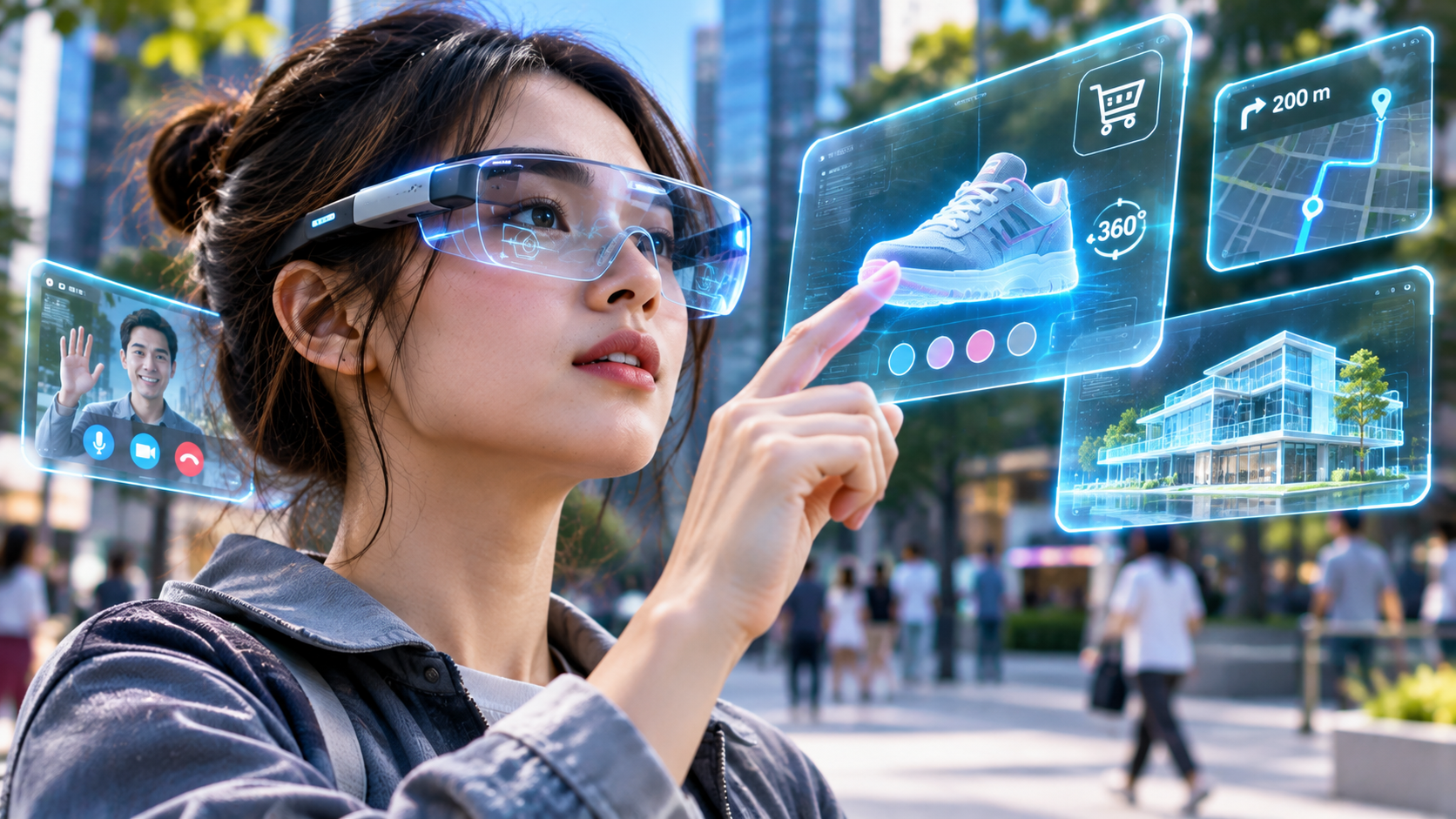
Augmented Reality Wearable Devices are at the forefront of technological innovation, merging the digital and physical worlds in ways previously imagined only in science fiction. These devices offer immersive experiences that not only entertain but also enhance productivity across various sectors. As we delve into the evolution, technological intricacies, industry applications, and ethical implications of these wearables, it becomes clear that they are reshaping our interaction with technology and each other.
From the early days of AR glasses to today’s sophisticated headsets, the journey of augmented reality wearable devices has been marked by significant milestones and breakthroughs that have revolutionized how we perceive and engage with our environment. As these devices become increasingly integrated into our everyday lives, understanding their impact is essential for both users and developers alike.
The evolution of augmented reality wearable devices throughout history
The journey of augmented reality (AR) wearable devices is a captivating tale of technological innovation and cultural transformation. From their inception in the late 20th century to the sophisticated devices we see today, AR wearables have evolved significantly, shaping how we interact with the world around us. This evolution has been marked by major milestones that showcase the advancements in technology, design, and societal impact.
The evolution of augmented reality wearable devices can be traced back to the early experiments with heads-up displays (HUDs) and optical systems. One of the earliest milestones was the introduction of the Virtuality Group’s head-mounted display in 1991, which allowed users to experience virtual environments. However, it was the development of the Google Glass in 2013 that brought AR into the mainstream. Google Glass featured a lightweight design with a small display that projected information directly into the user’s line of sight, sparking fascination and controversy. The technology behind these devices has evolved significantly, incorporating advancements in computer vision, machine learning, and miniaturization of components.
As we examine the technological innovations that have shaped AR wearables, several key inventions stand out. The integration of GPS technology and smartphones has allowed for real-time location-based services, enhancing the AR experience. Additionally, the introduction of marker-based tracking systems has paved the way for applications in gaming, education, and industry. ARKit and ARCore, developed by Apple and Google respectively, have enabled developers to create immersive experiences easily, demonstrating the growing accessibility of AR technology.
The cultural impact of augmented reality wearables on society is profound, influencing consumer behavior and reshaping interactions. Early adopters, such as tech enthusiasts and professionals, showcased the practical applications of these devices in fields ranging from healthcare to tourism. For instance, surgeons have utilized AR glasses to overlay critical information during operations, enhancing precision and outcomes. Brands like Pokemon Go have captivated the masses, demonstrating how AR can transform gaming and social interactions. As these devices continue to evolve, they challenge our perceptions of reality and open new avenues for creativity and engagement, reflecting a shift towards a more interactive and connected world.
The technological components that make augmented reality wearable devices functional
Augmented Reality (AR) wearable devices are at the forefront of technological innovation, seamlessly blending digital information with the physical world. The functionality of these devices hinges on an amalgamation of several sophisticated technological components, each playing a crucial role in delivering immersive experiences to users. By integrating sensors, processors, and displays, AR wearables can interact with their environment in real-time, offering users a unique perspective and enhancing their interaction with the world around them.
The primary technologies that enable augmented reality wearable devices include sensors, processors, and displays. Sensors like cameras, accelerometers, and gyroscopes collect data about a user’s surroundings and movements, facilitating the overlay of digital content onto the real world. Processors, often high-performance chips, analyze this data and render graphics in real-time, ensuring a smooth experience. Displays, which can be optics-based or screen-based, present the augmented reality visuals to the user, allowing for interaction. Together, these components create a cohesive system that interprets the user’s actions and surroundings, leading to an interactive and immersive experience.
Comparison of Sensor Types Used in Augmented Reality Devices
Different augmented reality devices incorporate various types of sensors, each serving distinct functions and applications. The following table illustrates how these sensors differ in their roles within AR technology:
| Sensor Type | Function | Applications |
|---|---|---|
| Camera | Captures real-time video and images of the environment. | Object recognition, scene interpretation, and marker tracking. |
| Accelerometer | Measures acceleration and detects motion changes. | Device orientation tracking and movement detection. |
| Gyroscope | Tracks rotational movement and orientation. | Enhances spatial awareness and stabilization of AR content. |
| Proximity Sensor | Detects the presence of nearby objects or users. | Interactivity within AR environments, triggering events based on proximity. |
| Depth Sensor | Measures distance to objects and creates a depth map. | Accurate placement of virtual objects in real-world environments. |
The role of augmented reality wearable devices in various industries
Augmented reality (AR) wearable devices are rapidly transforming various sectors by enhancing operational efficiency, improving training outcomes, and revolutionizing customer experiences. As industries continue to adopt AR technologies, the integration of these devices is reshaping traditional practices and unlocking new possibilities across different fields.
Healthcare Applications
In the healthcare sector, augmented reality wearable devices are being utilized to provide real-time data and enhance surgical procedures. For instance, the use of AR glasses enables surgeons to visualize patient data and anatomical overlays during operations, significantly improving the accuracy of procedures. In a renowned case, the use of Microsoft HoloLens in surgeries at hospitals like the Johns Hopkins Hospital has demonstrated reduced operation times and increased success rates. Surgeons can project 3D images of organs, helping them navigate complex anatomical structures with precision.
In addition to surgical applications, AR wearables facilitate training for medical students and professionals. Using devices like Magic Leap, trainees can interact with lifelike simulations of medical scenarios, improving their diagnosis and treatment skills before working on real patients. This immersive training method not only enhances learning but also boosts confidence among healthcare providers.
Education Sector Innovations
The education industry is also experiencing profound changes due to AR wearables. These devices enable interactive learning experiences, allowing students to explore complex subjects in a more engaging way. For example, AR headsets like Google Glass can overlay educational content over real-world objects, turning mundane lessons into interactive explorations. A notable case is the use of AR in anatomy classes, where students can visualize the human body in 3D, enhancing understanding of complex biological systems.
Moreover, teachers can utilize AR to create interactive lessons, making history and geography come alive through virtual field trips and historical reconstructions. Institutions like Case Western Reserve University have effectively integrated AR into their curriculum, resulting in improved student engagement and retention of knowledge.
Manufacturing Process Enhancements
In the manufacturing sector, augmented reality wearables are crucial for improving operational processes and reducing errors. AR smart glasses provide workers with step-by-step assembly instructions overlaid on the equipment they are working on, facilitating faster and more precise assembly. A prominent example is Boeing, which has adopted AR technology to guide technicians in wiring harness assembly, resulting in a 90% reduction in errors and a significant decrease in production time.
Furthermore, AR devices are employed for maintenance and repair tasks. Technicians equipped with AR glasses can access real-time information and remote assistance while working on machinery, which minimizes downtime and enhances productivity. Companies like Siemens have utilized AR in their maintenance operations, reducing the time technicians spend troubleshooting equipment issues.
The adoption of augmented reality devices across these industries brings a variety of benefits and challenges.
- Benefits include enhanced training and learning experiences, improved accuracy in tasks, increased productivity, and reduced operational costs.
- Challenges consist of high implementation costs, the need for ongoing technical support, potential resistance to change among employees, and concerns regarding data security.
“Augmented reality is not just about the technology; it’s about changing the way we work and learn in our industries.”
Overall, the integration of AR wearable devices into healthcare, education, and manufacturing demonstrates the transformative potential of this technology across various sectors, leading to improved efficiency and enhanced outcomes.
The impact of augmented reality wearable devices on user experience and interaction
The integration of augmented reality (AR) wearable devices into daily life has revolutionized how users interact with both digital and physical environments. By overlaying digital information onto the real world, these devices create immersive experiences that enhance user engagement and provide practical applications in various sectors, from gaming and education to healthcare and industrial training.
AR wearables enhance user experience by seamlessly merging the digital and physical worlds. This fusion enables users to interact with digital content in a natural and intuitive manner. For instance, a user wearing AR glasses can view navigation directions projected onto the street while exploring a new city, effectively combining navigation with real-world context. Additionally, users often report feelings of increased presence and engagement when using AR devices, as the technology allows for a deeper connection with the content displayed. However, user interactions with these devices come with both strengths and weaknesses, as illustrated by specific user feedback.
Strengths and weaknesses of user interactions with AR wearables
User interactions with AR wearable devices reveal various strengths and weaknesses based on individual experiences. Many users appreciate the hands-free capabilities and the convenience of accessing information without the need for smartphones. Positive testimonials highlight enhanced learning experiences in educational settings, where AR can visualize complex concepts, making them easier to comprehend. For example, a biology student using AR glasses to see 3D models of the human anatomy reported, “It felt like I was looking right inside the body, which made studying so much more interesting and effective.”
However, there are some weaknesses to consider. Users sometimes experience discomfort due to prolonged use, such as headaches or eye strain, which can detract from the overall experience. One user expressed, “While I love the technology, I can’t wear these glasses for too long; they start to hurt my eyes.” Additionally, there can be learning curves associated with gesture-based controls, which may frustrate users who are not tech-savvy.
To better understand interaction with AR devices, here is a list of common gestures and voice commands that facilitate user engagement:
- Swipe: A gesture used to navigate between applications or pages, enabling smooth transitions.
- Pinch: Commonly used to zoom in or out on images or maps, allowing users to control the level of detail.
- Voice Command: Allows users to execute functions hands-free, enhancing accessibility and convenience.
- Tap: A simple interaction for selecting items or confirming actions, creating a user-friendly experience.
- Head nod: Used for confirming selections in some AR glasses, providing a more natural interaction.
These gestures and commands hold significance as they enhance user accessibility, making it easier for a wider audience to engage with AR technology effectively. The feedback from users illustrates the dual nature of AR wearables, showcasing their potential and the challenges they present in user interaction.
Future trends and innovations in augmented reality wearable devices
As augmented reality (AR) technology continues to evolve, the future of AR wearable devices looks promising, driven by innovative hardware and software advancements. These devices are set to enhance user experience, creating seamless interactions between the digital and physical worlds. With the integration of sophisticated sensors, AI capabilities, and connectivity improvements, AR wearables will transform industries and everyday life.
Upcoming trends in augmented reality technology
The landscape of augmented reality wearable devices is shifting rapidly, and several key trends are emerging that will shape their future. Notable developments in hardware include lightweight and ergonomic designs that allow for prolonged wear without discomfort, as seen in products like smart glasses and headsets. Furthermore, advancements in display technology, such as microLEDs and holographic displays, will provide clearer and more vibrant visuals, enhancing the immersive experience.
In terms of software, machine learning algorithms will facilitate more intuitive user interfaces, enabling wearables to understand context and user preferences. Enhanced computer vision techniques will empower AR devices to recognize objects in real time and provide relevant information, creating a more interactive experience. Moreover, cloud computing will support robust processing capabilities, allowing wearables to perform complex tasks with minimal onboard hardware.
The integration of 5G networks will significantly elevate the functionality of AR wearables. With faster data transfer speeds and lower latency, users can expect real-time updates and richer content experiences. For instance, in retail, customers could try on clothing virtually and receive instant feedback on fit and style, while in education, students might engage with interactive learning modules that bring concepts to life.
Potential applications of augmented reality wearables in the next decade
The future of AR wearables holds a wealth of opportunities across various sectors. Here are some projected applications that could emerge over the next ten years:
- Healthcare: Surgeons could use AR glasses to overlay crucial patient data during procedures, improving accuracy and outcomes.
- Manufacturing: Workers equipped with AR devices could receive real-time instructions and visual guides to streamline assembly processes.
- Tourism: AR wearables could enhance travel experiences by providing historical context and interactive maps while exploring new destinations.
- Gaming: The gaming industry may see a surge in AR-based experiences, with players engaging in mixed-reality environments that blend gaming with real-world locations.
- Education: Classrooms could become interactive learning hubs where students use AR to visualize complex topics, from anatomy to astronomy.
“The fusion of augmented reality with advanced technologies like AI and 5G will redefine human interaction with information, making experiences more immersive and engaging.”
These predictions illustrate the transformative potential of augmented reality wearables, indicating that the next decade will see significant advancements that enhance both personal and professional applications.
Ethical considerations surrounding augmented reality wearable devices
The rise of augmented reality (AR) wearable devices has introduced a wave of technological innovation, but it also brings forth a multitude of ethical considerations. These devices, while enhancing user experiences, pose significant dilemmas that need careful examination. One of the primary concerns revolves around privacy and security. As AR wearables collect vast amounts of personal data, the potential for misuse or unauthorized access raises alarms about user trust and the integrity of the technology.
The implications of data collection by augmented reality wearables extend far beyond the individual user. These devices often gather sensitive information, ranging from location data to biometric indicators, leading to ethical dilemmas regarding consent and ownership of data. When users don AR wearables, they unwittingly enter a realm where their every action may be tracked and recorded. This persistent surveillance raises questions about user autonomy and the extent to which individuals are aware of the data being collected.
Moreover, the aggregation of data from multiple users allows companies to build detailed profiles that can be sold or shared with third parties without explicit consent. Such practices could lead to a decline in user trust, as individuals might feel that their privacy is compromised. User trust is not merely an ethical concern; it has tangible consequences for companies. When users lose faith in a product’s ability to protect their information, they are less likely to adopt or continue using the technology. This is evident in cases like the backlash faced by social media platforms over data breaches, which resulted in significant user attrition and regulatory scrutiny.
To navigate the ethical landscape of AR wearable technology, various organizations and think tanks have proposed guidelines aimed at fostering responsible use. These frameworks encourage transparency, user consent, and data protection, establishing a foundation for ethical practices in AR development. The following table Artikels some of the ethical guidelines proposed for the responsible use of augmented reality technology:
| Organization | Guideline |
|---|---|
| IEEE | Promote transparency in data collection and usage practices. |
| ACM | Encourage fair and equitable access to AR technologies. |
| European Commission | Implement strict data protection measures to safeguard user information. |
| Privacy International | Advocate for user autonomy through informed consent processes. |
| World Economic Forum | Establish ethical standards for the development and deployment of AR technologies. |
The ethical considerations surrounding augmented reality wearable devices cannot be overlooked. As the technology continues to evolve, it is imperative that developers and users engage in ongoing dialogues about the potential impacts on privacy, security, and user trust. By embracing ethical guidelines, stakeholders can work towards a future where augmented reality enhances lives without compromising fundamental rights.
Final Review
In summary, Augmented Reality Wearable Devices are not just a passing trend; they are an integral part of our future, influencing various industries and enhancing user experiences. As we continue to explore their potential, it is crucial to navigate the accompanying ethical considerations to ensure responsible development and usage. The horizon for these devices is expansive, promising new innovations that will further bridge the gap between our digital and physical realities.
FAQ Explained
What are Augmented Reality Wearable Devices?
These are devices that overlay digital information onto the physical world, enhancing user experiences through interactive features.
How do AR wearables differ from virtual reality devices?
AR wearables enhance the real world by adding digital elements, while virtual reality devices create entirely immersive digital environments.
Are there any health risks associated with using AR wearables?
Potential risks include eye strain, headaches, and motion sickness, particularly with prolonged use.
How can AR wearables be beneficial in education?
They provide interactive learning experiences, making complex subjects more accessible and engaging for students.
What industries are currently using AR wearable technology?
Industries such as healthcare, manufacturing, education, and retail are utilizing AR wearables to enhance operational efficiency and user experiences.