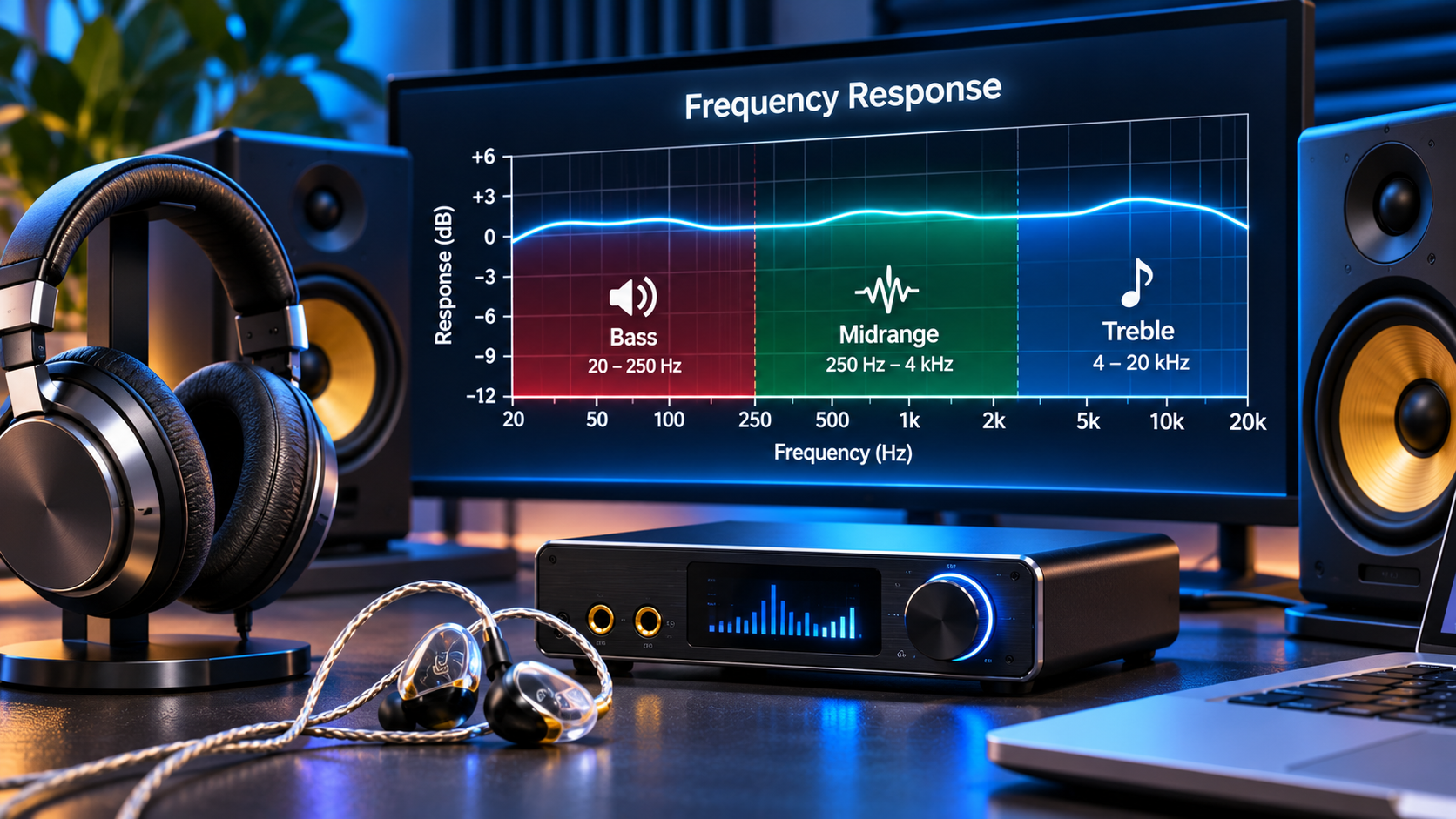
With Audio Device Frequency Response at the forefront, understanding how sound is delivered through various devices becomes a riveting journey. Frequency response is not just a technical specification; it defines how accurately an audio device reproduces sound across different frequencies, influencing everything from music enjoyment to gaming experiences.
This overview delves deep into the concept of frequency response, shedding light on its measurement, significance, and impact on audio quality. Explore how it varies among different audio devices and the crucial role it plays in shaping our auditory experiences.
Understanding the Basics of Audio Device Frequency Response
Frequency response is a critical concept in the world of audio devices, providing insight into how these devices reproduce sound across various frequencies. At its core, frequency response refers to the range of frequencies that an audio device can accurately reproduce, typically measured in Hertz (Hz). This range profoundly influences the quality of audio output, affecting how music, speech, and sound effects are perceived. A well-defined frequency response ensures that all sounds, from deep bass notes to sparkling highs, are delivered with clarity and precision, enriching the overall listening experience.
Frequency response is measured using a series of tests that play sound at varying frequencies, usually ranging from 20 Hz to 20 kHz, which covers the average human hearing range. The results are typically graphed, illustrating how the audio device performs at different frequencies. The significance of this measurement lies in its ability to highlight any inconsistencies or coloration in sound reproduction. For example, a device with a flat frequency response curve is generally regarded as more neutral, meaning it doesn’t artificially boost or cut specific frequencies, which is essential for mixing and mastering audio. Conversely, devices with pronounced peaks or troughs might enhance certain sounds but can lead to an unbalanced audio experience.
Various audio devices exhibit frequency response characteristics, each tailored to specific applications and environments. These include:
Types of Audio Devices with Frequency Response
Understanding the frequency response of different audio devices can help consumers make informed decisions based on their audio needs. Below are examples of common audio devices and their frequency response attributes:
- Headphones: High-quality headphones often feature a wide frequency response, allowing for a rich listening experience. For instance, some models can reproduce sounds from 5 Hz to 40 kHz, catering to both deep bass and high-frequency treble.
- Speakers: Studio monitors are designed to provide a flat frequency response for accurate sound reproduction, typically ranging from 40 Hz to 20 kHz. This characteristic makes them suitable for professional audio work.
- Microphones: Different microphones have unique frequency response curves tailored for specific applications. For example, a vocal microphone might emphasize the mid-frequency range to enhance vocal clarity, while a shotgun microphone may prioritize high frequencies to capture distant sounds.
- Subwoofers: Subwoofers are engineered to reproduce low frequencies, usually operating in the range of 20 Hz to 200 Hz. Their frequency response is crucial for delivering the depth and impact of bass-heavy music or soundtracks.
The frequency response of audio devices is not only a technical specification but also a fundamental element that shapes the auditory experience. Understanding it helps in selecting the right equipment for personal preferences and audio production needs.
The Relationship Between Frequency Response and Sound Quality
Frequency response plays a critical role in determining the overall sound quality of audio devices. It refers to the range of frequencies that an audio device can reproduce accurately. A device with a flat frequency response, meaning it reproduces all frequencies evenly, will typically deliver clearer and more balanced sound. This aspect becomes particularly significant in various audio environments, whether it’s a quiet home studio, a bustling open space, or a large concert hall. Each environment has its own acoustic characteristics that can affect how frequencies are perceived, making the quality of frequency response essential for optimal sound reproduction.
When evaluating the importance of frequency response in different audio environments, it’s clear that variations can substantially affect listener experience. For instance, in a home theater setup, a speaker with a well-balanced frequency response can enhance the clarity of dialogue and the impact of sound effects. In contrast, in a live sound situation, microphones and speakers with superior frequency response are crucial to ensure that the nuances of live performances are captured and delivered accurately to the audience. The ability to reproduce low-frequency sounds without distortion, as well as to maintain clarity in high frequencies, can greatly influence the listener’s emotional response to the performance.
Examples of Audio Devices with Superior Frequency Response
Several audio devices are renowned for their exceptional frequency response capabilities, demonstrating the relationship between this technical specification and sound quality.
– Sennheiser HD800S Headphones: Known for their extensive frequency range and remarkable clarity, these headphones excel in reproducing both low and high frequencies, making them favorites among audiophiles.
– Bowers & Wilkins 800 D3 Speakers: These speakers deliver a near-perfect frequency response, allowing for an immersive listening experience in both music and cinema.
– Neumann U87 Microphone: This iconic studio microphone is celebrated for its flat frequency response and versatility, making it a standard in professional music recording.
In comparing audio formats, analog and digital recordings exhibit notable differences in frequency response characteristics. Analog formats, such as vinyl records, tend to produce a warmer sound, often attributed to their continuous waveform. However, they can be limited in dynamic range and may exhibit distortion at extreme frequencies. On the other hand, digital formats, such as CDs or high-resolution audio files, provide a broader frequency range and greater clarity, thanks to their ability to capture sound in a more precise manner.
In addition, the dynamic range of digital formats allows for a more faithful reproduction of the original sound, minimizing loss at both the low and high ends of the frequency spectrum. This also contributes to a more detailed soundstage, where individual instruments can be perceived with greater separation.
Ultimately, understanding the relationship between frequency response and sound quality not only enhances the listening experience but also informs the selection of audio equipment tailored to specific auditory environments.
{Analyzing Frequency Response Graphs}
Understanding frequency response graphs is essential for assessing the performance of audio devices. These graphs visually represent how different frequencies are reproduced by an audio device, allowing users to evaluate its transparency and fidelity. By learning how to read and interpret these graphs, one can make informed decisions when it comes to selecting audio equipment that meets their listening preferences.
Frequency response graphs typically plot frequency (in Hertz) on the horizontal axis against amplitude (in decibels) on the vertical axis. A flat frequency response line suggests that the device reproduces audio signals without coloration or alteration, while deviations from this flatness can indicate how certain frequencies are emphasized or diminished. The ideal frequency response can vary depending on the type of audio device and its intended use, such as studio monitors versus consumer headphones.
{Common Terms and Notations in Frequency Response Graphs}
To successfully read frequency response graphs, it’s crucial to familiarize oneself with common terms and notations used in these representations. Each term provides insight into the audio characteristics of the device being assessed.
Below are key terms and notations often found in frequency response graphs:
- Flat Response: Indicates that all frequencies are reproduced evenly without significant boosts or cuts, generally desirable for the most accurate sound reproduction.
- Peak: A peak represents a frequency that is amplified in the response, which may cause certain sounds to be more pronounced.
- Dip: A dip indicates a reduction in amplitude at specific frequencies, which may lead to a lack of certain sound elements.
- Bandwidth: This refers to the range of frequencies over which the device operates effectively. A wider bandwidth typically allows for better reproduction of sounds.
- Roll-off: The rate at which the response drops off at the extremes of the frequency range, indicating how well the device handles low and high frequencies.
Familiarity with these terms enhances the ability to assess the quality of audio devices based on their frequency response graphs.
{Evaluating Audio Device Quality Based on Frequency Response}
When evaluating the quality of an audio device, frequency response graphs are crucial for understanding how the device performs across the audible spectrum. Here are some methods to gauge quality via these graphs:
A flat frequency response is typically the target for high-fidelity devices, particularly in professional audio settings. Devices that exhibit significant peaks or dips might color the sound and potentially lead to listener fatigue over time.
An additional consideration is looking at the tolerances indicated on the graph. Many frequency response graphs will show a shaded area around the ideal response, which represents acceptable deviations. Smaller areas indicate better precision and accuracy in sound reproduction.
When interpreting the graphs, consider the intended use of the device. For example, studio monitors often strive for a flat response, while consumer headphones may intentionally boost bass frequencies to cater to popular music trends.
Moreover, comparing frequency response graphs among similar devices can reveal subtleties in performance. By analyzing how different devices handle specific frequencies, listeners can pinpoint which device aligns with their audio preferences, leading to a more satisfying listening experience.
“A flat frequency response is typically the target for high-fidelity devices.”
Factors Influencing Frequency Response in Audio Devices
The frequency response of audio devices is a crucial aspect that determines their overall sound quality. Several factors come into play, each contributing to how well an audio device reproduces sound across different frequencies. Understanding these factors is essential for both manufacturers and consumers, as they directly impact the listening experience.
The frequency response of audio devices is influenced by a combination of physical and technological elements. Key factors include the design of drivers, materials used, and the type of enclosure. The drivers, which convert electrical signals into sound waves, play a pivotal role. Different driver types, such as dynamic, planar magnetic, and electrostatic, produce varying frequency responses due to their construction and operation. Additionally, the materials used in the driver diaphragm and voice coil can significantly affect sound reproduction. For instance, lightweight materials like mylar can enhance high-frequency response, while heavier materials might dampen it.
Design Elements Impacting Frequency Response
Several design elements contribute to the variance in frequency response among audio devices. A comprehensive understanding of these elements includes:
- Driver Size and Type: Larger drivers generally produce deeper bass frequencies, while smaller drivers excel in higher frequencies. Different types of drivers are optimized for various frequency ranges, impacting the overall sound signature.
- Materials: The choice of materials for the diaphragm, surround, and casing can affect resonance and damping characteristics. For example, using composite materials can yield a more balanced frequency response.
- Enclosure Type: The design of the enclosure, whether open-back, closed-back, or bass-reflex, alters the way sound waves interact. Closed-back designs often provide better bass response, while open-back designs may enhance soundstage and clarity.
Environmental factors also play a significant role in frequency response during audio playback. Room acoustics, for example, can dramatically affect how sound is perceived. Hard surfaces can lead to reflections that cause peaks and dips in frequency response, while soft furnishings may absorb excess sound, creating a more balanced listening environment.
Another environmental consideration is the background noise level, which can mask certain frequencies, particularly in lower-quality audio devices. Finally, the placement of the audio device within the space can influence how sound waves propagate, further altering the frequency response experienced by the listener.
Understanding these factors empowers users to make informed choices about audio equipment, ensuring an optimal listening experience tailored to their preferences and environment.
Practical Applications of Frequency Response Knowledge
Understanding frequency response is crucial for audio engineers as it significantly influences their work across various applications. By analyzing how audio devices reproduce different frequencies, engineers can tailor their designs and adjustments to achieve the intended sound quality. This knowledge ensures that audio equipment meets industry standards and user expectations, playing a vital role in diverse fields such as music production, gaming, and home theater systems.
In music production, frequency response data is essential for mixing and mastering tracks. Engineers rely on this information to select microphones, speakers, and headphones that accurately capture and reproduce sound. For instance, a studio microphone with a flat frequency response is preferred for recording vocals, ensuring an authentic sound without exaggerated frequencies. Conversely, headphones designed for bass-heavy genres may have a boosted low-frequency response to enhance the listening experience. By understanding how different devices respond across the audio spectrum, engineers can make informed choices that lead to superior sound quality.
Frequency Response in Gaming and Home Theater Systems
The implications of frequency response extend into the worlds of gaming and home theater systems, where immersive audio experiences are paramount. In gaming, sound design relies heavily on frequency response to create realistic environments. Engineers use data to select audio devices that deliver clear highs and deep lows, enhancing the player’s experience. For instance, a gaming headset with a well-balanced frequency response can accurately represent footsteps and environmental sounds, giving players a competitive edge.
Similarly, in home theater systems, frequency response impacts how soundtracks and sound effects are perceived. A well-calibrated surround sound system utilizes frequency response data to optimize speaker placement and settings, ensuring that every audio element is experienced as intended. This might involve using equalizers to adjust the response of speakers, compensating for room acoustics. The result is a richer, more engaging audio experience that complements the visual elements of film and television.
The selection of audio devices is thus heavily influenced by frequency response characteristics tailored to specific use cases. Engineers evaluate devices based on their specifications, ensuring compatibility with the desired audio output. For example, a professional audio engineer may choose studio monitors with a flat frequency response for precise mixing, while a home user may opt for a subwoofer with enhanced low-frequency response for a more dynamic movie-watching experience. Understanding frequency response empowers engineers to deliver optimal sound tailored to the unique needs of their audiences and applications.
“Frequency response is more than just numbers; it’s the key to unlocking the true potential of audio experiences.”
Measuring and Testing Frequency Response of Audio Devices
Measuring the frequency response of audio devices is essential for ensuring that they can accurately reproduce sound across various frequency ranges. This process evaluates how devices respond to different frequencies and helps identify any distortions or anomalies in sound reproduction. A structured methodology is necessary for obtaining precise and reliable measurements, which can significantly influence audio quality.
Methodology for Measuring Frequency Response
To achieve consistent and accurate frequency response measurements, a systematic approach is vital. The following steps Artikel a detailed methodology:
1. Preparation of the Test Environment: The measurement should ideally occur in an acoustically treated room to minimize external noise and room reflections. Any ambient noise can significantly affect the accuracy of the results.
2. Selection of Reference Equipment: Utilize a high-quality audio interface or digital-to-analog converter (DAC) to ensure that the signal sent to the audio device is as clean and accurate as possible. This equipment should have a known frequency response to avoid any influence on the measurement results.
3. Test Signal Generation: Generate a test signal using a sine wave generator or audio software. This signal should sweep through the frequency range of interest, typically from 20 Hz to 20 kHz for most audio devices. It can also include pink noise, which provides a more uniform energy distribution across frequencies.
4. Measurement Setup: Connect a calibrated measurement microphone positioned at a predetermined distance from the audio device under test. The microphone should be aligned with the speaker’s axis to capture the most accurate response.
5. Recording the Data: Play the generated test signal through the audio device and record the output from the microphone using audio measurement software. This software will analyze the captured audio and display the frequency response curve.
6. Data Analysis: After recording, the software should provide a frequency response graph, indicating output levels across different frequencies. Evaluate the curve to identify peaks and dips, which highlight areas where the device may perform exceptionally well or poorly.
7. Repeat Testing: To ensure reliability, repeat the measurements multiple times and average the results to account for any anomalies during the testing process.
Tools and Equipment for Frequency Response Testing
Accurate frequency response testing requires specific tools and equipment. The following list details essential items necessary for conducting these measurements effectively:
– Audio Interface: A high-quality audio interface or DAC is crucial for sending accurate test signals to the device under test.
– Measurement Microphone: Use a calibrated measurement microphone to precisely capture the output sound. The microphone should have a flat frequency response to avoid introducing errors.
– Microphone Stand: A sturdy stand is necessary to securely position the microphone at the correct distance and orientation relative to the audio device.
– Sine Wave Generator: Software or hardware that can generate sine waves at various frequencies is essential for testing.
– Audio Measurement Software: Utilize software designed for audio analysis, which can capture and display frequency response graphs and other metrics.
– Cables and Connectors: High-quality cables and connectors help prevent signal degradation during testing.
Common Challenges in Frequency Response Measurement
Measuring frequency response can present several challenges that may impact the accuracy of results. Addressing these issues is crucial for obtaining reliable data.
– Environmental Noise: External sounds can interfere with measurements. To overcome this, conduct tests in a controlled environment with minimal ambient noise and soundproofing measures.
– Microphone Placement: Improper microphone positioning can lead to misleading results. Always ensure that the microphone is aligned correctly and at a consistent distance from the sound source.
– Device Limitations: Different audio devices may have inherent limitations that affect their frequency response. Be mindful of these characteristics when interpreting results and ensure that the test signals are appropriate for the specific device being tested.
– Calibration Issues: Regular calibration of measurement equipment is essential. If calibration is neglected, it can lead to significant measurement errors, impacting the reliability of the results.
By following a structured methodology and utilizing the appropriate tools, audio professionals can effectively measure and test the frequency response of audio devices, ensuring optimal performance and sound quality.
Future Trends in Frequency Response Technology
The landscape of audio technology is ever-evolving, with frequency response playing a pivotal role in how consumers experience sound. As we move into the future, several emerging technologies and innovations are set to redefine frequency response characteristics and audio device design. These advancements are not only technical but also influenced by changing consumer preferences that demand more from their audio devices.
Emerging Technologies and Innovations
Innovations in materials science and engineering are poised to significantly impact frequency response in audio devices. For instance, the use of advanced materials like graphene can lead to the creation of lighter, stronger membranes in speakers that can reproduce sound with greater fidelity. The ability to produce speakers that have a flat frequency response across a wide range creates a more immersive listening experience, appealing to audiophiles and casual listeners alike.
Additionally, the rise of adaptive audio technology allows devices to automatically adjust their frequency response based on the environment or user preferences. This could mean that a pair of headphones could alter their sound signature based on the acoustics of the room or even the listener’s hearing profile, offering a tailored sound experience that today’s consumers crave.
As for digital signal processing (DSP), the future is bright. Advancements in algorithms and computational power are enabling more sophisticated processing techniques. For example, convolution reverb can simulate the acoustics of different environments, allowing users to experience how sounds would resonate in various physical spaces. This not only enhances the listening experience but also provides unique opportunities for sound designers and musicians to explore new sonic territories.
Consumer Preferences Impacting Audio Device Design
Consumer preferences are increasingly leaning towards personalization and adaptability in audio devices. As users demand better sound quality that fits their specific tastes, manufacturers are being pushed to develop devices that prioritize customizable frequency response. This trend has given rise to equalizer apps that allow users to shape their audio experience, thereby influencing how manufacturers design their products from the ground up.
Moreover, the popularity of streaming services that offer high-definition audio formats has elevated expectations regarding fidelity and frequency response. Consumers are no longer satisfied with mediocre audio quality; they are seeking devices capable of delivering superior performance. This shift in expectations is prompting manufacturers to invest in higher-quality components and innovative technologies that enhance frequency response.
Advancements in Digital Signal Processing
The integration of advanced digital signal processing techniques into audio devices is fundamentally changing the characteristics of frequency response. For instance, technologies like machine learning are enabling audio devices to learn from user behavior and optimize sound output accordingly. This means that over time, devices could adapt to a user’s unique listening habits, resulting in a continuously improved audio experience.
Furthermore, DSP advancements can lead to better noise-canceling features, which enhance the clarity of sound by isolating and improving frequency response in specific ranges. This is particularly important in environments with significant background noise, such as public transport or busy urban settings, where users still desire an enjoyable listening experience.
The future of frequency response technology lies in its ability to adapt, optimize, and resonate with individual consumer needs, paving the way for a richer audio experience.
Closing Summary
In summary, grasping the nuances of Audio Device Frequency Response empowers consumers and audio professionals alike. Whether you’re selecting equipment for a home theater or mixing tracks in a studio, understanding frequency response can elevate the overall audio experience. As technology continues to advance, staying informed about these developments ensures that we can appreciate sound in its most vivid form.
Detailed FAQs
What is frequency response?
Frequency response is the range of frequencies that an audio device can reproduce and how accurately it does so.
Why is frequency response important?
It affects the clarity and quality of sound, influencing how music and other audio are perceived.
How is frequency response measured?
It is measured using equipment that analyzes sound output across a range of frequencies, often displayed in a graph.
Can frequency response vary between devices?
Yes, different audio devices, such as headphones and speakers, can have vastly different frequency response characteristics.
What does a flat frequency response mean?
A flat frequency response indicates that the device reproduces all frequencies equally without boosting or cutting any, leading to accurate sound reproduction.