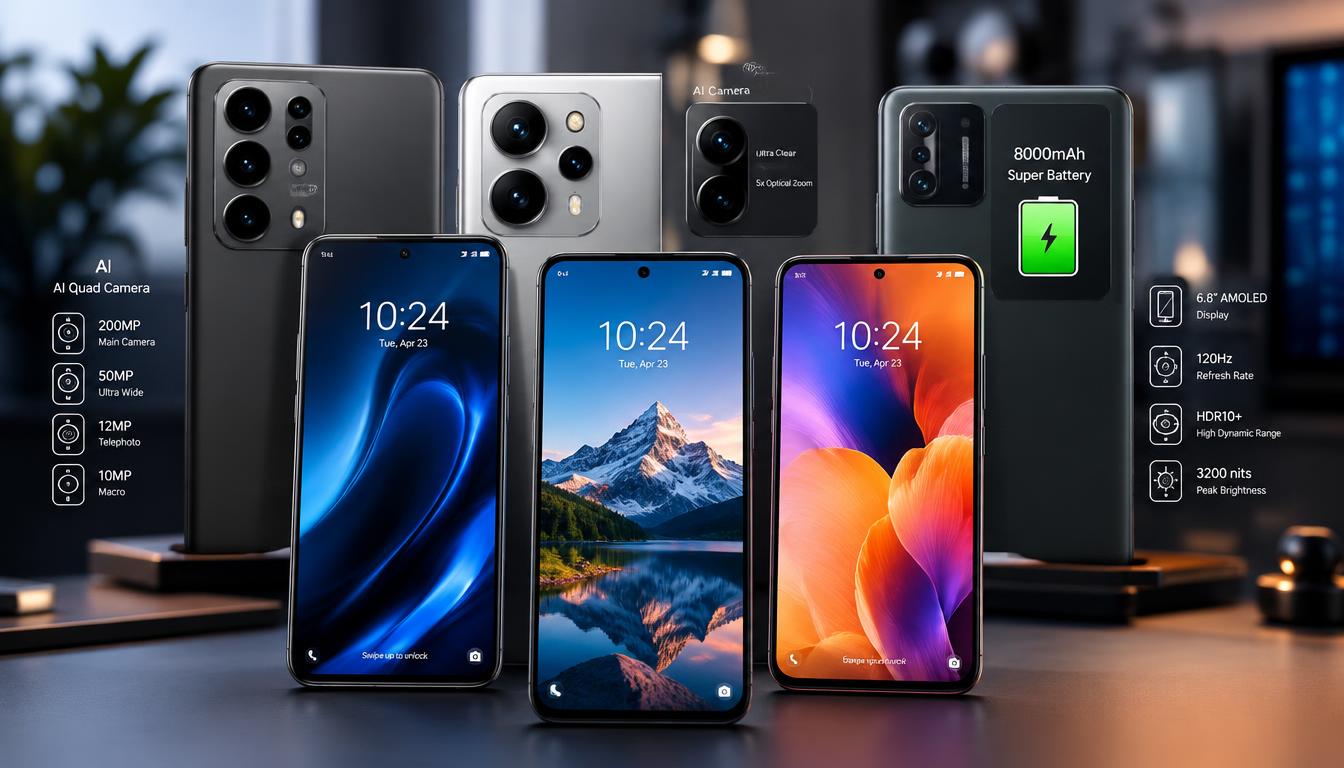
A premium phone is worth its price only when its standout features match the way we use it every day. Camera quality, battery life, display comfort, software support, and budget can point us toward very different choices. We’ll compare premium flagships, everyday phones, lower-cost models, and book-style foldables, so you can focus on features that matter in real life.
A high price does not guarantee a better fit. A camera-focused phone may suit someone who takes photos daily, while another buyer may value long support or a screen that fits one hand. Our comparisons focus on those needs, not a single winner for every person. Start with your routine, then weigh the benefits against the price and trade-offs.
Key Takeaways
- Match camera tools to the photos you take most.
- Check battery life and charging against your daily routine.
- Choose iOS or Android based on the devices you already use.
- Compare the software-support window before buying a phone to keep for years.
- Consider a book-style foldable only if you will use its open screen.
- Set a spending limit before comparing features.
Our aim is to help you find value without paying for features you rarely use. Set a spending limit and decide which one feature you would miss most before comparing models.
What should buyers prioritize before comparing phones?
Start with the tasks you do every day, not the longest feature list on the box. Your budget comes first, followed by operating system, camera needs, battery life, display, performance, and update support. Hands-on use can reveal trade-offs that a specification list cannot show.
Reviewers test more than numbers on a page. Expert Reviews has tested over 500 Android phones, judging displays, design, cameras, performance, battery life, and software. Its smartphone testing process includes display checks and controlled battery tests.
Set your budget first, then rank the features you use most. A spec sheet cannot show every daily trade-off.
The Verge reviewer uses each tested phone as a personal handset for at least one full week. Trusted Reviews uses each phone as its primary handset for at least four days and tests battery drain during video streaming. Those routines can expose issues that short demos miss.
Use this checklist before comparing a phone’s design or features:
- Budget: Set a firm maximum, including the storage level you need.
- Operating system: Choose iOS or Android based on your apps and devices.
- Telephoto need: Decide whether you often zoom in on distant subjects.
- Daily charging: Note where and when you can plug in.
- Time in use: Estimate how long you plan to keep the phone.
Camera needs vary from quick family photos to careful zoom shots. A telephoto camera uses a separate lens to capture distant subjects with more detail than digital zoom can keep.
Battery life also depends on your screen time, signal strength, and apps. A day spent streaming video can drain a phone faster than light messaging. A hands-on review that checks battery use under set conditions helps us compare phones more fairly.
Display size affects one-handed use, while refresh rate changes how smooth motion looks. Performance matters most when we run demanding games, edit video, or switch between many apps. For basic calls and browsing, a midrange phone may already feel quick.
Software support matters if you plan to keep a phone for several years. Check the promised update period and what kinds of updates it includes. Before buying, choose your top two priorities and one trade-off you can accept.
2. Best Smartphones with Premium Features for Every Buyer
The strongest premium picks in 2026 split into clear roles rather than one phone winning every category. For most Apple users, the iPhone 18 Pro Max is the best premium smartphone in 2026. Android power users may prefer the Galaxy S26 Ultra, while photography-first buyers should consider the Oppo Find X9 Ultra.
Our top 10 best phones in the world in 2026 are better understood as a shortlist for different needs, not a universal rank. The models below cover camera work, productivity, software choice, and a larger folding screen. Pick by the standout feature you will actually use.
| Model | Standout feature | Best fit | Main trade-off |
|---|---|---|---|
| Samsung Galaxy S26 Ultra | Built-in S Pen | Android power users | Many features to learn |
| iPhone 18 Pro Max | Three 48MP rear cameras | Apple users wanting a large screen | Large, heavy design |
| Google Pixel 11 Pro XL | Up to seven years of Android updates | Long-term Android users | Premium price |
| Oppo Find X9 Ultra | 200MP main camera | Photography-first buyers | Large camera hardware |
| Samsung Galaxy Z Fold 8 | 7.6-inch inner screen | Readers and multitaskers | Foldable design costs more |
The Samsung Galaxy S26 Ultra combines a 6.9-inch AMOLED screen, four rear cameras, and a built-in S Pen. The iPhone 18 Pro and Pro Max pair three 48MP rear cameras with a variable-aperture main camera.
The Google Pixel 11 Pro XL offers up to seven years of Android updates from launch. Oppo’s Find X9 Ultra pairs a 200MP main camera with 100W wired charging, while Samsung’s Z Fold 8 opens to a 7.6-inch inner screen.
These phones answer different searches for the best mobile phone in 2026. A camera specialist may put Oppo first, while someone invested in Apple devices may prefer the iPhone. The best Android choice also depends on whether you want Samsung’s tools or Google’s software.
Use the table to eliminate models whose standout feature does not solve a real need.
Which iPhone 18 Pro fits your needs?
Choose the iPhone 18 Pro if a smaller flagship matters more than the largest available screen. The Pro Max suits buyers who put a larger display and battery ahead of easy one-hand use. The $100 price gap buys more size, not a different rear camera count.
The iPhone 18 Pro starts at $1,199, while the iPhone 18 Pro Max starts at $1,299. Both use three 48MP rear cameras and a variable-aperture main camera. That aperture can change how much light reaches the sensor, giving creative users more control.
Choose the iPhone 18 Pro for a smaller flagship
The smaller Pro is the better fit if you want a premium iPhone that feels less imposing in a pocket or hand. Its camera system still includes the three rear cameras and adjustable aperture found on the larger model.
That shared camera setup helps make the choice less about losing a key creative tool. Instead, consider how often you view long documents, edit photos, or watch video on your phone. A smaller display can be easier to manage while walking or using one hand.
Choose the iPhone 18 Pro Max for a larger screen and battery
The Pro Max suits buyers who want more screen space and prioritize battery capacity. Its starting configuration includes 256GB of storage, and its price rose $100 from the previous year’s model. Those are meaningful changes for a family already considering a costly phone.
At 249 grams, the Pro Max is a heavy phone. That weight may feel tiring during long reading sessions or one-handed use, even if the large screen is appealing. Buyers should handle the size before choosing it.
More screen space helps when we read, watch video, or edit images, but it does not make every task easier. The larger model also takes more room in a pocket or small bag. Compare the Max’s added size and price with how often you actually use a large display.
What makes Galaxy S26 Ultra the Android flagship?
The Galaxy S26 Ultra is the Samsung choice for buyers who want the widest set of built-in tools. It combines a stylus, privacy controls, and flexible cameras in one Android flagship. The Ultra is the feature-packed choice, while the base Galaxy S26 is the lower-priced alternative.
Samsung lists the S26 Ultra at $1,300, and Amazon lists it at $1,200 in 2026. The phone has a Privacy Display that can limit what people nearby see. It also has a long-lasting battery, though it does not offer magnetic wireless charging.
Privacy and stylus features set it apart
The built-in S Pen gives us a direct way to write notes, mark up documents, and control some tasks. That makes the Ultra useful for people who often sketch or work on a phone screen.
Privacy Display can obscure part or all of the screen from nearby viewers. It may help on a bus or in a crowded waiting room, where shoulder-surfing is a concern. The feature is a specific tool, not a reason to ignore where we use sensitive information.
Camera flexibility comes with a bulky feature set
The rear camera system has a 200MP main camera, a 50MP ultrawide camera, and 10MP and 50MP telephoto cameras. Those lenses give us several ways to frame a scene, from wide views to zoomed subjects.
The S26 Ultra is built for buyers who want more control over camera and software features. The base Galaxy S26 costs less and may suit people who want a simpler, smaller Samsung phone. Its exact price and wired charging are covered in the everyday phone comparison.
Samsung’s feature-rich software may feel overwhelming if you want a simple interface. Extra tools can also take time to set up and learn. Skip its extra hardware if you will not use the S Pen, privacy controls, or multiple zoom cameras.
Is Pixel 11 the right Android for most people?
The Pixel 11 is the straightforward choice for buyers who want Google’s take on an everyday Android phone. It favors an easy daily experience, though its gaming performance does not match rival phones. Choose a different flagship if high-end gaming performance is a top priority.
Google Pixel software is a good fit for people who want a direct Android experience without a long list of extra tools. The Pixel 11 is listed at $899 at Amazon in 2026. Its everyday appeal matters more than raw gaming power for calls, photos, messaging, and browsing.
Pixel 11 suits buyers who want straightforward Android
The Pixel 11 suits buyers who want a capable phone for common tasks. It is less appealing to people who play demanding games often or expect top performance from every app. A phone can feel quick in daily use while still trailing rivals during heavy gaming.
For buyers who want Google’s simpler approach, that limit may not matter. Calls, maps, photos, and social apps do not ask for the same power as a demanding game. Think about your regular use, not only the most intense task you might try.
Pixel 11 Pro models add a premium option
The Pixel 11 Pro and Pixel 11 Pro XL are premium options for people willing to spend more. Both are listed at $1,299 at Best Buy in 2026. The known facts do not establish a specific feature difference between these two Pro models.
- Pixel 11: everyday Android use.
- Pixel 11 Pro: a premium Google option.
- Pixel 11 Pro XL: buyers who prefer a larger phone.
The Pro label does not automatically make a phone a better fit. Decide whether you want a premium Google phone or the more straightforward everyday model. Choose a different flagship if high-end gaming performance is a top priority.
Which premium phone has the strongest camera system?
Choose the Oppo Find X9 Ultra when camera flexibility matters more than price or a compact design. It is the photography-first pick, with a 200MP main camera, an 85mm zoom camera, and an ultrawide camera with a large sensor. Those tools favor deliberate shooting over simple point-and-shoot use.
The Samsung Galaxy S26 Ultra offers several zoom options, including 3x and 5x telephoto cameras. The iPhone 18 Pro has three 48MP rear cameras and a variable-aperture main camera, giving users flexible camera controls.
| Model | Camera strength | Limitation |
|---|---|---|
| Oppo Find X9 Ultra | 200MP main, 85mm zoom, large-sensor ultrawide | Large camera island and advanced modes |
| Galaxy S26 Ultra | 3x and 5x telephoto options | Many camera choices to manage |
| iPhone 18 Pro | Three 48MP cameras and variable aperture | No 200MP main camera |
Choose the Oppo Find X9 Ultra for photography-first use
The Oppo’s camera hardware suits buyers who like to frame scenes with different lenses. Its large-sensor ultrawide camera can help with broad views, while the 85mm zoom camera supports tighter framing. The phone also has a 7,050mAh battery and 100W wired charging.
That combination makes the Oppo a strong camera phone, but it may not suit everyone. A large camera island can make the device less comfortable to hold or slide into a pocket. Advanced modes can also slow down casual photos.
Compare zoom flexibility with everyday shooting
Samsung offers several zoom choices, while the iPhone emphasizes a flexible set of rear cameras and controls. A telephoto camera is useful when we shoot distant people, wildlife, or events. It matters less for close family photos or quick snapshots.
Camera quality also depends on how often you use each lens and how much editing you enjoy. More camera features do not guarantee better results for every person. Check that the lenses and shooting controls match the kinds of photos you take most.
Which phones recharge fastest?
The Galaxy S26 Ultra’s 60W wired charging and the iPhone 17’s 40W wired charging are useful reference points for buyers comparing recharge speed. Wired and wireless ratings differ, and real charging results depend on the phone, charger, and conditions. A wattage figure alone does not show how much charge a phone gains in a set time.
In May 2026, the Galaxy S26 Ultra received a lab award for fastest wired charging. It supports 25W wireless charging. The iPhone 17 supports 25W MagSafe wireless charging, while the iPhone 18 Pro Max gained 77% battery charge in 30 minutes of fast charging.
Those figures show why we should compare charging methods separately. A fast cable can help when we need a quick top-up near an outlet. Wireless charging can be easier at a desk or bedside, though its speed uses a different rating.
Use this checklist before buying a phone or charger:
- Confirm the charging standard supported by the phone.
- Check whether the needed power adapter comes in the box.
- Consider whether you rely on wireless charging.
- Compare a timed charge result, not wattage alone.
A charger’s power rating does not mean the phone will draw that full amount at every stage. Charging speed can slow as the battery fills, and heat can affect results. The phone, cable, adapter, and room conditions all matter.
The iPhone 18 Pro Max’s 77% result gives a timed comparison, while power ratings show supported charging methods. Use both kinds of detail when comparing a phone with the charger you already own. Confirm the charging method you use most before choosing between a faster cable and magnetic convenience.
What display features matter most in daily use?
A 120Hz refresh rate makes scrolling and animation look smoother, but size and resolution determine how the screen feels to use. Screen size shapes comfort, while resolution affects how sharp text and images appear. A higher refresh rate improves motion, not the detail in a picture.
The Galaxy S26 Ultra has a 6.9-inch AMOLED display with 3,120 × 1,440 resolution and a 1-120Hz adaptive refresh rate. Adaptive refresh rate is a display feature that changes how often the screen refreshes to balance smooth motion with power use.
| Model | Display size and panel | Resolution | Refresh rate |
|---|---|---|---|
| Galaxy S26 Ultra | 6.9-inch AMOLED | 3,120 × 1,440 | 1-120Hz adaptive |
| iPhone 17 | 6.3-inch OLED | 2,622 × 1,206 | 120Hz |
| Google Pixel 10 | 6.3-inch display | 1080p | 120Hz |
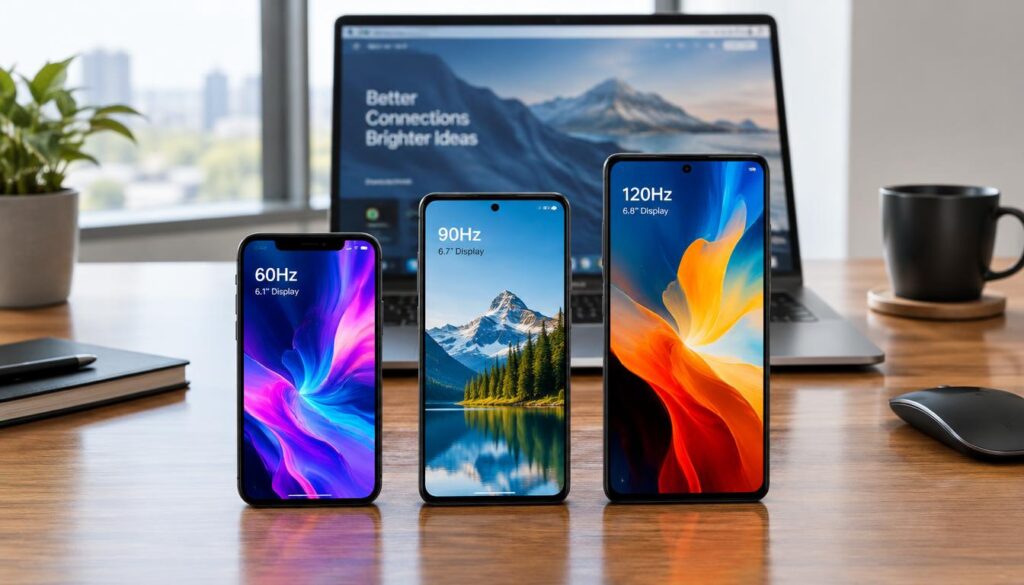
The iPhone 17 has a 6.3-inch OLED display with 2,622 × 1,206 resolution and a 120Hz refresh rate. The Pixel 10 also has a 6.3-inch screen, with 1080p resolution and a 120Hz refresh rate.
Google’s Pixel 10 sets its refresh rate to 60Hz by default, according to a report on its Smooth Display setting. Users can enable 120Hz in settings, though that may use more battery power.
The Samsung Privacy Display can obscure part or all of the screen from nearby viewers. It is a distinct privacy feature, not a replacement for a privacy screen protector in every situation. Buyers should still consider where they view sensitive content.
Big screens can help with maps, reading, and video, but they may feel awkward in one hand. Resolution and panel type also affect how comfortable a screen looks during long use. Choose the screen that is comfortable to read and hold, rather than the largest specification on a product page.
How do the best all-round phones compare?
A good everyday phone balances a comfortable display, dependable battery capacity, and a price that fits the budget. The Galaxy S26 and Pixel 10 offer different strengths around the $700 range. Compare the full price and buying terms, not just a discount label.
Amazon lists the Samsung Galaxy S26 at $700 in 2026, and the phone supports 25W wired charging. The Google Pixel 10 pairs a 6.3-inch, 1080p display with a 4,970mAh battery. Amazon lists it at $712, while Google lists it at $799.
The Galaxy S26 may appeal to buyers who want a lower listed price and wired charging. The Pixel 10 stands out for its display refresh rate and battery capacity. A larger battery number alone does not tell us how long a phone lasts under our own use.
Best mobile phone deals in 2026 depend on the model, storage, seller, and carrier activation terms. A carrier offer may require a plan or activation, while another seller may list the phone without those conditions. Compare the total amount due before choosing.
Storage can change the price, and seller terms can change what a discount means. Carrier deals may also tie savings to a specific service plan. Compare the amount due and the activation terms, not just the largest discount label.
Is iPhone 17 the better-value iPhone?
The iPhone 17 is the value choice for buyers who want a current iPhone without paying Pro-model prices. Its main camera trade-off is the lack of a telephoto camera. Choose a Pro model if optical zoom is important to the photos you take.
Listed prices differ by seller and offer terms. T-Mobile lists the phone at $829.99, The Verge lists it at $799 from Apple with 256GB, and CNET lists $929 or $899 with carrier activation.
What the standard iPhone 17 includes
The iPhone 17 offers a current iOS experience without the full price of an iPhone Pro. Its ultrawide camera has a 48MP sensor, up from the iPhone 16’s 12MP ultrawide camera. That upgrade can help when we want a wider view.
In a three-hour streaming test, the iPhone 17 battery fell from 100% to 89%. The iPhone 16 fell to 86% in the same test. This controlled comparison helps show a difference between those phones, but it cannot predict one person’s battery life.
When the missing telephoto camera matters
The iPhone 17 has no telephoto camera, so distant subjects rely on digital zoom. That may be fine for everyday photos, especially if we mostly shoot people and places nearby. It matters more at concerts, sports games, or when we cannot move closer.
Keep the listed prices separate because they reflect different sellers and activation terms. Storage also matters when comparing offers, since the Apple listing includes 256GB. Choose a Pro model if optical zoom is important to the photos you take.
What is the best budget smartphone in 2026?
The Pixel 10a is a strong budget choice for buyers who want a current Android phone near $500. It is the best budget smartphone in 2026 for people seeking a balanced Android phone at that price. Compare its listed configuration and support with older A-series phones before buying.
T-Mobile lists the Google Pixel 10a at $499.99 with 128GB of storage, while Best Buy lists it at $499 in 2026. TechRadar describes a 6.3-inch 120Hz display, a 5,100mAh battery, and seven years of major Android OS and security updates.
These are the main details to compare:
- Listed price and storage: $499.99 at T-Mobile for 128GB, or $499 at Best Buy.
- Display: 6.3 inches with a 120Hz refresh rate.
- Battery: 5,100mAh capacity.
- Software support: seven years of major Android OS and security updates.
The Pixel 10a is the strongest budget all-rounder
The Pixel 10a suits buyers who want a current Android phone, a smooth screen, and long support near $500. Its listed price is still high enough that we should compare the exact storage and seller terms, not just the model name.
Battery capacity is not the same as measured battery life. Screen use, signal strength, and apps all affect how long a phone lasts between charges. The Pixel 10a’s capacity gives us a useful comparison point, but it does not guarantee a set number of hours.
Consider the Pixel 9a’s measured strengths
The Pixel 9a is a previous-generation reference, not a stand-in for Pixel 10a test results. In its standard battery test, it lasted more than 34 hours, and its display exceeded 1,800 nits in brightness testing. Those measured strengths can make an older model appealing if its condition and support suit us.
A small price gap may make last year’s phone worth considering, but only if it still has enough support. Verify the exact storage configuration and update commitment before comparing older and newer A-series models.
Which foldable phone fits your routine?
A book-style foldable makes the most sense when the inner screen will replace frequent tablet use. The larger open screen can help with reading, multitasking, video, and gaming. Its value depends on how often you unfold it.
Samsung lists the Galaxy Z Fold 8 at $1,900, while T-Mobile lists it at $1,899.99 in 2026. Its outer display measures 5.5 inches and its inner display measures 7.6 inches.
| Model | Inner-screen size | Battery or durability detail | Main compromise |
|---|---|---|---|
| Galaxy Z Fold 8 | 7.6 inches | Nearly 17 hours in PCMag battery test | No telephoto lens or built-in Qi2 magnets |
| Google Pixel 10 Pro Fold | 8 inches | IP68 water and dust resistance | Higher price than many slab phones |
| Galaxy Z Fold 7 | Not specified | Not specified | Inner-screen size and battery detail not specified |
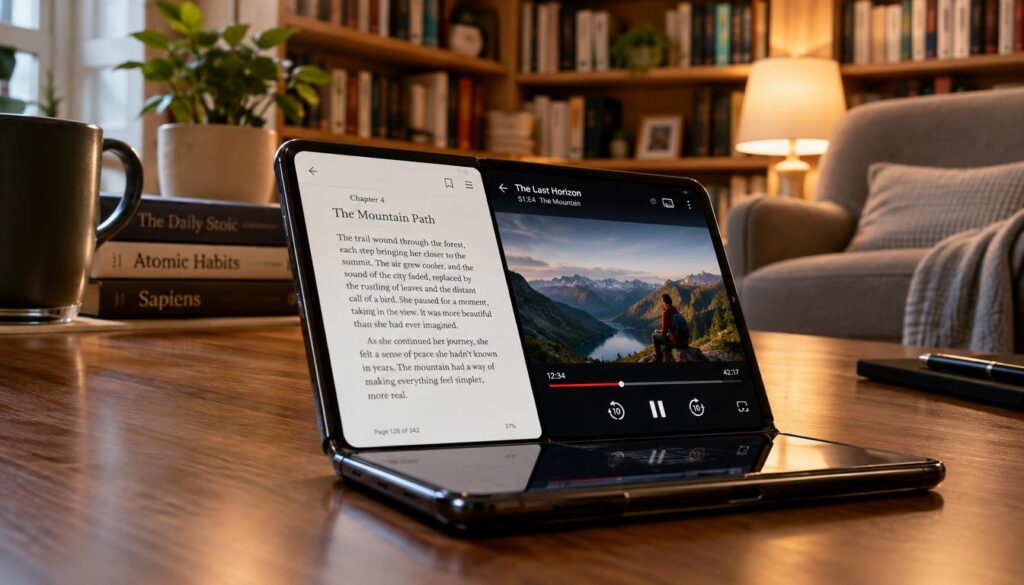
Book-style foldables suit larger-screen work and media
An unfolded screen can make two apps easier to view at once. It also gives video and games more room than a narrow phone screen. People who read long pages may find the larger display useful during commutes or breaks.
The Google Pixel 10 Pro Fold has an 8-inch inner screen, Qi2 magnets, and IP68 water and dust resistance. That durability rating means the phone is designed to resist dust and water under defined conditions, not every kind of damage.
Check the camera and charging compromises
The Galaxy Z Fold 8 has no telephoto lens or built-in Qi2 magnets. Those omissions matter to buyers who rely on optical zoom or magnetic accessories, but they may not affect people who mostly read and watch video.
The Fold 8 lasted nearly 17 hours in a PCMag battery test. A test result offers a comparison, not a guarantee for every routine. Try the folded shape in hand before paying a premium for a design that may stay closed most of the day.
What lower-cost phones keep useful premium features?
Buyers can spend far less than flagship prices and still find useful support or charging features. The right lower-cost phone depends on which feature matters most. A low listed price alone does not establish camera quality, speed, or long-term suitability.
The Samsung Galaxy A17 5G is listed at $199.99 at T-Mobile in 2026 and has a six-year support commitment. Amazon lists the Samsung Galaxy A25 5G at $319.99, but it lacks wireless charging.
Samsung’s lower-priced Galaxy A models
The Galaxy A17 5G stands out for its six-year support commitment, which may suit buyers who want to keep a phone longer. The Galaxy A25 5G costs more in its listed offer and may fit someone who wants that model, but it has no wireless charging.
Those details do not tell us how every app or game will run. A support promise also does not replace checking whether the phone has the storage and features we need. Match the model to a clear use case.
Apple and Motorola alternatives
The iPhone 17e is listed at $599.99 at T-Mobile in 2026. It has MagSafe charging and 256GB of base storage, which may suit an Apple user who wants those conveniences without a Pro model.
Amazon lists the Motorola Moto G Play (2026) at $171.72. That makes it a lower-cost listed option, but price alone does not show camera results, speed, or how well it will suit a buyer over time.
Compare support, charging, storage, and the seller offer before deciding. A phone with a low price can still be the wrong choice if it lacks a feature we use daily. Match each lower-cost model to a must-have feature instead of assuming every budget phone offers the same experience.
How long will software support keep a phone current?
A longer software-support window can make a phone useful for more years, but buyers should check what the promise covers. Seven years is a stated commitment for the Google Pixel 11 Pro XL, while the Galaxy A17 5G has a six-year commitment. Update promises may cover different kinds of updates.
The Galaxy S26 Ultra has a seven-year upgrade commitment in its listed specifications. The Pixel 11 Pro XL can receive up to seven years of Android updates from launch. Compare the exact terms, since operating-system upgrades and security fixes are not always the same promise.
Check these details when comparing support:
- Years of operating-system updates.
- Years of security updates.
- When the support period starts.
- Whether the price makes longer use worthwhile.
The start date matters because a phone bought long after launch may have less support time ahead. Security updates can help protect a device, while operating-system updates can bring new software features. Buyers should read both parts rather than treating them as one promise.
Count the years from the stated start point, and separate security fixes from operating-system upgrades. Similar numbers can describe different support.
A long commitment may make a higher-cost phone a better long-term fit, but only if we want to keep it. Battery wear, damage, and changing needs can still lead us to replace a device sooner. Read the operating-system and security-update terms separately before treating two support promises as equal.
Which premium phones suit gaming and demanding workloads?
Choose a top-tier flagship when demanding games or creative workloads are a regular part of your day. The Galaxy S26 Ultra and iPhone 18 Pro family are premium options, with flagship processors and substantial memory. A fast specification does not guarantee the same sustained performance in every workload.
The Galaxy S26 Ultra uses a Snapdragon 8 Elite Gen 5 for Galaxy processor and has 12GB or 16GB of RAM. The iPhone 18 Pro and Pro Max use the A20 Pro chip. Both families target buyers who want more power for demanding apps.
Choose a powerful flagship for sustained heavy use
Strong processors help run demanding games, edit video, and switch between many apps. RAM, or short-term working memory, helps keep active apps ready while we move between tasks. More memory can help heavy multitasking, but it does not make every app faster.
Creative work can place a steady load on a phone, especially when editing large files or exporting video. Gaming can also make a phone warm, and performance may change during long sessions. A top chip is a useful starting point, not a promise of constant peak speed.
Consider the limits of gaming-focused comparisons
The Pixel 11 is less suitable for buyers who prioritize gaming performance that matches rival phones. Its everyday appeal remains stronger for common tasks, but frequent players should compare how their games run on the phones they are considering.
Messaging, browsing, and sharing photos do not require a gaming-first flagship. Paying for high-end performance makes sense when we use apps that need it, not simply because a phone has a top processor. Pay for extra processing power only when your regular apps and games can use it.
Conclusion
The best choice is the phone whose standout feature solves a problem you actually have. Choose the iPhone 18 Pro Max for a premium iOS experience, or the Galaxy S26 Ultra for a feature-packed Android flagship.
The Pixel 10a makes more sense when value matters more than top-tier performance. Before ordering, check the preferred model’s configuration, seller terms, and software-support window. Confirm the storage configuration and support terms, then buy the model that fits your budget and daily use.