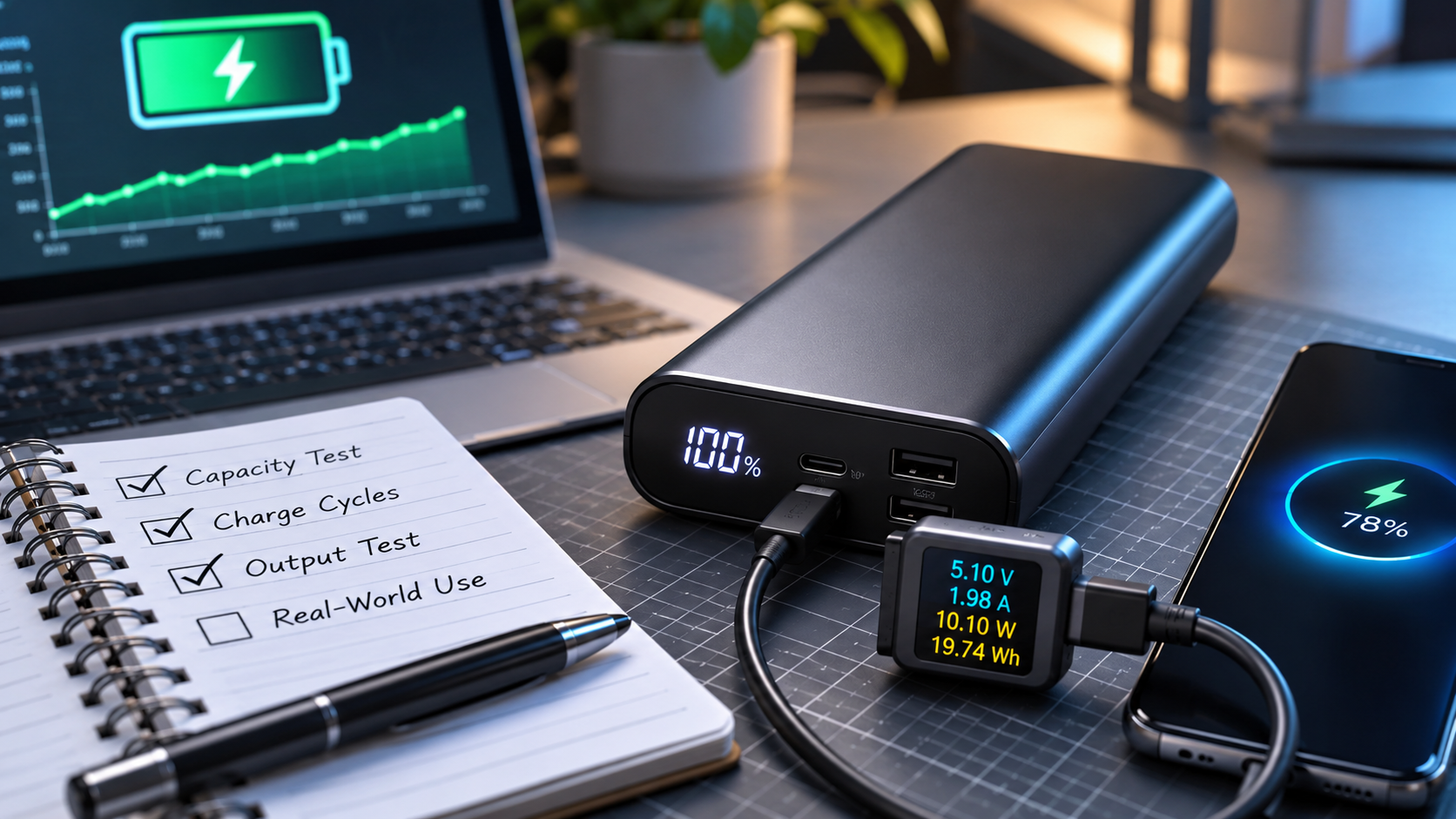
Power Bank Capacity Testing is an essential aspect of understanding how portable chargers perform under various conditions. With our increasingly mobile lifestyles, ensuring that our devices are adequately powered is crucial. This testing not only measures the actual capacity but also highlights the vital factors that influence performance and longevity.
In this discussion, we will explore the different methods for assessing power bank capacity, the impact of environmental factors and battery chemistry, and the importance of accurate testing for both consumers and manufacturers. By diving into industry standards, software aids, and common misconceptions, we aim to provide a comprehensive overview of this crucial topic in the world of portable power.
Power Bank Capacity Assessment Techniques
To effectively evaluate the capacity of power banks, various assessment techniques are employed. These methods help users determine the actual performance and reliability of their portable charging devices. Understanding the strengths and weaknesses of each technique is essential for making informed decisions regarding power bank purchases and usage.
There are several methods utilized for measuring power bank capacity, including direct discharge testing, load testing, and analytical testing. Each method has its distinct advantages and disadvantages, influencing their appropriateness in different scenarios.
Direct Discharge Testing
Direct discharge testing involves connecting the power bank to a known load and measuring the output until the power bank is depleted. This method is straightforward and provides a clear indication of the capacity based on the voltage and current supplied over time.
Advantages:
– Simple and easy to perform with basic equipment.
– Provides real-world data reflecting actual usage conditions.
Disadvantages:
– Results can vary based on the load used.
– Does not account for efficiency loss during discharge.
Common tools for this method include basic multimeters and discharge testers, which measure voltage and current in real-time.
Load Testing
Load testing assesses how well a power bank performs under various load conditions, often at different rates of discharge. This technique simulates actual usage scenarios by applying varying levels of resistance.
Advantages:
– Offers insights into how the power bank behaves under different loads.
– Helps identify performance inconsistencies that may not be apparent under a constant load.
Disadvantages:
– Requires specialized equipment to simulate different loads, which can be costly.
– More complex setup compared to direct discharge testing.
Tools used in load testing often include programmable electronic loads that can apply diverse conditions to the power bank.
Analytical Testing
Analytical testing involves using sophisticated equipment to assess the power bank’s internal components and their efficiency. This includes techniques like impedance spectroscopy and thermal imaging.
Advantages:
– Provides in-depth analysis of characteristics like internal resistance and thermal performance.
– Helps in identifying potential safety issues or inefficiencies.
Disadvantages:
– Generally requires expensive, specialized equipment and expertise.
– Not practical for everyday users or quick assessments.
Examples of tools used in analytical testing include oscilloscopes for waveform analysis and thermal cameras for evaluating heat distribution.
By employing these methods, users can gain a comprehensive understanding of their power bank’s capacity and performance, ensuring they make well-informed choices when selecting portable chargers.
Factors Influencing Power Bank Capacity
The capacity of a power bank is not merely a reflection of its advertised specs; various factors play a significant role in determining how effectively it can store and deliver power. Understanding these factors can help users make informed decisions about which power bank best suits their needs.
One of the primary aspects impacting power bank capacity is the battery chemistry used in its construction. The type of batteries can greatly influence how much energy the power bank can hold and how efficiently it discharges that energy. Additionally, environmental conditions, such as temperature and humidity, also play critical roles in the performance and longevity of these devices. Below are several key factors that affect power bank capacity.
Key Factors Impacting Power Bank Capacity
Understanding the following factors can provide insights into how they contribute to the overall capacity of power banks:
- Battery Chemistry: The type of battery chemistry, such as Lithium-ion or Lithium Polymer, affects energy density and discharge rates. Lithium-ion batteries typically offer higher capacity and efficiency compared to other types.
- Temperature: Extreme temperatures can reduce a power bank’s efficiency. High temperatures can lead to thermal runaway, while low temperatures can cause increased internal resistance, both diminishing overall performance.
- Age of the Battery: Over time, the chemical reactions within batteries degrade their capacity. Older batteries tend to hold less charge compared to newer ones, impacting performance during usage.
- Usage Patterns: How frequently and how intensively a power bank is used can affect its longevity and capacity. Regularly discharging and charging can lead to faster deterioration of capacity.
- Quality of Components: The materials and technology used in the manufacturing process directly influence both capacity and reliability. Higher-quality components generally yield better performance.
Environmental conditions have a notable influence on power bank performance. For instance, exposure to high heat can not only reduce the effective capacity of the battery but can also shorten its lifespan significantly. On the other hand, very low temperatures can lead to increased resistance within the cells, reducing their ability to deliver power efficiently, sometimes by as much as 30% in extreme cases.
The chemistry of the battery also plays a crucial role in overall capacity. Lithium-ion batteries are favored for their higher energy density, meaning they can store more energy in a smaller size. Furthermore, the cycle life of these batteries—typically around 500 to 1000 charge cycles—can greatly impact how their capacity degrades over time.
In summary, various factors such as battery chemistry, environmental conditions, and the age of the battery can significantly affect the capacity and performance of power banks. Understanding these influences can empower users to choose and maintain their power banks more effectively.
Importance of Accurate Capacity Testing
Accurate capacity testing of power banks is vital for both consumers and manufacturers. It ensures that the products meet expectations in delivering the specified energy storage and usage, which in turn affects user experience and product reliability. For consumers, it guarantees that they receive a product that performs as advertised, while for manufacturers, it upholds their reputation and fosters trust in their brand.
Inaccurate capacity testing can lead to significant consumer issues, such as devices running out of battery unexpectedly or failing to charge devices adequately. One notable incident occurred with a popular brand of power banks that advertised a capacity of 10,000mAh but, upon testing, were found to have a real capacity of only 6,500mAh. This discrepancy left users frustrated and unable to rely on their power banks during critical moments, such as while traveling or during power outages. Such experiences not only diminish customer satisfaction but can also lead to negative reviews and a long-lasting impact on brand reputation.
Consumer Satisfaction Enhancement
Proper capacity evaluation plays a crucial role in enhancing customer satisfaction. Consumers are more likely to trust and recommend products that meet their expectations based on accurate specifications. When power banks are accurately tested, it offers several benefits:
- Confidence in Purchase: Knowing that the power bank has been accurately tested allows consumers to feel confident in their purchases, reducing the chances of buyer’s remorse.
- Reliable Performance: Accurate capacity ensures that the power bank will deliver consistent performance, which is particularly important for users who rely on them for charging devices on the go.
- Brand Loyalty: Satisfied customers are more likely to become repeat buyers and advocates for the brand, promoting it through word-of-mouth and positive reviews.
- Reduced Returns: Accurate capacity testing minimizes the likelihood of returns and exchanges, ultimately saving manufacturers time and resources and improving the overall customer experience.
“Accurate capacity testing is not just about numbers; it’s about delivering on promises and building trust with consumers.”
Industry Standards for Power Bank Capacity Testing
Power bank capacity testing is guided by various industry standards that ensure consistency, safety, and reliability in portable charging devices. These standards help manufacturers and consumers understand the performance and efficiency of power banks, enabling informed purchasing decisions. As the market for power banks continues to grow, adherence to these standards becomes increasingly essential.
One of the key standards governing power bank capacity testing is the IEC 62133, which Artikels safety requirements for batteries used in portable applications. This standard covers the testing of battery cells and packs to prevent hazards such as overheating, leakage, or explosions. Another important standard is the USB Power Delivery (USB PD) specification, which defines how power is delivered via USB connections, including voltage and current levels, ensuring compatibility across devices.
Comparison of International Standards
Various international standards exist, and understanding their nuances is crucial for manufacturers. The primary standards include:
- IEC 62133: Primarily focuses on battery safety but does not provide specific guidance on capacity measurement methods.
- ANSI C18.2M: This American National Standards Institute standard provides guidelines for performance testing of portable rechargeable batteries, including discharge rates to evaluate effective capacity.
- UN 38.3: This standard governs the transportation of lithium batteries, covering testing for safety during shipping, which indirectly impacts manufacturers’ production practices.
The implications of these standards can vary significantly. For instance, while IEC 62133 emphasizes safety, it does not address efficiency directly, potentially leading to discrepancies in reported capacities. In contrast, ANSI C18.2M offers a more thorough approach to performance, aligning closely with consumer expectations for battery life and usability.
Manufacturers ensure compliance with these standards through rigorous testing protocols and certifications. Many utilize third-party testing labs to validate their products against these standards, conducting tests that measure both the nominal and effective capacity under specified conditions. This not only promotes safety but also builds consumer trust and enhances market competitiveness.
“Compliance with established standards is essential for manufacturers to guarantee product quality and consumer safety.”
In addition to safety testing, manufacturers often employ quality management systems, such as ISO 9001, to ensure consistent production methods. This systematic approach helps to mitigate risks associated with manufacturing defects and enhances overall product reliability. By adhering to these industry standards, power bank manufacturers can confidently market their products as safe and capable, thereby fostering trust within the consumer market.
The Role of Software in Capacity Testing
The role of software tools in capacity testing for power banks is crucial as they facilitate the monitoring, analysis, and evaluation of battery performance. These tools not only ensure that power banks meet their advertised specifications but also provide valuable insights into their efficiency and longevity. The integration of software with hardware testing equipment enables engineers to gather real-time data, analyze it effectively, and make informed design decisions.
Software tools assist in the testing and evaluation of power bank capacity by offering various functionalities such as logging charge cycles, measuring discharge rates, and assessing overall battery health. These applications can analyze performance metrics, detect anomalies, and help in creating detailed reports that highlight areas for improvement. For instance, tools like BatteryMon and BatteryCare are noteworthy examples that enable users to monitor battery performance metrics such as voltage, capacity, and health status over time.
Software Examples for Analyzing Battery Performance
The following software applications are instrumental in evaluating battery capacity and performance:
- BatteryMon: This software is designed for monitoring the performance of battery packs in real-time. It provides detailed graphs and metrics that help users visualize battery behavior during charge and discharge cycles.
- BatteryCare: This application focuses on laptop batteries but can also be useful for power banks. It tracks battery wear level and offers maintenance tips to prolong battery life.
- Ansmann Battery Tester: This tool is ideal for professional testing. It provides precise measurements of capacity and internal resistance, helping manufacturers to evaluate their products thoroughly.
- Smart Battery Workshop: This software allows users to analyze battery data, including voltage, current, and temperature, providing a comprehensive overview of performance under different conditions.
The data generated by these software tools plays a significant role in influencing design improvements for power banks. By analyzing performance metrics, designers can identify trends in battery degradation, pinpoint inefficiencies in energy usage, and make informed decisions on material selection and circuit design. The insights gained from software analysis can also lead to enhancements in thermal management and charging algorithms, resulting in safer and more reliable products.
“The integration of software tools in capacity testing allows for precise measurement and analysis, ultimately leading to improved battery designs and enhanced consumer satisfaction.”
Common Misconceptions About Power Bank Capacity
When it comes to power banks, many consumers harbor misconceptions that can lead to poor purchasing decisions. Understanding these myths is vital for selecting a power bank that truly meets your needs. Below are some prevalent misconceptions that often circulate among users, along with factual information to set the record straight.
Misconceptions About Power Bank Capacity
Many consumers mistakenly believe that the capacity of a power bank directly correlates with its performance and usability. Misunderstandings about mAh ratings and charging efficiency can significantly impact what someone chooses to buy. Here are some common misconceptions:
- Higher mAh Means Faster Charging: Many people think that a higher milliamp hour (mAh) rating will also translate to faster charging speeds. In reality, mAh indicates capacity, not speed; the charging speed is determined by the output current and voltage of the power bank.
- All Power Banks Are Created Equal: Some consumers believe that all power banks with the same mAh rating will perform identically. However, differences in quality, brand, and internal circuitry can lead to significant variations in real-world performance and efficiency.
- Power Bank Capacity Is Fully Utilized: A common myth is that the entire capacity of a power bank is usable. In fact, due to energy loss during the conversion process and inefficiencies, users typically only receive about 60-70% of the rated capacity when charging devices.
- Only One Charge Is Possible: Many users assume that a power bank with a lower mAh rating can only charge their devices once. Depending on the device’s battery size, a power bank can often provide multiple charges, especially for smaller devices like smartphones and earbuds.
It’s crucial to recognize how misinformation can affect purchasing decisions. Consumers may overlook quality power banks that could meet their needs due to misleading assumptions. Being informed helps in selecting a product that offers genuine value, ensuring that you get the performance and reliability you deserve in your power bank.
The Future of Power Bank Technology
As technology continues to evolve, power banks are no exception. The increasing demand for portable charging solutions is driving innovation in power bank technology, with a focus on improving capacity, efficiency, and user experience. This section explores the emerging trends and advancements that are shaping the future of power bank technology and capacity testing standards.
Advancements in battery technology play a pivotal role in redefining capacity testing standards. New materials, such as solid-state batteries, are emerging as potential game-changers in the industry. These batteries offer higher energy densities, longer lifespans, and improved safety compared to traditional lithium-ion batteries. This shift will necessitate new testing protocols that accurately measure real-world performance, taking into account rapid charging capabilities, discharge rates, and thermal management.
Emerging Trends in Power Bank Technology
The power bank industry is witnessing several trends that are set to redefine user expectations and experiences. These trends include:
- Fast Charging Technologies: With the rise of fast charging standards like Quick Charge and Power Delivery, power banks are expected to adopt these technologies to enhance charging efficiency and reduce downtime.
- Wireless Charging Integration: As wireless charging becomes more prevalent, future power banks may incorporate this feature, allowing users to charge devices without the hassle of cords.
- Smart Power Management: Advanced power management systems will allow power banks to prioritize charging based on device needs, optimizing energy distribution and extending battery life.
- Eco-Friendly Materials: There is a growing trend towards sustainability, and future power banks may use recyclable or biodegradable materials, appealing to environmentally-conscious consumers.
- Compact Designs: With ongoing advancements in miniaturization, future power banks will likely become more compact and lightweight while still providing substantial power capacity.
Future innovations in power bank design are expected to focus heavily on user-centric features. Manufacturers are likely to integrate smart technology that provides real-time battery status updates via smartphone apps. This will allow users to monitor their power usage and make informed decisions about charging.
“The future of power banks will not only be about capacity but also about smarter, more convenient designs that enhance the user experience.”
Additionally, unique designs such as foldable or modular power banks may emerge, allowing users to customize their charging solutions according to their specific needs. For instance, a modular design could enable users to attach additional battery packs for increased capacity when required without compromising on portability during regular use.
As these trends unfold, power bank technology is anticipated to become more efficient, convenient, and aligned with the evolving lifestyles of consumers. This future not only prioritizes capacity but also emphasizes the overall user experience and sustainability, setting the stage for a new era in mobile charging solutions.
Practical Tips for Users on Capacity Testing
When it comes to ensuring that your power bank meets your charging needs, understanding its capacity is essential. Testing the capacity of a power bank can provide insights into its efficiency and reliability. By following some straightforward steps, consumers can verify their power bank’s performance and make informed purchasing decisions in the future.
Testing the capacity of a power bank at home doesn’t require advanced technical skills. Instead, with a few tools and a step-by-step approach, it can be easily accomplished. This not only helps in understanding the actual power bank performance but also aids in making comparisons between different models before a purchase.
Step-by-Step Guide to Conducting a Simple Capacity Test
To carry out a basic capacity test, you’ll need a USB power meter, a multimeter, or a simple device that can measure the power delivered. Here’s how to perform the test:
1. Gather Your Equipment: You will need a power bank, a USB power meter or multimeter, and a device to charge (like a smartphone or tablet).
2. Charge the Power Bank: Fully charge your power bank until the indicator lights show it’s at maximum capacity. This ensures a consistent starting point for the test.
3. Connect the Power Meter: Plug the power bank into the USB power meter, followed by connecting the charging device to the output of the power bank. If using a multimeter, make sure to connect it correctly to measure the output voltage and current.
4. Start Charging the Device: Begin charging your device and note the time it takes to reach full charge. Also, monitor the power meter to see how many milliampere-hours (mAh) are being delivered during the charging process.
5. Calculate the Capacity: The power meter should display the total mAh output. If you have used a multimeter, you can calculate the capacity by using the formula:
Capacity (mAh) = Current (A) × Time (h)
This will give you an estimate of the actual capacity your power bank can deliver.
6. Analyze the Results: Compare the calculated capacity to the rated capacity indicated on the power bank. A significant difference may suggest inefficiency or a defective unit.
Understanding the capacity ratings of power banks is crucial when making a purchase. Many manufacturers advertise high capacity figures, but actual performance can vary widely based on the design and components used.
Importance of Understanding Capacity Ratings
When shopping for a power bank, capacity ratings play a pivotal role in determining whether a product will meet your needs. Here’s what to consider:
– Rated vs. Real Capacity: Manufacturers often list the nominal capacity (in mAh) as a selling point. However, the real-world performance may be lower due to factors like energy loss during conversion and the quality of the battery cells.
– Compatibility with Devices: Knowing the capacity helps you understand how many times your power bank can charge a device. For instance, a 10,000mAh power bank can typically charge a smartphone with a 3,000mAh battery about three times, depending on efficiency.
– Expected Lifespan: Higher capacity batteries can provide more charge cycles before their performance diminishes. Familiarizing yourself with expected longevity based on capacity ratings can help you select a power bank that will last.
Being informed about these factors not only enhances your buying experience but also ensures that you choose a power bank that aligns with your charging requirements effectively.
Last Recap
In conclusion, understanding Power Bank Capacity Testing is fundamental for making informed decisions on power bank purchases. As technology evolves, so do the methods and standards for capacity testing, making it vital to stay updated. By debunking myths and exploring innovative trends, we can ensure that consumers are equipped with the knowledge needed for maximizing their power bank experience.
Questions Often Asked
What is power bank capacity?
Power bank capacity refers to the amount of energy stored in the power bank, usually measured in milliampere-hours (mAh), indicating how much power it can deliver to charge devices.
How do environmental conditions affect capacity?
Extreme temperatures can impact battery performance; high heat can reduce capacity, while cold temperatures may slow down charging speeds.
Can I trust the capacity ratings provided by manufacturers?
While many manufacturers provide accurate ratings, it’s essential to consider independent testing results as some might exaggerate their product capabilities.
What tools can I use for home capacity testing?
Simple tools like USB power meters can help you measure the output and determine the actual capacity of your power bank.
Why is it important to understand power bank capacity?
Understanding capacity helps consumers select the right power bank for their needs, ensuring they choose a reliable option that meets their charging requirements.