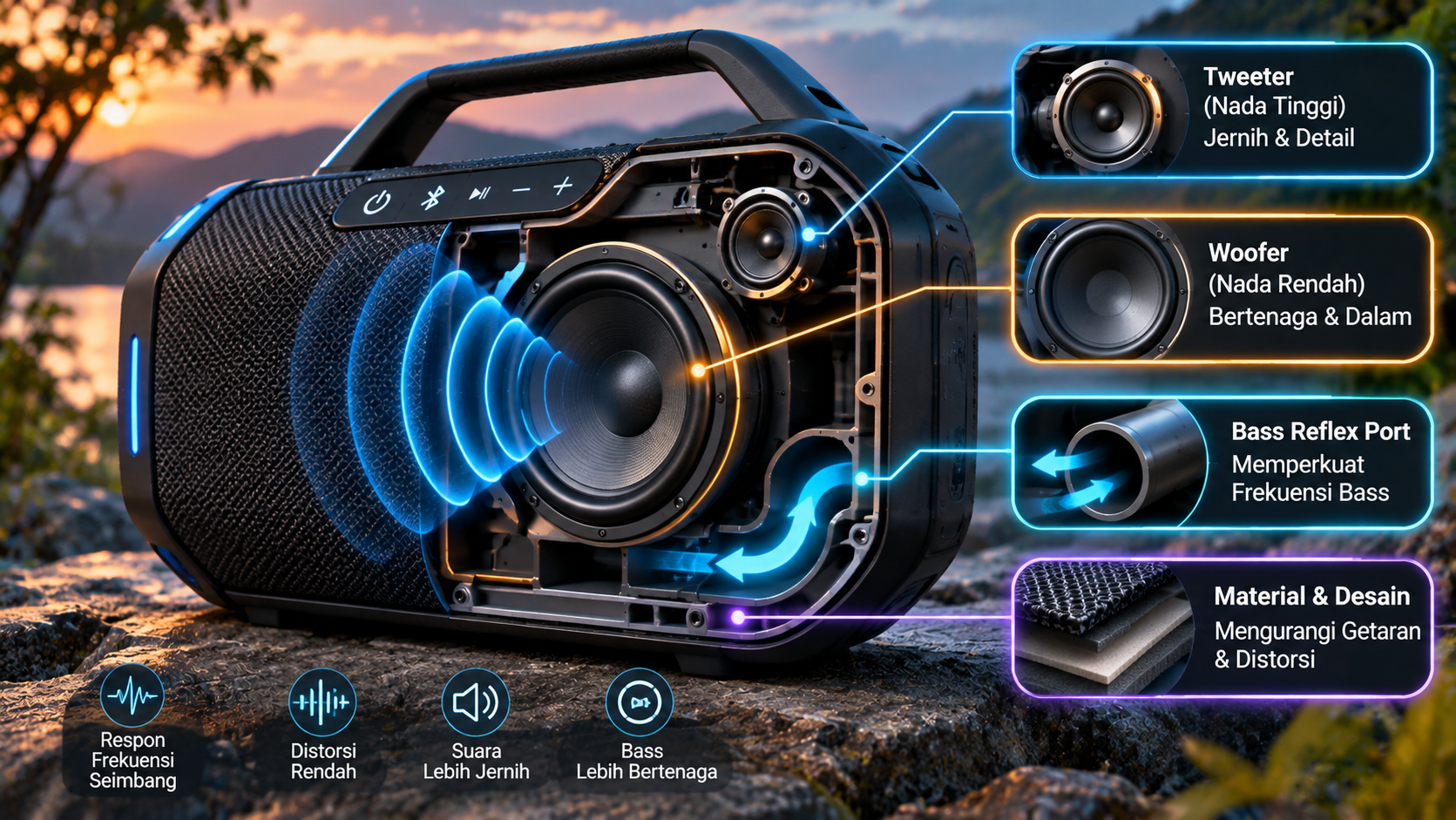
Portable Speaker Acoustic Engineering delves into the intricate world of sound design, where technology meets art to create audio experiences that captivate listeners. By understanding the core principles of acoustic engineering, we can appreciate how portable speakers produce rich, immersive sound despite their compact size.
This exploration covers the fundamental aspects of speaker design, including sound waves, frequency response, and material choices, while also highlighting innovations that enhance portability and sound quality. As we venture deeper, we’ll uncover the nuances of how different materials influence acoustic performance and discuss the challenges faced by users in various environments.
The fundamentals of acoustic engineering in portable speakers
Acoustic engineering is a vital field that bridges the gap between sound technology and practical applications, particularly in portable speakers. Understanding the principles of acoustic engineering is essential for creating devices that deliver high-quality audio in a compact form. Various factors affect sound reproduction, including design, materials, and the physics of sound waves, all of which play a crucial role in how portable speakers perform in diverse environments.
One of the foundational aspects of acoustic engineering is the behavior of sound waves. Sound waves are created by vibrating objects and propagate through air (or other mediums) as longitudinal waves. In the context of speaker design, these waves are generated by a diaphragm that moves back and forth, creating pressure variations that we perceive as sound. The frequency response of a speaker refers to its ability to reproduce different frequencies of sound accurately. A speaker with a wide frequency response can handle both low bass notes and high treble sounds, providing a richer listening experience. This is often quantified in hertz (Hz), where lower values represent bass frequencies and higher values correspond to treble. For instance, a portable speaker boasting a frequency range of 20 Hz to 20 kHz can reproduce the full spectrum of audible sound, which is critical for enjoying music and other audio content.
Role of resonance in sound quality
Resonance is another key principle in acoustic engineering that significantly influences sound quality. It occurs when an object vibrates at its natural frequency, amplifying specific sound waves while diminishing others. In portable speakers, resonance can either enhance or degrade sound quality, depending on the materials used and the overall design.
To optimize resonance in portable speakers, engineers often consider the following factors:
- Cabinet design: The shape and material of the speaker cabinet can greatly influence resonance. A well-designed cabinet minimizes unwanted resonances and enhances clarity.
- Speaker driver selection: Different drivers have varying levels of resonance. Choosing the right driver type can ensure a balanced sound output.
- Damping materials: Incorporating materials that absorb vibrations can help control resonance, leading to improved sound fidelity.
By carefully addressing these elements, acoustic engineers can create portable speakers that not only deliver powerful sound but also maintain clarity and detail across all listening environments. The intricate balance of sound waves, frequency response, and resonance is essential in achieving the desired auditory experience that consumers seek in portable audio devices.
Materials used in portable speaker construction
Portable speakers are designed to deliver high-quality audio while being lightweight and easy to transport. The choice of materials in their construction plays a critical role in determining both sound quality and durability. Various materials are utilized in the fabrication of portable speakers, and each contributes uniquely to the overall performance and environmental impact of the device.
Different materials exhibit distinct acoustic properties that affect sound performance. The choice of material can influence factors such as resonance, distortion, and overall durability of the speaker. Understanding these materials helps in identifying the best options for both sound fidelity and sustainability.
Common materials in portable speakers
Several materials are commonly used in the construction of portable speakers, each with specific acoustic properties and environmental considerations. The following list highlights four key materials:
- Plastic: Lightweight and cost-effective, plastic is often used for the outer casing of portable speakers. It provides adequate protection and can be molded into various shapes, but may resonate undesirably at certain frequencies.
- Wood: Renowned for its natural acoustic properties, wood can enhance sound quality by providing a warmer tone. However, it is heavier and can be more susceptible to environmental damage than synthetic materials.
- Aluminum: Durable and lightweight, aluminum is often used in premium portable speakers. It offers superior rigidity, which helps reduce distortion and improve sound clarity, while also being resistant to corrosion.
- Foam: Used in speaker cones and surrounds, foam can significantly improve sound quality by providing better damping and reducing distortion. Its acoustic performance, however, is heavily dependent on the density and type of foam used.
The choice of these materials not only affects the speaker’s sound performance but also its environmental impact. For instance, while plastic is widely used, its production and disposal contribute significantly to pollution. On the other hand, materials like wood from sustainable sources can reduce the ecological footprint of portable speakers. The industry is increasingly exploring biodegradable and recyclable alternatives to conventional materials, aiming to strike a balance between durability, sound quality, and sustainability.
“Choosing the right materials for portable speakers can lead to significant improvements in sound quality while also considering the impact on the environment.”
The impact of speaker design on sound output
The design of a portable speaker plays a crucial role in determining the quality and characteristics of its sound output. Each design element, from size to shape and material choice, can significantly influence the acoustics and overall listening experience. Understanding these factors can help consumers choose the right speaker for their needs and preferences.
Several design factors affect the acoustics of portable speakers, including the size and shape of the enclosure, which directly influences the resonance and sound projection. A larger speaker cabinet often provides better bass response due to its ability to move more air, while a smaller speaker may offer more portability but at the expense of lower frequencies. Likewise, the shape of the enclosure can alter sound dispersion; a cylindrical design may provide a more uniform sound field compared to a rectangular box. It’s essential for designers to balance portability with acoustic performance to create a versatile speaker that meets user expectations.
Driver placement and sound staging
Driver placement is another critical factor in achieving an optimal sound experience. Proper alignment and positioning of the drivers within the speaker enclosure directly correlate with sound staging and imaging. When drivers are strategically placed, the sound waves can interact harmoniously, creating a more immersive listening experience. For instance, having tweeters positioned at ear level can enhance high-frequency clarity and create a distinct soundstage.
Additionally, the distance between drivers affects the phase relationship and coherence of sound. When drivers are too close, it may lead to phase cancellation, while excessive distance can result in disjointed sound. Thus, careful attention to driver placement not only impacts the clarity of individual frequencies but also the overall spatial quality of sound.
Passive vs. active speaker designs
When evaluating portable speaker systems, it’s important to understand the differences between passive and active designs, as each has unique advantages and considerations. Below is a comparison table that highlights key aspects of both designs.
| Feature | Passive Speakers | Active Speakers |
|---|---|---|
| Power Source | Requires external amplifier | Built-in amplifier |
| Portability | Less portable due to additional components | More portable and convenient |
| Sound Quality | Can be superior with high-quality components | Consistent sound quality with optimized internal parts |
| Setup Complexity | More complex with additional setup required | Plug-and-play simplicity |
| Cost | Generally lower initial cost | Can be more expensive due to integrated technology |
In summary, understanding these differences allows users to make informed decisions based on their specific requirements and preferences. The choice between passive and active portable speakers can significantly affect the overall listening experience, particularly in terms of convenience, sound quality, and setup complexity.
Innovations in portable speaker technology
Recent advancements in portable speaker technology have significantly enhanced both sound quality and portability, making these devices increasingly popular among consumers. Innovations such as improved battery life, lightweight materials, and advanced audio processing techniques have contributed to a more satisfying listening experience, whether at home or on the go. As a result, users are now able to enjoy rich, immersive sound in a variety of settings, highlighting the importance of ongoing research and development in this field.
Digital signal processing (DSP) plays a crucial role in enhancing audio performance in modern portable speakers. By analyzing and manipulating audio signals, DSP technology allows for improved sound clarity and overall quality. This technology can automatically adjust equalization (EQ), balance audio levels, and reduce distortions, offering a tailored listening experience. Many portable speakers now incorporate DSP to optimize sound output based on the environment, such as outdoor settings or enclosed spaces, ensuring maximum enjoyment for the listener.
Innovative Features in Modern Portable Speakers
A variety of groundbreaking features have emerged in the latest portable speakers, reflecting the evolving needs of consumers. These innovations enhance usability and cater to diverse preferences. Notable examples include:
- Waterproofing: Many portable speakers now feature IP ratings, indicating their resistance to water and dust. This robustness allows users to take their speakers to the beach, pool parties, or hikes without fear of damage.
- Wireless Connectivity: Bluetooth technology has revolutionized how people connect their devices. Modern speakers support various wireless protocols, allowing for seamless pairing with smartphones, tablets, and laptops while eliminating the clutter of wires.
- Voice Assistants: Integration with virtual assistants like Amazon Alexa or Google Assistant allows users to control music playback and access information hands-free, enhancing convenience and interactivity.
- Multi-Room Audio: Some speakers now offer features that enable them to connect to other compatible devices within the same network, allowing users to synchronize audio across multiple rooms, creating an immersive sound experience throughout the home.
- Battery Life Improvements: Enhanced battery technology enables extended playtime between charges, with some speakers offering up to 20 hours of continuous playback, perfect for long outings or gatherings.
The convergence of these features into portable speaker designs showcases the industry’s commitment to innovation, making audio experiences more accessible, enjoyable, and user-friendly. Overall, the evolution of technology in portable speakers continues to push the boundaries of what is possible, catering to the diverse needs of audio enthusiasts everywhere.
The role of battery life in portable speaker performance
In today’s fast-paced world, portable speakers have become a staple for music lovers who value mobility without sacrificing sound quality. One of the key components that significantly influences a portable speaker’s performance is its battery life. The type of battery technology used not only dictates the duration a speaker can operate on a single charge but also impacts its sound quality and overall user experience.
Battery technology plays a crucial role in determining how well a portable speaker performs. Modern lithium-ion batteries are commonly used due to their high energy density and ability to hold a charge longer than older technologies. This allows manufacturers to design speakers that can deliver powerful sound output for extended periods, enhancing the listener’s experience. However, the quality of sound can also be affected by the battery; for instance, a battery that is nearing the end of its lifespan may not provide consistent power output, leading to audio distortion or a drop in volume.
Challenges in Balancing Sound Output and Battery Longevity
Manufacturers face a complex challenge in finding the right balance between sound output and battery longevity. Increasing the speaker’s volume or enhancing bass response requires more energy, which can drain the battery faster. Consequently, there are several factors that manufacturers must consider:
- Power Consumption of Components: High-quality drivers, amplifiers, and advanced digital signal processing circuits require significant power. Selecting components that optimize sound without consuming excess energy is essential.
- Design and Size Constraints: The physical space available for the battery can limit energy capacity. Compact designs may reduce battery life, making it difficult to achieve the desired performance.
- Heat Management: Excess heat generated by powerful components can lead to inefficiencies in battery usage and shorten lifespan. Effective thermal management solutions are critical to maintaining performance.
- User Settings and Features: Features like EQ settings, LED lights, and connectivity options can impact battery life. Balancing these with user expectations is a challenge for manufacturers.
In order to ensure optimal battery performance while maintaining sound quality, manufacturers and users alike employ various strategies.
Methods for Optimizing Battery Life in Portable Speakers
There are numerous approaches to enhance battery life in portable speakers, both through design considerations and user practices.
- Energy-Efficient Components: Utilizing energy-efficient amplifiers and drivers can significantly lower power consumption while still delivering high-quality sound.
- Battery Management Systems: Advanced battery management systems can monitor charge cycles, optimize charging rates, and enhance overall battery health and lifespan.
- User Control Over Features: Allowing users to customize features such as LED brightness or EQ settings can help manage battery usage based on individual preferences.
- Regular Software Updates: Manufacturers can improve battery management through software updates that optimize performance and power consumption.
Understanding these aspects of battery life in portable speakers can help both manufacturers and consumers make informed choices, ensuring a quality audio experience that lasts.
Acoustic challenges faced by portable speaker users
Portable speakers have become a popular choice for music lovers seeking convenience and portability. However, users often encounter various acoustic challenges that can detract from their listening experience. These issues vary depending on the environment where the speakers are used, and understanding these challenges is key to enhancing sound quality and performance.
One common acoustic issue faced by portable speaker users is sound distortion, which can occur in different environments such as open spaces, crowded areas, or enclosed rooms. Each scenario presents unique challenges; for instance, outdoor settings may lead to sound dispersion, while indoor spaces can cause echoes and reflections. Additionally, the speaker’s physical placement can significantly impact sound clarity and volume. To combat these issues, users can adopt several strategies to improve their listening experience.
Sound distortion and solutions
Sound distortion often arises from the interaction of sound waves with surrounding surfaces and objects. It can manifest as a muddy or unclear audio output, which diminishes the overall quality. Understanding the factors contributing to this problem can help users take corrective actions. The following points highlight potential solutions to mitigate sound distortion:
- Position speakers away from walls: Placing portable speakers too close to walls can cause sound waves to bounce, resulting in echoes and loss of clarity. Aim for at least a few feet distance from reflective surfaces.
- Use soft materials to dampen sound: Surrounding the speaker with soft furnishings or materials, such as cushions or blankets, can help absorb sound waves and reduce distortion.
- Adjust volume levels: Keeping the volume at moderate levels can prevent distortion that occurs when speakers push beyond their capabilities. Finding the right balance is essential.
- Experiment with speaker orientation: Some portable speakers are designed to project sound in specific directions. Adjusting the orientation can enhance the listening experience by directing sound towards the intended audience.
- Consider outdoor acoustics: When using portable speakers outdoors, be aware of wind and open space. Utilizing barriers like trees or walls can help reduce sound dispersion.
“Positioning and environment play a crucial role in achieving optimal sound quality from portable speakers.”
Understanding the acoustic challenges and implementing these strategies can significantly enhance the audio experience when using portable speakers. Whether you’re at a picnic, a beach party, or in a cozy living room, being mindful of these factors will lead to clearer, more enjoyable sound.
Future trends in portable speaker acoustic engineering
The acoustic engineering of portable speakers is experiencing a transformative phase, driven by advancements in technology and evolving consumer preferences. As audio technology continues to innovate, we can expect a variety of trends that will enhance the functionality, performance, and user experience of portable speakers. These developments will not only shape how we interact with sound but also redefine the standards of audio quality and accessibility.
Emerging trends in acoustic engineering include the integration of advanced materials, miniaturization of components, and enhancements in wireless technology. These changes promise to improve sound quality while maintaining portability. Additionally, the rise of smart technology is influencing how consumers enjoy and customize their audio experience.
Influence of artificial intelligence on sound customization
Artificial intelligence is set to revolutionize the way users interact with portable speakers. By leveraging AI, manufacturers can offer intelligent sound customization features that adapt to individual listening environments and preferences. For instance, speakers might use AI algorithms to analyze room acoustics and automatically adjust equalization settings for optimal sound output.
This intelligent sound customization can be further enhanced with machine learning capabilities, allowing speakers to learn a user’s preferences over time. Consequently, a user might find their device adapting not only to the type of music played but also to the time of day or the ambiance of the space.
The integration of AI into portable speakers signifies a shift towards personalized audio experiences, where each user can enjoy tailored soundscapes that resonate with their preferences.
Furthermore, AI-powered voice assistants are becoming standard features in many portable speakers. These assistants can provide users with intuitive controls while offering smart home integration, enabling voice commands to manage music, settings, and more.
Consumer preferences driving innovation
Consumer preferences are pivotal in shaping the innovations seen in portable speaker technology. As people increasingly prioritize convenience and versatility, manufacturers are responding with products that cater to these demands. Some of the key consumer-driven trends include:
- Durability and water resistance: With outdoor activities gaining popularity, consumers seek robust speakers that can withstand various elements.
- Battery life and efficiency: Longer battery life is a top priority, as users desire uninterrupted music playback during travels or events.
- Integration with streaming services: Seamless connectivity with popular music streaming platforms is essential for modern users who value instant access to their favorite playlists.
- Design and portability: Aesthetic appeal and lightweight design are crucial, as consumers prefer speakers that are not only functional but also stylish and easy to carry.
As these preferences evolve, manufacturers are compelled to innovate continually, leading to more advanced and user-friendly portable speakers. The focus on consumer satisfaction is driving research and development, ultimately leading to a more dynamic acoustic engineering landscape that prioritizes the user experience.
Closing Summary
In conclusion, the landscape of Portable Speaker Acoustic Engineering is ever-evolving, driven by technological advancements and consumer preferences. As we look to the future, the integration of features like digital signal processing and AI promises to further enhance our listening experiences. Staying informed about these trends will empower users to make better choices and enjoy superior sound quality wherever they go.
Query Resolution
What is acoustic engineering?
Acoustic engineering is the branch of engineering focused on the study and application of sound, including how it is generated, transmitted, and managed in various environments.
How do materials affect sound quality in portable speakers?
Different materials can influence sound quality through their density, stiffness, and damping properties, affecting how sound waves are produced and transmitted.
What is the importance of driver placement in portable speakers?
Driver placement is critical as it influences sound staging and the overall audio experience, with optimal positioning enhancing clarity and spatial awareness.
What role does battery life play in speaker performance?
Battery life impacts how long a portable speaker can operate and can also affect sound output quality; optimizing battery efficiency ensures sustained performance.
What are common acoustic challenges for portable speaker users?
Users often face issues like sound distortion and suboptimal listening conditions, which can be mitigated through strategic positioning and proper usage.