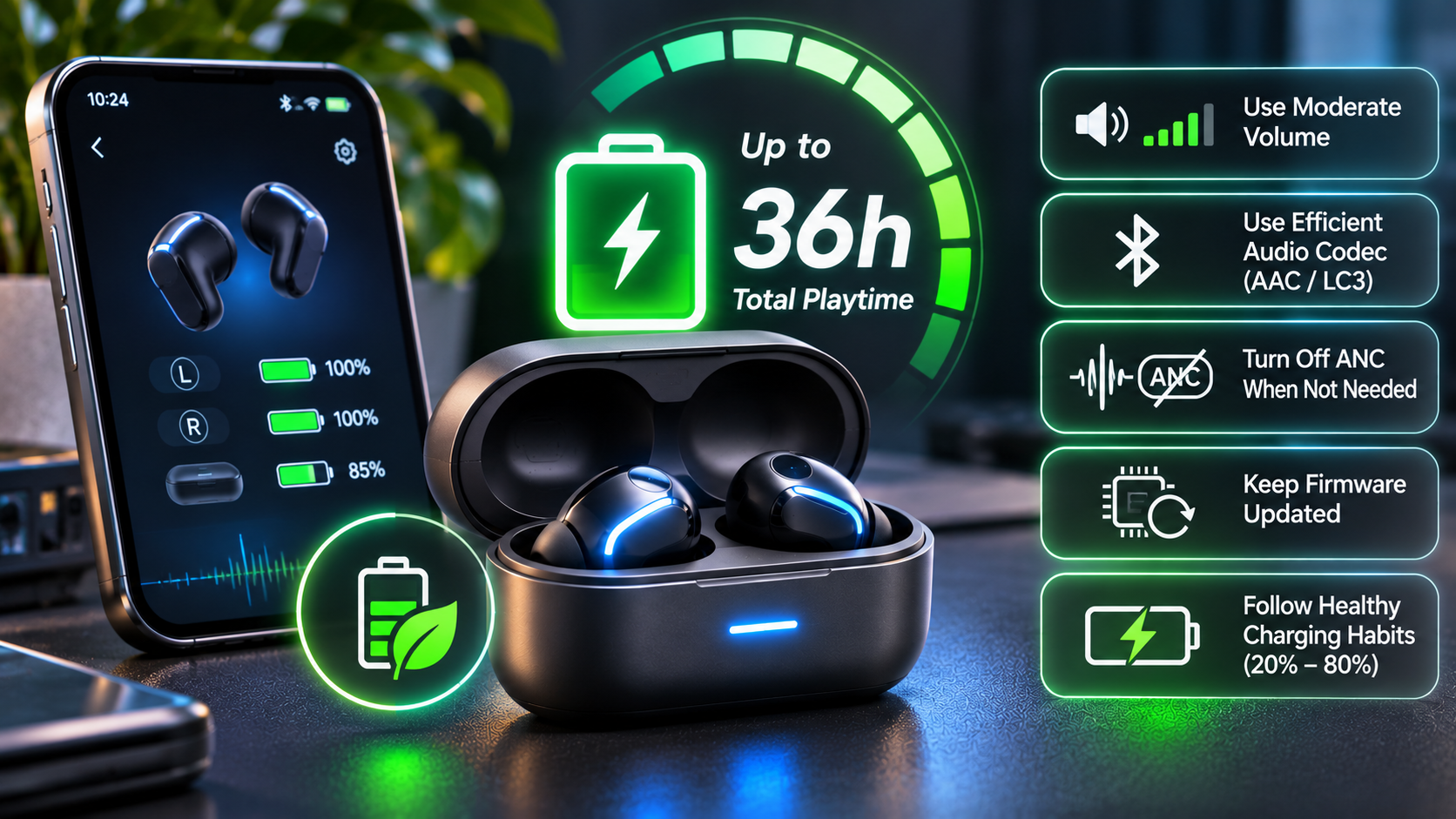
Earbud Battery Life Optimization is a critical aspect of enhancing your audio experience. As wireless earbuds continue to rise in popularity, understanding how to maximize their battery life becomes essential for users who rely on them for extended periods. The interplay of technology, usage habits, and care routines can significantly impact how long your earbuds last between charges. Whether you’re a casual listener or an audiophile, knowing the ins and outs of battery management can lead to a more enjoyable and hassle-free listening experience.
This comprehensive guide delves into the various factors affecting earbud battery life, from design choices and Bluetooth technology to charging practices and maintenance tips. By following best practices and staying informed on the latest advancements, you can ensure that your earbuds not only perform better but also endure longer, providing you with uninterrupted audio enjoyment.
Understanding the Factors Affecting Earbud Battery Life
The longevity of earbud battery life is influenced by a variety of interconnected factors. By understanding these factors, users can make informed decisions on how to optimize their earbuds for extended use. Battery life not only hinges on the battery’s physical characteristics but also on how the earbuds are used and the surrounding environment. In this discussion, we will delve into usage patterns, environmental conditions, and the technological nuances that affect battery efficiency in earbuds.
Several elements can significantly influence the battery life of earbuds. Firstly, usage patterns play a crucial role—frequent use at high volumes can drain the battery more quickly than lower volumes or sporadic use. For instance, users who frequently engage in activities like running or commuting might opt for higher volume to combat background noise, leading to reduced battery performance over time. Additionally, environmental conditions such as temperature can affect battery efficiency. Extreme cold or heat can hinder a battery’s ability to hold charge, resulting in decreased performance. Thus, using earbuds in a temperature-controlled environment can help maximize battery longevity.
Impact of Bluetooth Technology on Battery Consumption
Different types of Bluetooth technology directly affect how much power earbuds consume during operation. The evolution of Bluetooth standards has aimed to improve battery efficiency while maintaining sound quality.
1. Bluetooth 4.0: This version introduced Low Energy (LE) technology, which allowed devices to maintain connections with minimal power consumption. Earbuds utilizing Bluetooth 4.0 can last longer on a single charge compared to those using older standards.
2. Bluetooth 5.0: An upgrade from its predecessor, this version offers increased range and data transfer speeds, but it is also designed to be more energy-efficient. Earbuds using Bluetooth 5.0 can provide longer playback times, even at higher volumes, thanks to better management of battery resources.
3. Bluetooth 5.1 and Beyond: These latest versions continue to build on energy efficiency, providing users with enhanced location tracking and connection stability without sacrificing battery life. Users can expect even longer usage times with the newest models.
The design and materials of earbuds also play a significant role in battery efficiency. Lightweight materials, for instance, can enhance comfort without adding unnecessary bulk that might affect battery performance. Furthermore, streamlined designs that reduce energy-sapping features like unnecessary LEDs or heavy components can help conserve battery life. For example, earbuds constructed with high-grade plastics or metals that also contain efficient circuitry can lead to better battery management.
In conclusion, understanding these factors—from usage patterns and environmental impacts to the technology and design choices—can lead to more responsible usage and ultimately enhance the overall battery life experience in earbuds.
Best Practices for Maximizing Earbud Battery Life
Maximizing the battery life of your earbuds is essential not only for enjoying uninterrupted audio but also for extending the longevity of the device itself. By adopting specific strategies and maintaining your earbuds properly, you can significantly enhance their performance and ensure they last longer. Here are some effective practices to consider.
Adjusting Volume and Utilizing Mono Mode
One of the most impactful choices you can make to extend earbud battery life is managing the volume levels. Listening to audio at a lower volume setting can greatly conserve battery power. Generally, lower volumes require less energy to drive the speakers, which translates to longer playtime. Aim for a comfortable listening level that doesn’t sacrifice sound quality while keeping the volume within a reasonable range.
Another way to optimize battery usage is by switching to mono mode when you’re only using one earbud. Monophonic audio reduces the power consumption significantly since only one speaker is active. This mode is particularly useful during phone calls or when you only need to listen to audio without the full stereo experience. Engaging mono mode can help prolong battery life, especially during long periods of usage.
Routine Maintenance and Care
Routine maintenance is vital for preventing battery degradation over time. Taking care of your earbuds ensures they not only perform optimally but also last longer. Here are some essential care practices to keep in mind:
– Keep them clean: Regularly clean your earbuds to ensure there’s no buildup of dirt or moisture that can interfere with performance. Use a soft, dry cloth to wipe down the surfaces, and avoid using aggressive cleaners.
– Store properly: Always store your earbuds in a protective case when not in use. This prevents physical damage and shields them from dust and moisture, which can harm the battery.
– Avoid extreme temperatures: Keeping earbuds in very hot or cold environments can negatively affect battery health. Store them at room temperature to maintain optimal performance.
Taking these simple steps not only helps in preserving the battery life but also enhances the overall user experience by ensuring that your earbuds remain functional and reliable over time.
Benefits of Regular Software Updates
Keeping your earbuds’ firmware updated is crucial for optimal battery performance. Manufacturers often release updates that can enhance efficiency and introduce features to improve battery longevity. For example, an update may optimize power management settings, allowing the battery to last longer on a single charge.
Regular updates can also fix bugs that may lead to excessive battery drain. For instance, software glitches can sometimes cause connectivity issues or background processes that consume more power than necessary. By ensuring your device is up to date, you not only receive new features but also benefit from fixes that help conserve battery life.
In conclusion, implementing these best practices can significantly enhance your earbuds’ battery life. From managing volume levels and utilizing mono mode to routine maintenance and keeping your software updated, these steps will help ensure that your earbuds remain functional and enjoyable for as long as possible.
The Role of Charging Habits on Battery Health
Charging habits play a crucial role in determining the longevity and health of your earbud batteries. While modern battery technology has improved, the way we charge our devices can significantly influence their overall performance and lifespan. Understanding the effects of different charging practices can help you make informed decisions that enhance battery health.
Overnight charging and short top-ups are two common charging habits that can impact battery lifespan differently. Overnight charging, while convenient, may lead to overcharging, as most devices continue to draw a small amount of current even after reaching 100%. This phenomenon, known as trickle charging, can generate heat and gradually degrade battery capacity over time. On the other hand, short top-ups, where you charge the earbuds for brief periods throughout the day, can be beneficial. These short charges reduce the time the battery spends at high voltage, helping to maintain a more stable battery chemistry and prolonging its life. In fact, experts suggest keeping the battery level between 20% and 80% for optimal health, as this range minimizes stress on the battery.
Impact of Charging Accessories on Battery Performance
Using third-party chargers and cables can have a significant impact on battery performance and health. While it may be tempting to use cheaper alternatives, these products often lack the necessary safety features and quality that original equipment manufacturers (OEM) provide. Third-party chargers can supply inconsistent voltage and current, leading to potential damage or inefficiencies in battery charging. For instance, a charger that outputs too much voltage can cause overheating, which is detrimental to lithium-ion batteries commonly used in earbuds.
Additionally, charging cables that are poorly constructed can result in fluctuating power delivery, which can harm the battery’s internal circuitry. To ensure the best charging experience, it’s advisable to use OEM chargers and cables, as they are specifically designed to work harmoniously with your earbuds.
Monitoring charge cycles is another important factor in maintaining battery health. A charge cycle occurs when you use and recharge your battery from 0% to 100%, and it’s crucial to avoid complete discharges. Frequent full discharges can lead to battery degradation, reducing its total lifespan. Instead, try to recharge your earbuds after using them for a few hours, even if they haven’t completely drained. This practice not only keeps the battery in a healthy range but also promotes memory efficiency, allowing for better performance over time.
By adopting good charging habits, using the right accessories, and monitoring charge cycles, you can significantly improve the longevity and performance of your earbud batteries, ensuring a consistent and high-quality audio experience.
Advances in Battery Technology for Earbuds
Recent years have witnessed remarkable strides in battery technology, significantly enhancing the performance and user experience of wireless earbuds. As consumers increasingly seek longer playback times and faster recharging capabilities, manufacturers are turning to innovative battery designs and materials. These advancements not only extend battery life but also contribute to a more comfortable listening experience, positioning earbuds as a staple in modern audio solutions.
One of the most noteworthy developments in battery technology is the evolution of fast charging capabilities. Traditional lithium-ion batteries have been the standard for portable devices, including earbuds. However, the latest innovations now incorporate advanced materials and designs that enable quicker charging cycles. For instance, some earbuds can achieve up to 1 hour of playback time after just 10 minutes of charging, courtesy of optimized charging circuits and battery chemistry. Manufacturers are utilizing high-density lithium polymer batteries, which are designed to allow for rapid energy transfer. This means users can enjoy their earbuds without long downtimes, fitting seamlessly into busy lifestyles.
Solid-State Batteries and User Experience
The introduction of solid-state batteries represents a paradigm shift in battery technology. Unlike conventional lithium-ion batteries, solid-state batteries utilize a solid electrolyte, which enhances safety and energy density. This technology reduces the risk of leaks and fires, common hazards associated with liquid electrolytes found in traditional batteries. With a higher energy density, solid-state batteries can potentially double or triple the battery life of earbuds without increasing their size.
The implications of solid-state battery technology for user experience are profound. Users can expect earbuds that not only last longer on a single charge but are also lighter and more compact. The smaller form factor allows for sleeker designs without compromising on power. Additionally, these batteries can tolerate a broader range of temperatures, making earbuds more reliable in various environmental conditions. As this technology becomes more mainstream, users will benefit from a more durable, efficient, and safe experience.
Looking ahead, several trends are emerging in battery optimization technologies specifically designed for wireless earbuds. One significant trend is the integration of energy-efficient materials such as graphene and advanced lithium-sulfur compounds. These materials promise to enhance conductivity and capacity, leading to longer-lasting power solutions. Research into hybrid batteries that combine the advantages of different technologies also holds promise for the future.
Another key trend is the development of intelligent battery management systems (BMS). These systems use artificial intelligence to monitor usage patterns and optimize charging cycles accordingly. By learning user habits, the BMS can extend battery life by reducing power consumption during idle times or when the earbuds are not in use. This personalized approach ensures that users enjoy a more tailored experience, maximizing the longevity of their earbuds.
In summary, advances in battery technology for earbuds are paving the way for more efficient, safer, and longer-lasting audio experiences. The shift towards solid-state batteries and the incorporation of intelligent management systems are set to revolutionize how users interact with their devices. As these technologies continue to mature, the future of wireless earbuds looks incredibly promising, with enhanced capabilities that cater to the ever-evolving demands of users.
Troubleshooting Common Earbud Battery Issues
Many users encounter battery-related problems with their earbuds, which can diminish the listening experience and overall functionality. Understanding these issues and knowing how to tackle them can significantly extend battery life and improve performance. This section delves into typical battery problems, practical solutions, and recognizes when it’s time to replace your earbuds.
Identifying Common Battery Problems
Several battery-related issues can arise with earbuds, which may include quick drainage, failure to charge, or inconsistent performance. Recognizing these problems early can help prevent frustration and expensive replacements. Here are some common issues and their solutions:
- Quick Drainage: If your earbuds are losing power rapidly, it may indicate that the battery is aging or there are settings that need adjustment. Solutions include turning off features like noise cancellation or auto-play, which can consume a lot of energy.
- Charging Issues: Earbuds that refuse to charge could have dirty charging contacts or a faulty charging case. Cleaning the contacts with a soft cloth and ensuring the case is functioning correctly can often resolve the issue.
- Inconsistent Performance: If sound quality fluctuates or connections drop frequently, the battery might be struggling. Resetting the earbuds or updating firmware can stabilize performance, often resolving these inconsistencies.
The importance of addressing these issues promptly cannot be understated. Ignoring battery problems may lead to more significant issues down the line, such as complete failure of the device.
Recognizing When to Replace Earbuds
Determining whether to repair or replace earbuds can be challenging. Users should consider several factors when making this decision. Key signs that replacement may be necessary include:
- Age of the Device: If your earbuds are several years old, the battery may have significantly degraded. Most lithium-ion batteries have a limited lifespan, typically around 300-500 charge cycles.
- Repair Costs vs. New Purchase: If the cost of repairing the earbuds is close to or exceeds the price of a new pair, it’s often more economical to invest in a new device.
- Frequent Battery Issues: Continual problems, such as having to charge multiple times a day, suggest that the battery is no longer functioning efficiently and it may be time for an upgrade.
Users should weigh these factors carefully, as making the right decision can save time and money in the long run.
User Experiences and Tips
Many users have successfully navigated battery challenges with their earbuds and have shared their experiences. Here are some tips based on real-life stories to help others manage their earbud battery issues:
- Regular Maintenance: Some users emphasize the importance of keeping the charging ports clean. A small brush or compressed air can help remove debris that might interfere with charging.
- Smart Usage: Adjusting the volume levels and disabling unused features can lead to noticeable battery life improvements. For example, using a lower volume can extend playtime, as high volumes tend to consume more power.
- Firmware Updates: A surprising number of users have found that updating their firmware resolved battery efficiency issues. Manufacturers regularly release updates that can optimize battery usage and improve overall performance.
By applying these practical solutions and remaining attentive to their earbuds’ performance, users can effectively troubleshoot common battery issues and enhance their listening experience.
Outcome Summary
In conclusion, optimizing earbud battery life is both an art and a science. By understanding the myriad factors that influence battery performance, adopting best practices for maintenance, and keeping abreast of technological advancements, you can significantly enhance your listening experience. Remember, a little care goes a long way in prolonging the life of your earbuds, allowing you to enjoy your favorite tunes without the frustration of frequent recharging.
Popular Questions
How often should I charge my earbuds?
It’s recommended to charge your earbuds regularly and avoid complete discharges to maintain battery health, aiming for short charges when possible.
Can I use third-party chargers for my earbuds?
While third-party chargers may work, using the original charger ensures optimal performance and safety for your earbuds.
What can I do if my earbuds charge slowly?
Check for debris in the charging port, use a different cable or charger, and ensure the charging case is functioning properly.
Is it okay to leave my earbuds charging overnight?
While many modern earbuds have overcharge protection, it’s best to avoid overnight charging to maximize battery lifespan.
How can I tell if my earbuds’ battery is degrading?
Signs of battery degradation include significantly shorter playback times, inconsistent charging, or failure to hold a charge.