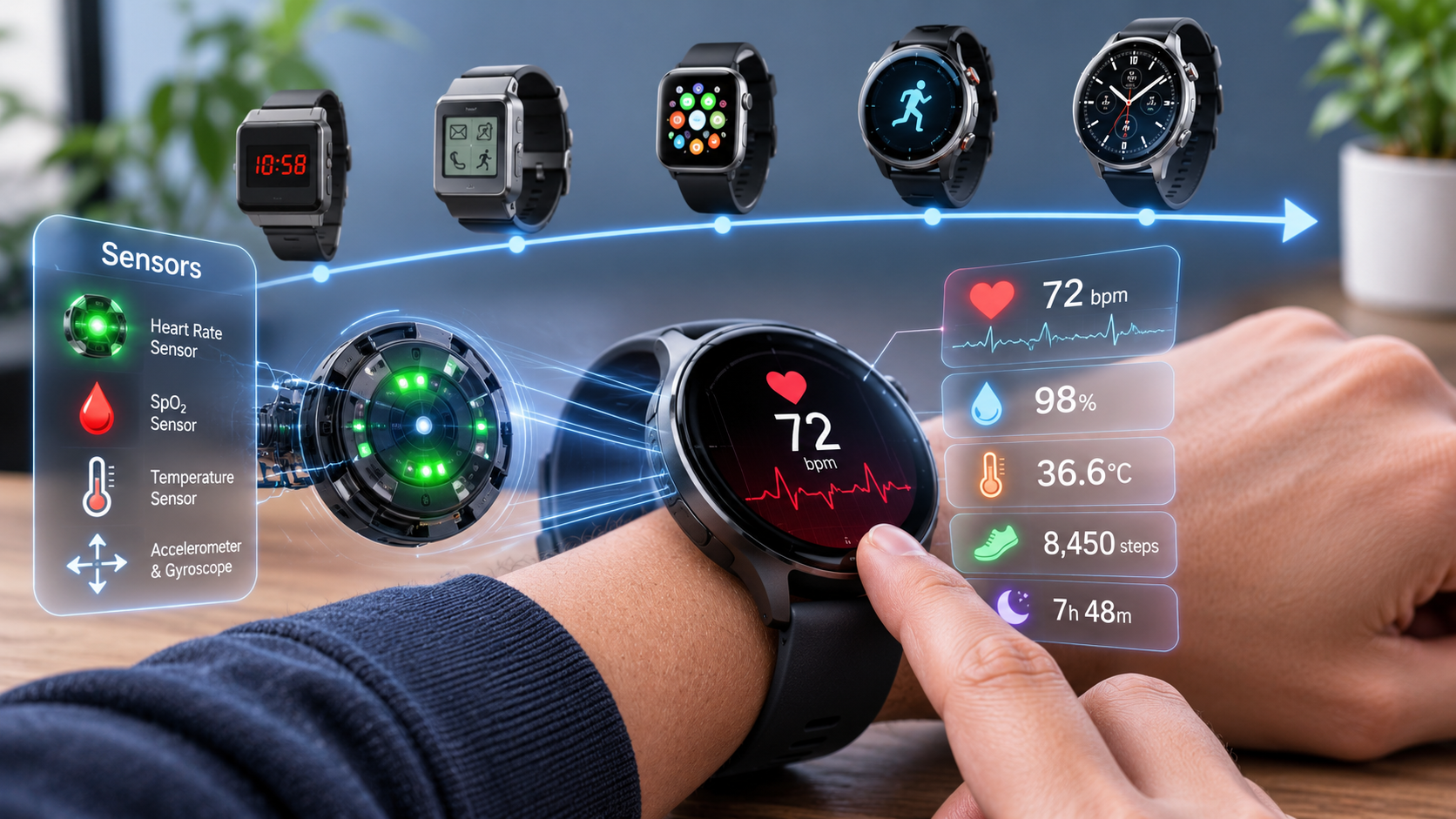
Smartwatch sensor accuracy has undergone remarkable evolution, transforming the way we interact with technology in our daily lives. As sensors have become more sophisticated, their ability to provide precise data has greatly enhanced, leading to improved health monitoring and fitness tracking capabilities. From heart rate monitors to GPS tracking, understanding the developments in sensor technology helps us appreciate the accuracy levels we now often take for granted.
The historical advancements in smartwatch sensor technology reveal a journey marked by significant milestones, each contributing to the enhanced accuracy we experience today. With a variety of sensors at play, it’s essential to explore how these innovations have shaped user experiences and what factors continue to influence performance in real-world scenarios.
The evolution of smartwatch sensor technology significantly impacts accuracy levels
The journey of smartwatch sensor technology has been marked by remarkable advancements that have directly influenced the accuracy of these devices. From their inception, smartwatches have undergone a significant transformation, integrating more sophisticated sensors that enhance their functionality and precision. As technology progresses, the accuracy of health and fitness tracking has improved, making these wearables an essential tool for users seeking to monitor their well-being.
Advancements in smartwatch sensor technology have been driven by innovations in materials, data processing, and sensor design. Over the years, improvements in sensor technology have enabled more precise measurements of various health metrics. Notably, three milestones stand out in the evolution of smartwatch sensors and their contributions to accuracy.
Major milestones in the development of smartwatch sensors
The following milestones mark significant breakthroughs in smartwatch sensor technology, leading to enhanced accuracy:
1. Heart Rate Monitoring Technology: The introduction of photoplethysmography (PPG) in smartwatches revolutionized heart rate monitoring. PPG uses light sensors to detect blood volume changes in the wrist. Early models provided basic measurements, but advancements in algorithms and sensor sensitivity have significantly improved heart rate accuracy. This technology now enables continuous heart rate tracking, vital for fitness enthusiasts and those managing health conditions.
2. GPS Integration: The incorporation of GPS sensors into smartwatches has dramatically improved the accuracy of location-based services and tracking activities such as running or cycling. Initially, GPS was often inaccurate in urban environments due to signal interference. However, advancements in multi-band GPS technology have resulted in more reliable position tracking, allowing users to accurately measure distance and pace.
3. Accelerometer and Gyroscope Enhancements: The integration of advanced accelerometers and gyroscopes has played a crucial role in motion tracking accuracy. These sensors measure acceleration and orientation, providing data for various activities such as walking, running, and swimming. With improvements in sensor calibration and data interpretation, smartwatches can now offer detailed insights into movement patterns, enabling better workout analysis and feedback.
The evolution of smartwatch sensor technology exemplifies how continuous innovation drives improved accuracy in health and fitness monitoring. These milestones not only enhance the user experience but also emphasize the importance of accurate data in making informed health decisions. As technology continues to advance, we can expect even greater precision and functionality in future smartwatch models.
Various types of sensors used in smartwatches and their accuracy metrics
Smartwatches have revolutionized personal health monitoring by integrating various types of sensors that track different metrics with impressive accuracy. These sensors provide users with insights into their health, fitness levels, and daily activities. Understanding the types of sensors and their specific accuracy metrics is essential for evaluating smartwatch performance and reliability.
Smartwatches typically incorporate several key sensors, each with unique functions and accuracy standards. Here’s a breakdown of the primary types of sensors found in smartwatches and the metrics associated with their accuracy.
Heart Rate Sensors
Heart rate sensors are among the most common sensors in smartwatches, usually utilizing photoplethysmography (PPG) technology to monitor heart rates. The accuracy of these sensors is often measured in beats per minute (BPM) and can vary based on factors such as skin tone, movement, and the fit of the smartwatch.
– Calibration methods: These sensors are calibrated using reference heart rate monitors during testing. For instance, a smartwatch may be tested against a medical-grade ECG monitor to ensure that its readings are within an acceptable range, often ±5 BPM in a resting state.
Accelerometers
Accelerometers track movements and physical activity by measuring acceleration forces. This data is crucial for step counting, activity recognition, and even sleep analysis. The accuracy of accelerometers is often evaluated in terms of step count accuracy and activity classification accuracy.
– Calibration methods: Accelerometers are calibrated through an array of controlled movements, ensuring they can differentiate between various activities, such as walking, running, or cycling. Testing might involve comparing the accelerometer’s readings with those from high-precision motion capture systems.
Gyroscopes
Gyroscopes complement accelerometers by providing orientation data, allowing watches to determine rotational motion. The accuracy of gyroscope sensors is usually assessed in degrees per second (°/s), often found to be most effective when combined with accelerometer data for enhanced movement tracking.
– Calibration methods: Gyroscopes are commonly calibrated using known rotational speeds in controlled environments. This might include spinning a watch on a calibrated turntable and comparing the outputs to standard measurements.
GPS Sensors
GPS sensors are critical for tracking location and distances during outdoor activities like running or cycling. The accuracy of GPS readings is generally assessed in meters and can be impacted by environmental factors such as urban canyons or heavy tree cover.
– Calibration methods: GPS sensors undergo calibration by comparing their readings against known distances during test runs on predetermined tracks. For example, if a smartwatch records a 5km run on a verified route and shows discrepancies, adjustments can be made in its algorithms to improve future accuracy.
Optical Sensors
Optical sensors are primarily used for blood oxygen saturation (SpO2) monitoring and other blood-related metrics. Their accuracy is often measured in percentage (%), indicating the reliability of the readings under various conditions.
– Calibration methods: Optical sensors are calibrated using blood samples analyzed in clinical settings. For instance, the smartwatch may be tested against pulse oximeters in controlled environments to ensure readings are within ±2% of the actual blood oxygen levels.
Thermometers
Thermometers in smartwatches typically monitor skin temperature, which can provide insights into overall health trends. Their accuracy is generally evaluated in degrees Celsius (°C) or Fahrenheit (°F) and can vary with environmental conditions.
– Calibration methods: Thermometers are calibrated by comparing them against standard thermometers in controlled temperature settings. Regular tests ensure that the smartwatch readings align with those from medical-grade equipment.
Through these various sensors, smartwatches provide users with valuable insights while relying on sophisticated calibration methods to enhance accuracy and reliability in real-world applications.
Factors influencing the accuracy of smartwatch sensors in real-world applications
Smartwatch sensors are designed to provide users with valuable data on various health metrics and activities. However, several factors can impact their accuracy in real-world applications. Understanding these factors is essential for users to interpret their data correctly and make informed decisions based on the readings their devices provide.
Environmental Factors Affecting Sensor Readings
Environmental conditions play a significant role in the accuracy of smartwatch sensors. Factors such as temperature, humidity, and atmospheric pressure can influence sensor performance. For instance, extreme temperatures can affect the battery life and sensor calibration, leading to erroneous readings. Additionally, high humidity may cause condensation on the device, which can interfere with the sensor’s functionality.
Other environmental elements that can impact sensor performance include:
- Lighting Conditions: Sensors that rely on optical measurements, like heart rate monitors, may struggle in low-light conditions, resulting in less accurate data.
- Electromagnetic Interference: Proximity to electronic devices or strong magnetic fields can lead to signal distortion, affecting sensor readings.
- Altitude: Changes in elevation, such as moving from a low-lying area to a mountainous region, can impact readings from barometric pressure sensors, which are often used for altitude tracking.
User-Specific Factors Leading to Variations
Individual differences among users can significantly influence the performance of smartwatch sensors. Factors such as skin type, body composition, and even how a device is worn can affect the accuracy of readings. For example, individuals with darker skin tones may experience variations in optical heart rate sensor accuracy due to differences in light absorption.
Other user-specific factors include:
- Fit of the Device: A loose or poorly fitted smartwatch may not maintain constant contact with the skin, leading to inaccurate heart rate and activity data.
- Skin Temperature: Variability in skin temperature can affect sensor readings. Cold skin may lead to lower heart rate readings, while heated skin may produce exaggerated results.
- Motion Artifacts: Activities that involve rapid movements can create noise in the data collected, which may misrepresent metrics like heart rate during exercise.
Impact of Different Activities on Sensor Accuracy
Different physical activities can also affect how accurately smartwatch sensors operate. For instance, running and swimming present distinct challenges for sensor performance. Running typically allows for more consistent readings, whereas swimming can complicate matters due to water interference and the movement of the limbs.
Considering the impact of activities, the following points illustrate how different exercises influence sensor accuracy:
- Running: Most smartwatches perform well during running, as the activity predominantly involves rhythmic, repetitive movements that sensors can effectively track.
- Swimming: Water resistance can impede the functionality of sensors. Swim-proof devices may provide less accurate heart rate readings when submerged due to signal distortion in water.
- Strength Training: Quick, sporadic movements during weightlifting can lead to inaccuracies in heart rate monitoring as sensors may struggle to keep up with rapid changes in activity level.
“The accuracy of smartwatch sensors can significantly vary based on environmental and user-specific factors, as well as the type of physical activity being performed.”
The role of software algorithms in improving sensor accuracy on smartwatches
Software algorithms have become the backbone of sensor accuracy in smartwatches, transforming raw data into actionable insights. They play a crucial role in interpreting the vast amounts of data collected from various sensors, enabling users to understand their health and fitness metrics with greater precision. Without these algorithms, the data generated by smartwatches would be difficult to translate into meaningful conclusions, thereby limiting their effectiveness in daily life.
Importance of software algorithms in processing sensor data
The processing of sensor data is heavily reliant on sophisticated software algorithms that ensure the accuracy and reliability of the information presented to users. These algorithms filter out noise from the sensor readings, correct for errors, and enhance the overall quality of the data. By employing techniques such as signal processing and data fusion, algorithms can amalgamate information from multiple sensors, allowing for a more comprehensive understanding of the user’s health metrics.
Prevalent algorithms in smartwatch technology
Several algorithms are widely used in smartwatch technology, each serving distinct functions that contribute to sensor accuracy. Here are a few notable examples:
- Kalman Filters: These algorithms estimate the state of a dynamic system from a series of noisy measurements, making them ideal for tasks like tracking movement and heart rate in real-time.
- Machine Learning Algorithms: Tools like support vector machines and neural networks can learn from historical data to improve predictions and classifications over time, enhancing the accuracy of health metrics.
- Fourier Transforms: Used for analyzing periodic signals, these algorithms help in breaking down complex data from sensors into simpler components, facilitating better analysis of heart rate variability.
- Statistical Models: These models assess data trends and patterns, assisting in providing insights regarding user behavior and health changes over time.
Real-time data analysis and machine learning contributions
Real-time data analysis combined with machine learning significantly enhances the accuracy of smartwatch sensors. Algorithms designed for these purposes can adaptively refine their predictions based on incoming data, leading to improved accuracy over time. This dynamic approach allows the device to adjust to individual users, learning from their specific patterns and generating personalized insights.
By analyzing real-time data, smartwatches can detect anomalies and provide timely alerts, helping users stay informed about their health status.
The integration of machine learning empowers smartwatches to continuously improve their sensor accuracy. For instance, a smartwatch that monitors sleep can utilize historical sleep data to predict sleep quality more accurately. This not only illustrates the power of algorithms but also emphasizes how real-life applications can enhance user experience by providing trustworthy and actionable data.
Comparison of accuracy levels between different smartwatch brands and models
The accuracy of smartwatch sensors is a critical factor for users who rely on their devices for health and fitness tracking. With numerous brands and models available today, understanding how their sensor accuracies stack up against each other can enhance the purchasing decision. Various smartwatch brands employ different technologies and methodologies to ensure their sensors deliver reliable data, yet user experiences may vary significantly.
The methodologies used to measure and report sensor accuracy across various smartwatch models include clinical validations, controlled experiments, and user feedback analysis. Leading brands often publish lab results demonstrating their sensor capabilities, but real-world performance can differ based on numerous factors such as user activity levels, environmental conditions, and even wearable fit. User reviews also play a vital role in understanding practical accuracy, as they provide anecdotal evidence of how well these sensors perform in everyday scenarios.
Accuracy Ratings of Leading Smartwatch Brands
The following table summarizes the accuracy ratings of various smartwatch models based on user reviews and technical data. This comparison provides insight into how different brands measure up in sensor performance.
| Brand | Model | Heart Rate Accuracy (%) | Step Count Accuracy (%) | GPS Accuracy (m) |
|---|---|---|---|---|
| Apple | Apple Watch Series 7 | 90 | 95 | 5 |
| Samsung | Galaxy Watch 4 | 88 | 92 | 6 |
| Garmin | Forerunner 245 | 92 | 94 | 4 |
| Fitbit | Fitbit Sense | 85 | 90 | 8 |
| Fossil | Gen 5E | 84 | 89 | 10 |
This data reveals that brands like Garmin and Apple lead in heart rate and step count accuracy, while other models, such as those from Fitbit and Fossil, demonstrate slightly lower performance, particularly in GPS accuracy. In practical terms, this means that users engaged in activities requiring precise tracking, such as running or cycling, may find certain models better suited to their needs than others.
Accurate sensor performance can greatly enhance the user experience, providing confidence in health and fitness tracking.
Understanding these differences can empower consumers to make informed choices based on their specific needs and preferences.
User experiences and case studies on smartwatch sensor accuracy
Smartwatches have become increasingly popular among various demographics, with their sensor accuracy being a pivotal feature that affects user satisfaction. From fitness enthusiasts to casual users, experiences with sensor performance can vary significantly. This section will explore diverse user experiences and case studies that shed light on the reliability of smartwatch sensors and the common themes that emerge from user feedback.
User feedback on sensor accuracy across demographics
User experiences reflect a wide spectrum of satisfaction and frustration concerning smartwatch sensor accuracy. For instance, athletes often rely heavily on heart rate monitors and GPS tracking for training purposes. A case study involving marathon runners showed that while many reported precise heart rate readings during steady-state runs, discrepancies arose during interval training due to sensor lag.
Casual users, such as older adults, often prioritize health metrics like step count and sleep tracking. Feedback from this demographic indicated that while daily step counts were generally accurate, sleep tracking tended to be inconsistent, leading to skepticism about the device’s reliability.
A variety of user comments from forums and reviews highlight key themes that resonate across different groups:
- Active users: Many find that outdoor activities like cycling lead to inaccurate GPS readings, particularly in areas with poor satellite visibility.
- Health-conscious individuals: There are reports of heart rate sensors underestimating or overestimating during intense workouts, affecting users’ trust in the device.
- General consumers: Instances of discrepancies in sleep tracking have prompted many to question the utility of these features, especially when compared to dedicated sleep monitors.
Specific case studies offer deeper insights into smartwatch sensor accuracy. For example, a comparative study conducted on popular smartwatch models highlighted that the Apple Watch consistently provided accurate heart rate readings in both resting and active states, outperforming several competitors. However, the study also noted that some models, like certain Fitbits, showed significant inaccuracies during high-intensity workouts, suggesting a failure in sensor technology under stress.
Another notable case is a group of fitness trainers who wore various smartwatches during a high-energy fitness class. Feedback indicated that one model consistently tracked calories burned with less than 5% deviation from actual estimates based on metabolic equivalents (METs), while another brand reported variances of up to 20%.
Common themes in these case studies reveal:
- Reliability during varied activities: Accuracy tends to decrease during high-intensity exercises or in environments with interference, such as urban areas.
- Advanced sensors: Models incorporating multiple sensor types (optical, electrical) often yield better overall accuracy.
- User calibration: Some users noted improvements in accuracy after adjusting sensor settings or wearing the device in optimal positions.
“Accurate readings during rest are not enough; performance under stress is critical for users who rely on these devices for fitness tracking.”
The future of smartwatch sensor technology and its potential accuracy improvements
The evolution of smartwatch sensor technology is poised for remarkable advancements, particularly in terms of accuracy. As we move forward, innovations in sensor design and integration promise to enhance the precision of health tracking, fitness monitoring, and various other applications. This section delves into emerging technologies and research that are shaping the future of smartwatch sensors.
Emerging Technologies Enhancing Sensor Accuracy
Several promising technologies are on the horizon that could significantly improve the accuracy of smartwatch sensors. These advancements stem from developments in materials science, artificial intelligence, and miniaturization techniques.
One key area of focus is the integration of advanced materials, such as graphene, which is known for its exceptional electrical and thermal conductivity. This could lead to sensors that are not only more sensitive but also capable of operating under varying environmental conditions without losing accuracy.
Another crucial innovation is the incorporation of machine learning algorithms that analyze sensor data more effectively. These algorithms can identify patterns and anomalies, allowing for real-time adjustments that enhance the precision of health metrics, from heart rate monitoring to blood oxygen levels.
Moreover, the development of multi-sensor fusion technology will enable smartwatches to combine data from various sensors, providing a more holistic and accurate picture of an individual’s health. Rather than relying on a single sensor, this approach leverages multiple data points to improve overall accuracy.
“The future of smartwatch sensors lies in their ability to adapt and learn, ensuring higher precision in health tracking.”
Innovations and Research Influencing Future Developments
Ongoing research in sensor technology is spearheading innovations that could lead to unprecedented accuracy in smartwatches. Some notable areas of research include:
– Bio-sensing Technologies: Researchers are developing bio-sensors that can detect biochemical markers in sweat or interstitial fluid. This means future smartwatches could provide insights into hydration levels, glucose levels, and even hormonal changes, all with higher accuracy and reliability.
– Advanced Signal Processing: Improvements in signal processing techniques are essential for enhancing the fidelity of data collected by sensors. This includes algorithms that filter out noise and reduce interference, leading to clearer and more accurate readings.
– Wearable Device Integration: As IoT (Internet of Things) technologies evolve, smartwatches may integrate seamlessly with other wearable devices, such as smart clothing or biosensors. This interconnected network can provide a comprehensive health assessment by pooling data from a variety of sources.
“Integrating diverse sources of data will lead to smarter and more accurate wearable technology.”
In the coming years, consumers can anticipate significant advancements in smartwatch sensor accuracy. With the continuous evolution of materials, data processing techniques, and algorithmic advancements, the next generation of smartwatches is expected to provide a deeper and more accurate understanding of personal health metrics. These innovations will not only enhance the functionality of smartwatches but also improve the user experience, making health monitoring more effective and reliable than ever before.
Final Thoughts
In conclusion, the future of smartwatch sensor accuracy looks promising as emerging technologies and algorithms continue to evolve. As we navigate through advancements, we can expect even more refined data and improved user experiences. Ultimately, understanding the accuracy of smartwatch sensors empowers consumers to make informed choices and maximize the benefits of their devices in various activities.
Helpful Answers
How do smartwatch sensors compare to traditional fitness trackers?
Smartwatch sensors generally offer more advanced features and integrations, providing a wider range of data compared to traditional fitness trackers, which may focus on basic metrics.
Can environmental conditions affect smartwatch sensor accuracy?
Yes, environmental factors like temperature, humidity, and even altitude can influence the accuracy of sensor readings in smartwatches.
How often should I calibrate my smartwatch sensors?
Calibration needs vary based on the model and usage, but it’s generally advised to calibrate after significant updates or if you notice discrepancies in readings.
Are all smartwatch sensors equally accurate?
No, accuracy levels can vary significantly between different brands and models, influenced by technology, algorithms, and user experiences.
What should I do if I suspect my smartwatch sensor is inaccurate?
If you suspect inaccuracy, try recalibrating your device, updating software, or consulting the manufacturer for troubleshooting options.