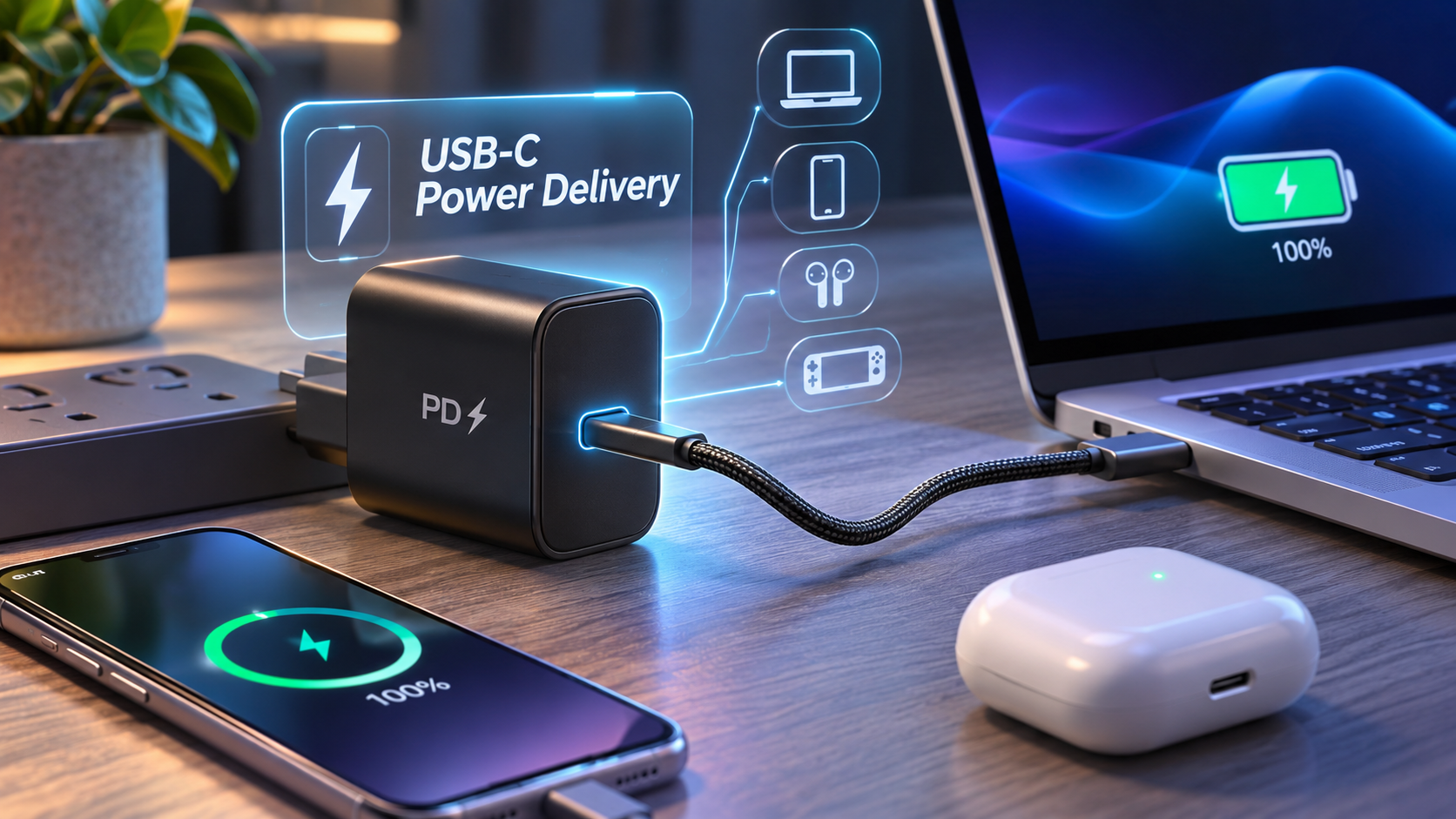
USB-C Power Delivery Technology is revolutionizing the way we charge and connect our devices, offering a smarter, more efficient solution that caters to the demands of modern technology. Unlike its predecessors, USB-C introduces a universal standard that not only enhances power delivery but also streamlines data transfer, making it a go-to choice for both consumers and manufacturers alike.
As we dive deeper into the workings of USB-C Power Delivery, we’ll explore the intricate negotiation process that enables optimal power transfer and the myriad benefits it brings over previous USB standards. This technology is not just about convenience; it’s about harnessing the full potential of our devices while ensuring compatibility across a diverse range of platforms.
The Fundamental Principles Behind USB-C Power Delivery Technology
USB-C Power Delivery (PD) technology has revolutionized the way we charge devices and transfer power. At its core, USB-C PD enables higher power levels and faster data transfer rates utilizing a single cable and connector. This technology is particularly significant in modern technology where the demand for efficient charging solutions has skyrocketed. With the increase in portable devices, laptops, and accessories, the need for a versatile and robust power solution is paramount. USB-C PD addresses these demands by allowing devices to negotiate power requirements, enabling them to receive the appropriate amount of energy they need for optimal performance.
USB-C Power Delivery operates on the principle of power negotiation over the USB communication protocol. Unlike previous USB standards that had fixed power limits, USB-C PD supports power delivery up to 100 watts, which opens the door for a wide range of devices, from smartphones to laptops. This is possible because both the power source and the device being charged can communicate their power needs through a process known as “power role negotiation.” This dialogue allows the devices to agree on the optimal voltage and current levels required for fast and safe charging. For instance, if a smartphone and a laptop are connected, the laptop could request a higher power level due to its larger battery capacity, while the smartphone would request a lower amount, ensuring both devices charge efficiently without damaging their batteries.
Benefits of USB-C Over Previous USB Standards for Power Delivery
The advantages of using USB-C for power delivery over older USB standards are numerous and impactful. The transition from older versions such as USB-A, which typically delivered 2.5 watts to USB-C, which can provide up to 100 watts, represents a substantial leap in technology. Here are key benefits that illustrate the superiority of USB-C Power Delivery:
- Higher Power Levels: Enabling devices to draw more power efficiently, reducing charging times significantly.
- Universal Compatibility: One cable and connector for various devices, minimizing cable clutter and simplifying connections.
- Bidirectional Power Flow: Devices can both send and receive power, allowing for greater flexibility in charging options.
- Smart Power Management: Enhanced communication allows for optimized power usage based on device needs, prolonging battery life and health.
- Support for Data Transfer: In addition to power delivery, USB-C supports high-speed data transfer, making it ideal for modern tech needs.
The capabilities of USB-C PD represent a significant advancement in power management technology, facilitating a more efficient and user-friendly charging experience across a myriad of devices.
Advantages of Implementing USB-C Power Delivery in Devices
The adoption of USB-C Power Delivery (PD) technology has revolutionized the way devices are charged and powered, offering significant advantages to manufacturers and consumers alike. As an emerging standard in the tech world, USB-C PD not only enhances the functionality of devices but also streamlines the user experience. With its ability to provide higher power levels, USB-C PD addresses the limitations of traditional charging methods, resulting in improved performance and efficiency.
One of the primary advantages manufacturers gain by implementing USB-C Power Delivery is the versatility and universality of the connector. USB-C ports can handle various functions such as data transfer, audio, and video output, alongside power delivery. This multifunctionality allows manufacturers to consolidate various ports into a single connector, saving space in device design. For example, laptops like the MacBook Pro utilize USB-C PD to charge while simultaneously connecting to external displays, reducing the need for multiple cables.
Another significant benefit of USB-C PD is its faster charging capability. Traditional charging methods typically provide limited power output, which can be frustrating for users with high-demand devices. USB-C PD can deliver up to 100 watts of power, significantly reducing charging times. For instance, devices like the Nintendo Switch can be charged to full capacity in under three hours, while smartphones like the Samsung Galaxy S series can achieve a substantial charge in just 30 minutes.
The efficiency of USB-C Power Delivery compared to traditional charging methods is notable. Traditional USB chargers often operate at lower power levels, meaning they can take longer to charge devices and may not support the power requirements of larger electronics. The ability of USB-C PD to adapt power delivery based on the device’s needs ensures optimal charging without overheating or damaging the battery. Furthermore, the intelligent negotiation of power levels helps maintain energy efficiency, promoting longer battery life and sustainability.
In summary, the integration of USB-C Power Delivery technology enhances device functionality, reduces charging times, and increases energy efficiency, providing clear advantages for both manufacturers and consumers. By embracing this technology, manufacturers can offer a more streamlined and user-friendly experience that meets the demands of modern electronic devices.
The Compatibility and Interoperability of USB-C Power Delivery
USB-C Power Delivery (PD) technology represents a significant advancement in charging and data transfer standards, designed to ensure compatibility across a diverse range of devices. This universal connector simplifies connections by enabling devices to communicate and charge efficiently, regardless of brand or type. As technology evolves, maintaining compatibility across various devices is critical for consumer satisfaction and functionality.
USB-C Power Delivery achieves compatibility through a universal specification that allows devices to negotiate power requirements. The technology supports multiple protocols, such as USB 3.1, DisplayPort, and Thunderbolt, which play a crucial role in ensuring seamless connectivity. When a USB-C PD charger is connected to a device, they communicate over a data line to determine the optimal power level needed for charging. For instance, a smartphone may require only 15W for charging, while a laptop could need up to 100W. This negotiation process is seamless and automatic, allowing multiple devices to share a single charger without compatibility issues.
Protocols Supporting USB-C Power Delivery
The interoperability of USB-C Power Delivery is largely attributed to the various protocols it supports. These protocols ensure that devices can not only charge but also transfer data efficiently. Below are key protocols that enhance the utility of USB-C PD:
- USB 3.1: This protocol enables high-speed data transfer, reaching up to 10 Gbps, allowing for quick file transfers between devices.
- DisplayPort: By supporting video output, USB-C PD allows devices to connect to monitors and displays, enabling video streaming and presentations without the need for additional cables.
- Thunderbolt 3: This advanced protocol offers data transfer speeds of up to 40 Gbps and supports daisy-chaining multiple devices, making it ideal for professional setups.
Despite its impressive versatility, USB-C Power Delivery faces challenges regarding compatibility with legacy devices. Many older devices use different charging ports and protocols, limiting their ability to utilize the benefits of USB-C PD. These legacy devices often rely on proprietary charging solutions, which can lead to frustration for users looking to adopt new technology. Furthermore, the absence of backward compatibility means that adapters may not always work reliably, leading to varying performance outcomes.
A notable example of this is the transition from Micro USB to USB-C, where users with older smartphones may struggle to find compatible chargers or experience slower charging speeds. As manufacturers continue to phase out legacy ports in favor of USB-C, the industry is gradually addressing these compatibility concerns to create a more unified charging ecosystem.
The Future of USB-C Power Delivery Technology in Consumer Electronics
USB-C Power Delivery (PD) has rapidly become a key player in the realm of consumer electronics, transforming how we charge and connect our devices. As we look toward the next five years, it’s clear that USB-C PD technology will continue to evolve, bringing a wave of innovation and enhanced user experiences. From faster charging speeds to increased compatibility across various devices, the future promises a seamless integration of power and data transfer capabilities that cater to an increasingly tech-savvy consumer base.
Anticipating the trajectory of USB-C PD, we can expect significant advancements that will redefine how we interact with our devices. For instance, charging speeds are expected to exceed the current capabilities, potentially reaching 240W or higher. This would allow not just smartphones and laptops but also larger devices like gaming consoles and monitors to charge efficiently via a single cable. Moreover, the development of bi-directional charging could enable devices to power each other, leading to innovative applications such as a phone charging a laptop.
Innovations in USB-C Technology
The anticipated innovations in USB-C technology will likely revolve around enhanced functionality, increased power delivery, and improved interoperability. These innovations are set to significantly impact user experience by simplifying connectivity and streamlining device management. Key trends and advancements may include:
– Enhanced Data Transfer Speeds: Future iterations of USB-C may support transfer rates up to 80 Gbps, facilitating faster data sharing for high-resolution videos and large files, making workflows smoother for professionals in creative industries.
– Universal Compatibility: As more devices adopt USB-C, we can expect a greater standardization across brands and device types, minimizing the need for multiple cables and connectors. This could mean that a single USB-C charger could cater to a wide range of gadgets, simplifying daily life for users.
– Integration with Emerging Technologies: USB-C will likely integrate with technologies like wireless charging and smart home devices. Imagine a scenario where your smart home hub charges your phone while simultaneously maintaining connectivity with other devices seamlessly.
– Eco-Friendly Innovations: As sustainability becomes a priority, future USB-C designs may focus on reducing e-waste through modular designs or recyclable materials, leading to a more sustainable ecosystem in consumer electronics.
The following table illustrates a comparison between current USB-C applications and potential future advancements:
| Current Applications | Potential Future Advancements |
|---|---|
| Charging smartphones and laptops (up to 100W) | Charging larger devices (up to 240W), including gaming consoles and monitors |
| Data transfer rates of up to 40 Gbps | Data transfer rates of up to 80 Gbps |
| Single cable for power and data transfer | Bi-directional charging capabilities between devices |
| Standardized connectors across devices | Universal compatibility with all electronic devices |
| Basic integration with peripherals | Advanced integration with smart home technology and IoT devices |
“USB-C is not just a connector; it’s the future of connectivity across all electronic devices.”
Safety Measures and Standards in USB-C Power Delivery Technology
USB-C Power Delivery (PD) technology has revolutionized the way devices are powered and charged. As with any advancement in technology, safety measures and standards are paramount to ensure user protection and prevent damage to devices. USB-C PD incorporates a variety of safety protocols that not only enhance performance but also safeguard both users and devices from potential hazards.
The USB Implementers Forum (USB-IF) is responsible for establishing strict safety standards that govern USB-C Power Delivery technology. These standards ensure that devices communicate effectively regarding their power needs and capabilities. One of the key safety features is the intelligent negotiation of power levels between devices. This negotiation ensures that the correct amount of power is supplied, avoiding the risk of overheating or overloading. Additionally, USB-C PD specifications include built-in protections against short-circuiting and overcurrent, which can lead to device failure or even fires.
Precautions for Safe Usage of USB-C Devices
To maximize safety while using USB-C devices, users should be aware of several precautions. Adhering to these guidelines helps prevent common issues and enhances the overall user experience.
Firstly, always use certified cables and chargers. Non-compliant accessories may not adhere to safety standards, increasing the risk of malfunction. When purchasing cables or chargers, look for the USB-IF logo or other certification marks that guarantee compliance with safety standards.
Secondly, avoid using damaged cables or connectors. Inspect charging accessories for frays, kinks, or bent connectors before each use. Continuing to use a compromised cable could lead to electrical hazards or device damage.
Another important precaution is to avoid overloading power sources. Using multiple high-power devices on a single outlet can exceed the outlet’s capacity, leading to overheating or tripped breakers.
In addition, it is advisable to disconnect devices when not in use. Leaving devices plugged in continuously can generate heat and, over time, may reduce battery lifespan.
Common issues that can arise from ignoring these safety measures include:
- Overheating: Using inappropriate chargers can cause devices to overheat, potentially damaging internal components.
- Battery Damage: Continuous use of substandard cables can lead to battery swelling or failure.
- Device Failure: Short-circuits from damaged cables may render devices unusable, leading to costly repairs.
Real-World Applications of USB-C Power Delivery Technology
USB-C Power Delivery (PD) technology is reshaping the way we connect and power devices across various sectors. With its ability to deliver higher power levels, it enhances charging speeds and versatility, making it a preferred choice for modern devices. As industries evolve, USB-C PD is becoming integral, enabling a more efficient and streamlined approach to power management.
The applications of USB-C Power Delivery can be observed in a range of real-world scenarios that highlight its transformative potential. From laptops to smartphones, the benefits are evident. One notable area where USB-C PD is making waves is in electric vehicles (EVs). As the demand for sustainable transportation increases, USB-C PD plays a crucial role in charging infrastructure. With the capability to deliver up to 100 watts of power, charging stations equipped with USB-C PD can provide faster charging options for EVs, significantly reducing downtime for drivers.
Additionally, the smart home industry has embraced USB-C PD technology. Devices such as smart speakers, lighting systems, and security cameras can now utilize USB-C for charging and connectivity. The universal nature of USB-C simplifies setup processes and reduces the need for multiple types of chargers, which is a relief for consumers managing numerous devices in their homes.
Industries Adopting USB-C Power Delivery
Numerous industries are recognizing the advantages of USB-C Power Delivery, leading to its widespread adoption. The following sectors are at the forefront of this shift:
- Consumer Electronics: Smartphones, tablets, and laptops are increasingly featuring USB-C ports to enable faster charging and data transfer.
- Automotive: The electric vehicle sector utilizes USB-C PD for efficient charging solutions in both vehicles and charging stations.
- Healthcare: Medical devices are being designed with USB-C PD to enhance portability and charging capabilities for critical equipment.
- Smart Home Technology: Devices such as smart bulbs and home assistants leverage USB-C for convenient charging and connectivity.
- Gaming: Consoles and accessories are utilizing USB-C PD for quicker power access and improved data transfer rates.
In summary, USB-C Power Delivery technology is not just a trend; it is a pivotal advancement that enhances performance across industries. As more sectors adopt this technology, the future looks promising for devices that require efficient power management and streamlined connectivity.
The Global Market Trends Influencing USB-C Power Delivery Adoption
The adoption of USB-C Power Delivery (PD) technology is rapidly transforming the global charging landscape. This shift is driven by various market dynamics, including the growing demand for faster, more efficient charging solutions, the increasing prevalence of USB-C compatible devices, and the regulatory push towards universal charging standards. As consumers and manufacturers alike recognize the benefits of USB-C PD, the technology is set to become a staple in electronic charging practices worldwide.
Several factors are influencing the widespread acceptance and utilization of USB-C Power Delivery technology in the global market. One significant driver is the shift in consumer behavior toward more sustainable and efficient charging solutions. As consumers become more eco-conscious, the demand for devices that offer multi-functional capabilities—such as charging, data transfer, and video output through a single cable—has surged. This has made USB-C a preferred choice for many, especially among tech-savvy users looking for convenience and versatility.
Moreover, the increasing number of device manufacturers adopting USB-C standards is a pivotal factor in this trend. Major brands, including Apple, Samsung, and Google, have transitioned to USB-C for their flagship products, paving the way for greater acceptance among consumers. The technology has also been embraced in sectors like laptops, tablets, and gaming consoles, which further enhances its market presence and consumer familiarity. Additionally, governments in various regions are advocating for universal charging solutions to reduce electronic waste and improve usability, further fueling the adoption of USB-C PD.
Regions Leading in USB-C Adoption
The following regions have made significant strides in adopting USB-C technology, driven by factors such as consumer demand, regulatory support, and market readiness:
- Europe: Europe has been at the forefront of USB-C adoption, with the European Union actively promoting legislation for a universal charging standard. This regulatory push encourages manufacturers to adopt USB-C to comply with new regulations.
- North America: The U.S. and Canada are experiencing a significant uptick in USB-C adoption due to the growing number of devices supporting USB-C and increasing consumer awareness. High-profile tech companies are leading this change by integrating USB-C in their products.
- Asia-Pacific: Countries like Japan and South Korea are rapidly embracing USB-C technology, supported by regional manufacturers who have transitioned to USB-C in smartphones and laptops. The increasing availability of USB-C accessories further boosts adoption rates.
- Australia: Australian consumers are increasingly favoring devices with USB-C technology, particularly as more local retailers stock USB-C products and accessories. The shift is also driven by the trend towards minimalism and efficiency in technology.
The global landscape for USB-C Power Delivery is evolving, and as these regions continue to embrace the technology, it is likely that we will see further advancements and innovations that will shape the future of charging solutions.
Final Thoughts
In conclusion, USB-C Power Delivery Technology marks a significant advancement in how we interact with our electronic devices. Its ability to provide faster charging, greater efficiency, and widespread compatibility positions it as the future of power delivery. As we embrace these innovations, it’s clear that USB-C will continue to shape the landscape of consumer electronics, making our lives easier and more connected.
FAQ Summary
What is USB-C Power Delivery Technology?
It’s a universal standard for charging and data transfer that allows devices to negotiate power levels, ensuring efficient charging.
Is USB-C Power Delivery compatible with older USB devices?
Yes, but functionality may be limited, and you might need adapters for full compatibility.
Can USB-C Power Delivery charge laptops?
Absolutely, many laptops now support USB-C Power Delivery for charging, making it convenient to use a single charger.
How does USB-C compare to traditional charging methods?
USB-C offers faster charging speeds and higher power levels compared to previous USB standards, making it more efficient.
Are there safety measures in place for USB-C Power Delivery?
Yes, USB-C incorporates safety standards to prevent overcurrent and overheating, ensuring safe usage of devices.