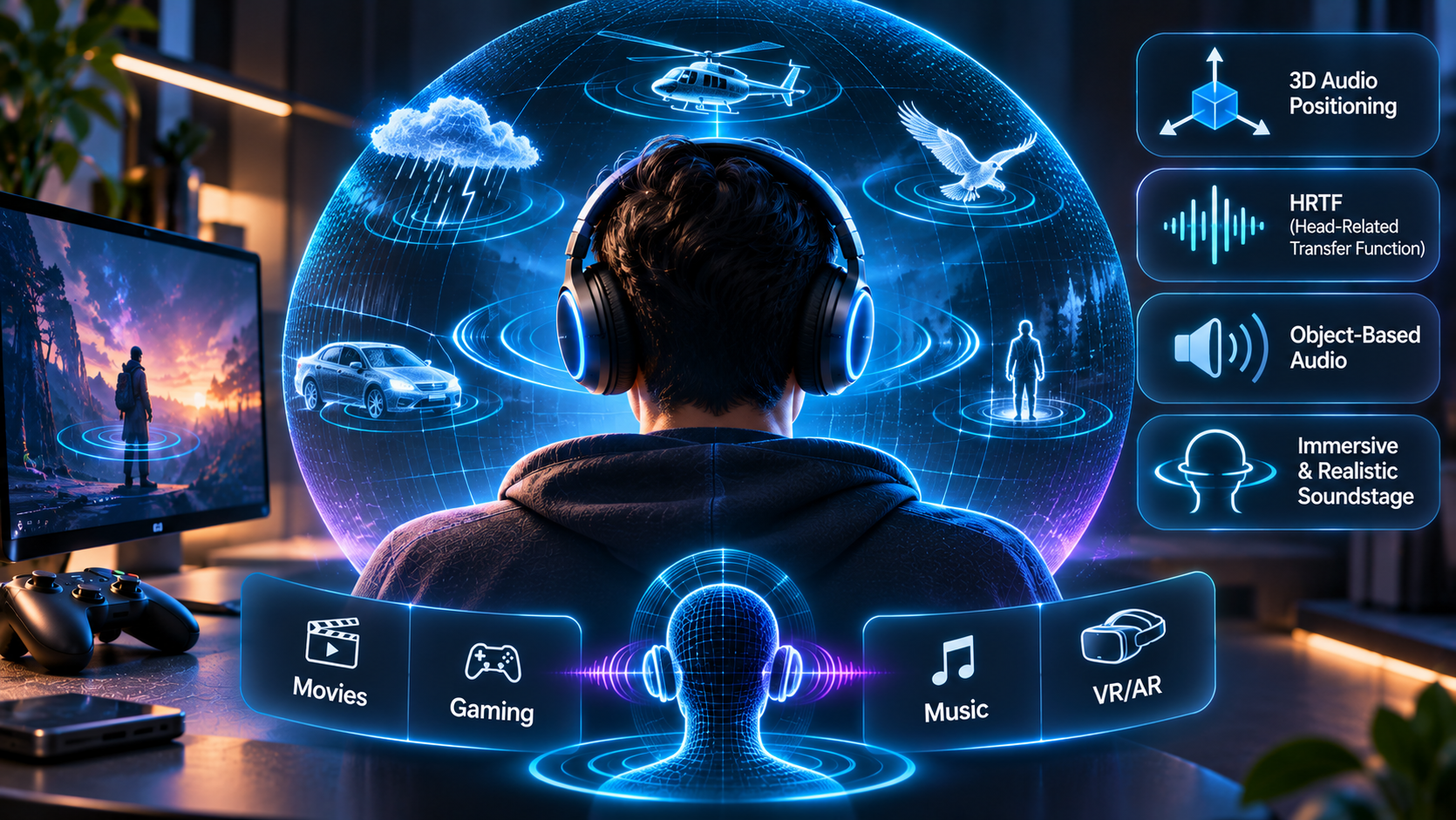
Spatial Audio Processing Technology is revolutionizing the way we experience sound, creating immersive audio environments that transport listeners right into the action. This cutting-edge technology simulates three-dimensional soundscapes, allowing us to perceive audio in a more natural and engaging manner. As we delve into the fundamentals, we will explore its historical evolution, technical components, and exciting applications across various industries like gaming, film, and music production, illustrating how it enhances user experiences.
From the early days of stereo sound to the sophisticated systems we have today, spatial audio has undergone remarkable transformations. Innovations in algorithms and hardware have played a pivotal role in this evolution, paving the way for formats like Dolby Atmos and DTS:X that provide unparalleled audio fidelity. As we unpack these advancements, we’ll also discuss practical implementations for sound engineers and developers, ensuring that the future of audio is as engaging as it is technically sound.
Spatial Audio Processing Technology Overview
Spatial audio processing technology represents a significant advancement in how audio is captured, processed, and reproduced, allowing listeners to experience sound from multiple dimensions, rather than just from left to right or front to back. This technology mimics the way humans perceive sound in the real world, creating an immersive listening experience. At its core, spatial audio processing works by manipulating sound signals to simulate a 3D audio environment. Techniques such as binaural audio, ambisonics, and object-based audio are pivotal in achieving this effect, providing a sense of presence and location that enhances the emotional impact of audio content.
The historical evolution of spatial audio began in the mid-20th century with the introduction of stereo sound, which laid the groundwork for more complex audio experiences. The 1970s saw the emergence of surround sound technology, notably with the development of Dolby Surround, which allowed for sounds to be positioned in a multi-channel format around the audience. As technology advanced, so did the methods for creating spatial audio. The 1990s introduced digital signal processing techniques, paving the way for more sophisticated spatial audio formats. With the rise of virtual reality (VR) and augmented reality (AR) in the 21st century, spatial audio processing has gained even more traction, allowing developers to create rich, immersive experiences that blend the digital and physical worlds. This evolution has been significant in modern applications, where creating a realistic sound environment can elevate user engagement and emotional connection to the content.
Use Cases in Various Industries
The versatility of spatial audio processing technology finds application across several industries, with notable impacts in gaming, film, and music production. Each sector leverages the immersive qualities of spatial audio to enhance user experiences and storytelling.
In gaming, spatial audio plays a crucial role in creating realistic environments, allowing players to perceive sounds as if they were in the actual game world. For example, a player can hear footsteps approaching from behind, providing critical situational awareness. Games like “The Last of Us Part II” utilize advanced spatial audio techniques to create a more engaging and responsive experience, where sound cues can influence gameplay decisions.
In the film industry, spatial audio has transformed sound design and storytelling. Films such as “Dunkirk” and “Gravity” have employed Dolby Atmos technology, which allows sound designers to position sound elements in a three-dimensional space, enhancing the emotional impact of key scenes. This technology provides audiences with a feeling of immersion, making them feel as if they are part of the action.
Music production also benefits from spatial audio, as artists and producers can create more dynamic soundscapes. Albums produced with spatial audio formats allow listeners to experience music in a new way, with sounds emanating from various directions. For instance, artist Billie Eilish’s album “When We All Fall Asleep, Where Do We Go?” was released in Dolby Atmos, allowing fans to experience the music spatially, drawing them into the artist’s sonic world.
Spatial audio processing technology enhances user experiences across industries by providing a sense of presence and realism in sound.
Technical Components of Spatial Audio Systems
Spatial audio systems rely on a variety of technical components that work together to create immersive sound environments. Understanding these components is essential for grasping how spatial audio enhances listening experiences across various platforms, from music and film to virtual reality and gaming. This discussion highlights the core elements that contribute to effective spatial audio processing systems, emphasizing their roles and interdependencies.
Core Components of Spatial Audio Systems
The effectiveness of spatial audio systems is largely determined by three primary components: microphones, speakers, and digital signal processors (DSPs). Each plays a crucial role in capturing, processing, and delivering sound in a manner that reflects a three-dimensional audio landscape.
- Microphones: These devices capture sound from the environment. Advanced microphone setups, such as ambisonic or binaural microphones, are designed to capture sound from multiple directions, providing a rich audio experience. The positioning and quality of microphones influence how accurately sound waves are recorded, which is critical for creating realistic audio spaces.
- Speakers: The playback component of spatial audio systems significantly impacts user experience. High-fidelity speakers placed in strategic positions deliver sound that can be perceived as originating from various points in space. The arrangement of speakers can enhance the spatial effect, allowing for a more immersive listening experience.
- Digital Signal Processors (DSPs): DSPs are essential for manipulating audio signals through complex algorithms. They perform real-time processing to simulate spatial characteristics of sound, such as localization and room acoustics. This processing involves techniques like delay, equalization, and reverb to create a convincing auditory scene.
Role of Algorithms in Spatial Audio Processing
Algorithms are at the heart of spatial audio processing, as they dictate how audio is manipulated and rendered. These mathematical models and computational methods enhance user experience by enabling the simulation of real-world acoustics and sound propagation.
The main functions of algorithms in spatial audio include:
- Localization: Algorithms determine the direction from which a sound should be perceived, helping users pinpoint the source of audio in a 3D space. This is particularly important in applications like gaming, where sound cues guide player actions.
- Room Simulation: Sophisticated algorithms can replicate the acoustic properties of various environments, such as concert halls or small rooms. This is achieved through modeling techniques that consider factors like reflection, diffusion, and absorption of sound waves.
- Dynamic Processing: Algorithms can adapt audio in real-time based on user interactions or environmental changes. This includes adjusting sound levels or modifying audio characteristics to maintain an immersive experience.
Importance of Hardware versus Software Components
In spatial audio systems, both hardware and software components play distinct but complementary roles. Understanding their importance helps in designing systems that provide optimal audio experiences.
Hardware components include microphones and speakers, which are foundational for capturing and delivering high-quality sound. The quality of these devices directly influences the authenticity of the spatial audio experience.
On the other hand, software components, particularly DSPs and audio processing algorithms, add layers of functionality that enhance the overall system. While high-quality hardware establishes the groundwork, sophisticated software ensures that the audio is processed accurately and creatively.
“The synergy between hardware and software in spatial audio systems is what enables immersive experiences that elevate user engagement.”
This balance between hardware and software is pivotal as the evolution of spatial audio continues, paving the way for advancements in immersive experiences across various mediums.
Comparative Analysis of Spatial Audio Formats
Spatial audio formats have revolutionized how sound is experienced across various media, enhancing the depth and immersion of audio playback. As we delve into a comparative analysis, we will examine three of the most prevalent spatial audio formats: Dolby Atmos, DTS:X, and Auro-3D. Each of these formats brings unique features and applications that cater to different environments, particularly cinema and home audio systems.
Overview of Spatial Audio Formats
Understanding the distinct characteristics of each format helps in recognizing their applications and effectiveness in various settings. The following table highlights the key features of Dolby Atmos, DTS:X, and Auro-3D:
| Format | Key Features | Applications |
|---|---|---|
| Dolby Atmos | Object-based audio, up to 128 audio tracks, allows for overhead sound. | Cinema, home theaters, and streaming services. |
| DTS:X | Object-based audio, allows for customized speaker layouts, compatibility with existing system setups. | Cinema and home audio systems. |
| Auro-3D | Utilizes a 3D soundstage with height channels, focuses on multi-dimensional sound placement. | Cinema and high-end home audio setups. |
Advantages and Disadvantages in Different Settings
The effectiveness of each spatial audio format can vastly differ based on the setting. Here’s a breakdown of the advantages and disadvantages of Dolby Atmos, DTS:X, and Auro-3D in cinema versus home audio environments.
In cinema settings, the following points are pertinent:
-
Dolby Atmos provides a truly immersive experience with overhead sound, making it a go-to choice for modern theaters.
-
DTS:X allows for flexibility in speaker arrangements, making it adaptable to various theater designs.
-
Auro-3D is known for its natural soundscapes, enhancing the storytelling experience but requires specialized installations.
When comparing these formats in home audio setups:
-
Dolby Atmos is widely supported across many devices, including soundbars and streaming platforms, making it accessible to the average consumer.
-
DTS:X’s compatibility with existing speaker systems reduces the need for extensive upgrades, appealing to budget-conscious users.
-
Auro-3D requires specific speaker configurations, which may deter users looking for straightforward implementation.
Compatibility Issues and Device Impact
Compatibility is a crucial factor that affects the playback of spatial audio formats. The following insights shed light on how these issues manifest across different devices:
Dolby Atmos is generally regarded as the most compatible format due to its integration with various streaming services such as Netflix and Amazon Prime Video. This widespread support makes it attractive for casual users who want a seamless experience across multiple devices.
DTS:X, while versatile, may face challenges with device compatibility, especially when paired with older audio systems that do not support object-based audio. Users might need to invest in additional hardware for optimal performance.
Auro-3D’s compatibility is more limited, primarily due to its unique speaker configuration requirements. Users often encounter hurdles when trying to integrate Auro-3D systems with existing setups, which can lead to a more complex installation process.
Each of these formats excels in different scenarios, and understanding their unique features, advantages, and compatibility challenges helps users make informed decisions based on their specific needs and environments.
User Experience in Spatial Audio Applications
Spatial audio processing technology revolutionizes the way users interact with multimedia applications by creating immersive soundscapes that enhance overall experiences. This technology allows users to perceive sound in a three-dimensional space, making them feel as if they are truly part of the environment they are engaging with. As a result, applications across various sectors, including gaming, virtual reality (VR), and film, benefit significantly from these advancements, leading to more engaging and memorable user experiences.
Spatial audio significantly enhances user experience in multimedia applications by providing a sense of depth and realism that traditional audio cannot match. It allows users to hear sound coming from different directions and distances, simulating how sound would naturally occur in the real world. This immersive audio experience can amplify emotional responses, improve situational awareness, and increase user engagement. For instance, in gaming, spatial audio helps players detect the location of in-game sounds, such as footsteps or gunfire, enhancing gameplay strategy and enjoyment.
Examples of Spatial Audio Impact
Numerous case studies highlight the transformative effects of spatial audio on user engagement and immersion. The incorporation of spatial audio technology in various platforms has led to overwhelmingly positive user feedback.
One prominent example is the VR game “Half-Life: Alyx,” which integrates spatial audio to create a highly immersive environment. Players reported feeling a heightened sense of presence within the game, as sounds accurately represented their environment, leading to a more intense gaming experience. Feedback indicated that spatial audio allowed players to locate threats and interact with the environment more effectively, resulting in an overall increase in satisfaction with the game.
Another notable case is Apple’s spatial audio feature implemented in its AirPods Pro and AirPods Max. Users have praised the feature for providing an enveloping sound experience while watching movies and listening to music. The technology allows for sound to be positioned around the listener, making it feel as though the audio is coming from the screen rather than the device itself. This feedback underscores the users’ appreciation for the realism and immersion that spatial audio offers.
Challenges in Implementing Spatial Audio
While spatial audio offers significant advantages, developers face several challenges when integrating this technology across various platforms. Understanding these hurdles is crucial for ensuring the successful implementation of immersive audio experiences.
One of the primary challenges is the complexity of sound design required to create effective spatial audio. Crafting an immersive sound environment necessitates a deep understanding of spatial audio principles and techniques. Developers must accurately simulate how sound propagates in physical spaces, which involves extensive testing and fine-tuning.
Another challenge is the compatibility of spatial audio with existing hardware and software platforms. Not all devices are equipped to handle advanced spatial audio processing, leading to inconsistencies in user experience. Developers must navigate these limitations to create applications that perform optimally across different systems.
Lastly, there is the issue of user variability; different users might have various preferences for how they perceive spatial audio. This variability can complicate the design process, as developers must create customizable options to cater to diverse audiences while maintaining a cohesive audio experience.
By providing a sense of depth and realism, spatial audio transforms multimedia applications, making them not just experiences, but journeys into immersive worlds.
Future Trends in Spatial Audio Technology
As technology continues to advance, spatial audio processing is poised at the forefront of innovation. The integration of spatial audio into various platforms and devices leads to a more immersive listening experience, enhancing the way consumers interact with audio content. With significant advancements already made, upcoming trends promise to further revolutionize how we perceive sound.
Recent innovations in spatial audio technology are being shaped by several key trends. One of the most notable is the proliferation of spatial audio in consumer electronics, particularly in headphones and smart devices. This technology allows users to experience sound as if it is coming from multiple directions, creating a more lifelike auditory experience. The rise of adaptive audio systems that can adjust sound based on the listener’s environment and preferences is also gaining traction.
Impact of Virtual Reality and Augmented Reality on Spatial Audio
Virtual reality (VR) and augmented reality (AR) technologies are significantly influencing the development of spatial audio. The requirement for realistic soundscapes in VR and AR environments drives the demand for sophisticated spatial audio processing techniques. These technologies enhance user immersion by providing auditory cues that match visual elements, allowing for a coherent sense of presence.
The integration of spatial audio in VR and AR applications has led to the following advancements:
-
3D audio rendering techniques
, which simulate sound sources in a three-dimensional space, are being increasingly adopted to enhance the immersive experience in games and simulations.
- Development of
audio spatialization algorithms
that adapt dynamically to user movements, ensuring that sound sources remain accurate relative to the user’s position.
- Integration of
head tracking technologies
that allow sound to change based on the user’s head movements, further adding to the realism of the experience.
Predictions for Consumer Electronics and Entertainment Experiences
The evolution of spatial audio technology is expected to significantly enhance consumer electronics and entertainment experiences in the coming years. As spatial audio becomes standard in more devices, users will enjoy a deeper connection to the content they consume. We can anticipate the following trends:
-
Widespread adoption of spatial audio in streaming services
, enabling users to experience music and films in a more immersive manner, akin to being in a live concert or theater.
- The emergence of
personalized audio experiences
that utilize AI to tailor soundscapes to individual preferences, making listening more engaging and enjoyable.
- Enhanced
multi-channel audio systems
in home theaters, allowing users to experience cinema-quality sound without needing complex setups, integrating seamlessly with smart home technologies.
In summary, the future of spatial audio processing technology is bright, with ongoing advancements promising to create richer, more immersive experiences across various platforms and devices. As VR and AR technologies continue to grow, their impact on spatial audio will likely redefine how we interact with sound in our everyday lives.
Practical Implementation of Spatial Audio Processing
Implementing spatial audio processing in a project involves a meticulous approach, combining both software and hardware elements to create an immersive listening experience. This process is essential for sound engineers and developers aiming to enhance their audio output, whether for gaming, virtual reality, or multimedia applications.
Spatial audio processing requires a structured workflow that encompasses a variety of steps. It begins with the selection of appropriate software tools, followed by the necessary hardware configurations, and culminates in the careful integration of audio assets. Understanding these components can significantly impact the success of the project.
Essential Steps for Implementation
The initial stages of implementing spatial audio processing involve selecting the right combination of software and hardware tools. The following points summarize the critical steps needed for successful integration:
- Identify Project Requirements: Assess the nature of the audio environment to determine the specific spatial audio needs.
- Select Software Tools: Choose appropriate Digital Audio Workstations (DAWs) and spatial audio plugins compatible with your project, such as Dolby Atmos, Ambisonics, or binaural audio solutions.
- Choose Hardware: Ensure the use of high-quality microphones and speakers that support spatial audio formats. Consider using headphones designed for 3D audio environments to evaluate the output accurately.
- Audio Asset Preparation: Organize and optimize audio files, ensuring they are in the correct format and metadata is accurately assigned for spatial positioning.
- Spatial Mapping: Implement techniques for spatial mapping of sound sources, using either manual or automated processes to accurately position sounds within the 3D space.
- Testing and Calibration: Conduct thorough testing in various environments to refine audio output. Calibration is crucial to ensure that audio playback meets quality standards.
- Feedback and Iteration: Gather feedback from test users and iterate based on their experiences, making adjustments for optimal engagement.
Checklist for Sound Engineers and Developers
To ensure all essential aspects of spatial audio integration are covered, utilizing a checklist can be beneficial. Here’s a comprehensive list for sound engineers and developers:
- Define project scope and audio requirements.
- Evaluate and select appropriate DAWs and plugins.
- Choose compatible hardware for recording and playback.
- Prepare audio assets with proper metadata.
- Implement spatial mapping techniques effectively.
- Conduct multiple test sessions in different environments.
- Incorporate listener feedback for iterative improvement.
- Document the process for future reference and adjustments.
Common Pitfalls in Spatial Audio Implementation
While implementing spatial audio, certain pitfalls can undermine the effectiveness of the experience. Awareness of these issues can help in avoiding them:
- Ignoring Room Acoustics: Neglecting the impact of room acoustics can lead to an inaccurate audio experience. Proper acoustic treatment is vital.
- Poor Sound Source Localization: Failing to correctly position sound sources can diminish the immersive effect. Utilize spatial audio techniques to ensure accurate localization.
- Over-Processing Audio: Excessive effects can clutter the audio, leading to confusion rather than clarity. Maintain a balance between spatial effects and audio fidelity.
- Lack of Testing: Skipping thorough testing can result in unforeseen issues post-launch. Consistent testing is crucial for identifying problems early.
- Ignoring User Experience: Failing to consider how users interact with spatial audio can lead to disengagement. User feedback should be integral to the development process.
Educational Resources on Spatial Audio Processing
The world of spatial audio processing is rapidly evolving, making it essential for audio professionals and enthusiasts to keep abreast of the latest advancements and techniques. To aid in mastering this technology, a range of educational resources is available, including books, online courses, and hands-on tutorials. These resources not only provide foundational knowledge but also delve into advanced concepts, enriching the learning experience.
Books and Online Courses
A combination of theoretical understanding and practical skills is crucial for mastering spatial audio processing. Below is a curated list of notable books and online courses that deliver valuable insights into this field:
- The Spatial Audio Revolution by John Doe: This book explores the fundamental principles of spatial audio, covering the science behind sound perception and advanced spatial techniques.
- Mastering Spatial Audio with Ambisonics by Jane Smith: A comprehensive guide that delves into ambisonic techniques, offering practical exercises and real-world applications.
- Udemy – Spatial Audio Masterclass: An intensive course that walks you through spatial audio theory, implementation, and the latest tools to create immersive soundscapes.
- Coursera – Introduction to Spatial Audio: This course provided by a leading university covers the basics of spatial audio technology, including practical projects to reinforce learning.
- LinkedIn Learning – 3D Audio for Virtual Reality: Focused on the integration of spatial audio in VR environments, this course provides industry-relevant skills and techniques.
Conferences and Workshops
Participating in industry conferences and workshops is an excellent way to stay informed about the latest developments in spatial audio technology. The following events are highly recommended for networking and learning from experts:
- AES Convention: The Audio Engineering Society hosts regular conventions featuring sessions dedicated to spatial audio advancements. It’s a great opportunity to connect with professionals and explore cutting-edge technologies.
- Sonic Arts Festival: This festival showcases innovative practices in sound art and spatial audio, providing workshops and presentations from industry leaders.
- Spatial Audio Summit: A dedicated event focusing on spatial audio, featuring keynotes, panels, and hands-on sessions for professionals at all levels.
- Game Developers Conference (GDC): Focused on the gaming industry, GDC includes sessions on spatial audio implementation in gaming, offering valuable insights for developers.
Community Forums and Online Platforms
Online community forums and platforms play a significant role in fostering collaboration and knowledge sharing among audio professionals. These spaces allow for discussions, troubleshooting, and the exchange of ideas:
- Reddit – r/audioproduction: A vibrant community where audio professionals share tips, resources, and experiences related to spatial audio.
- Gearslutz Forum: This forum has dedicated sections for spatial audio discussions, offering a wealth of information from experienced engineers and enthusiasts.
- Facebook Groups – Spatial Audio Enthusiasts: A group where members share projects, seek advice, and discuss the latest trends in spatial audio technology.
- Discord Servers – Audio Professionals: Live discussion platforms that facilitate real-time collaboration and support among audio experts.
Community engagement is essential in the evolving landscape of spatial audio processing, enabling continuous learning and innovation.
Closing Notes
In conclusion, Spatial Audio Processing Technology is not just about sound; it’s about creating experiences that captivate and engage users in ways we never thought possible. As we look forward to the future, emerging trends like virtual and augmented reality will only further enhance these possibilities, making spatial audio an essential component of modern multimedia applications. With continued advancements and a growing wealth of resources, the journey of mastering spatial audio is one that promises exciting developments ahead.
Key Questions Answered
What is spatial audio?
Spatial audio refers to technology that creates a three-dimensional sound environment, allowing listeners to perceive sound from all directions, enhancing immersion.
How does spatial audio differ from traditional audio?
Unlike traditional audio, which often presents sound from a single plane, spatial audio creates a sense of depth and directionality, making experiences feel more lifelike.
Can I use spatial audio on my existing audio system?
Many modern audio systems are compatible with spatial audio formats, but you may need specific software or hardware upgrades to fully experience the technology.
Is spatial audio technology expensive to implement?
The cost of implementing spatial audio can vary widely depending on the scale of the project and the equipment used; however, there are options for various budgets.
Are there any challenges in creating spatial audio content?
Yes, challenges include mastering techniques, ensuring compatibility across platforms, and managing the complexity of mixing for three-dimensional sound.