Over 30% of the global economy depends directly on raw material movements. These essential building blocks, known as real assets, power smartphones, cars, and many other everyday products. Learning the commodity market is vital for anyone building a stronger financial future.
Commodities are raw materials traded in bulk, including energy, metals, farm products, and livestock. Whether you favor commodity investing or want to understand global price changes, learn how these markets work. You can participate without storing oil barrels or wheat tons in your garage.
Today, investors gain exposure through futures contracts, exchange-traded products, and company stocks. Diversifying across these sectors may help hedge inflation and protect portfolios from market volatility.
Key Takeaways
- These assets represent fundamental raw materials used in global production and consumption.
- The market is divided into hard assets like metals and energy, and soft assets like agriculture.
- Investors can gain exposure through futures, ETFs, or stocks rather than physical ownership.
- Supply and demand dynamics, influenced by weather and geopolitics, drive price fluctuations.
- Adding these to a portfolio serves as a strategic hedge against inflation and economic uncertainty.
Why commodities differ from stocks, bonds, and cash
Unlike familiar stocks and bonds, the commodity asset class follows unique physical and economic rules. Buying a company share gives you a claim on future earnings and growth. Commodities are raw materials that exist in the physical world.
These financial assets do not create cash flow in the usual way. A bond pays interest, and a stock may offer dividends. A barrel of oil or bushel of wheat produces no yield, so returns depend on price gains, not regular income.
Their value comes from global supply and demand, not corporate balance sheets. For instance, crude oil benchmarks respond quickly to geopolitical tensions or production quota changes. Scarcity and usefulness guide these physical inputs, often giving them a low link to broad equity markets.
The following table shows the main differences between these investment choices and their portfolio roles:
| Feature | Stocks & Bonds | Commodities |
|---|---|---|
| Primary Return | Dividends & Interest | Price Appreciation |
| Value Driver | Corporate Earnings | Supply & Demand |
| Income Potential | High (Regular) | None (Zero) |
| Market Role | Capital Growth | Inflation Hedge |
Because commodities lack the contracts found in debt instruments, they act differently during economic cycles. Investors often use them as a strategic tool to guard against inflation when cash loses purchasing power. This difference matters when diversifying beyond traditional paper-based financial assets.
Which commodities are traded most often
Commodities range from raw materials to basic food supplies. Four main pillars group these goods by physical traits, production cycles, and economic use. These groups help explain how global markets work.
“Commodities are the building blocks of the global economy, representing the fundamental resources that power our lives and sustain our growth.”
Energy commodities
The energy commodities market strongly influences global finance. It includes crude oil, heating oil, natural gas, and gasoline. These resources power transport and factories, so prices can show wider economic changes.
Precious and industrial metals
Metals fall into two groups based on their main uses. Precious metals, such as gold and silver, often store value or protect against inflation. Industrial metals, including copper, aluminum, and nickel, support construction and technology manufacturing.
Monetary policy often moves precious metals prices. Infrastructure spending and factory output strongly affect industrial metals. Both groups help balance a diverse portfolio.
Agricultural commodities
This sector includes crops that feed the world, such as corn, wheat, soybeans, and sugar. Investors often use agricultural futures to access these markets. Weather and seasonal harvests strongly influence their prices.
Because these goods spoil, storage and transport affect their prices. Market participants must consider these limits when studying supply and demand.
Livestock commodities
The livestock sector includes cattle, hogs, and other animals raised for food. Like other agricultural futures, these markets follow unique biological cycles and health rules. Producers and buyers use these markets to manage risks linked to raising and processing livestock.
- Energy: Oil, gas, and power.
- Metals: Gold, silver, and copper.
- Agriculture: Grains and softs.
- Livestock: Cattle and hogs.
These four pillars clarify how global supply chains connect with financial tools. Whether tracking precious metals or following industrial metals, market participants find distinct opportunities in each sector.
How commodity markets connect producers, businesses, and investors
Commodity markets link raw-material producers with businesses that depend on those materials. They move goods from their source to final consumers. These markets offer a central place to manage global trade risks.
Producers and commercial buyers
At one end, commodity producers extract or grow raw materials, such as oil, wheat, and copper. At the other, commercial buyers, including food manufacturers and energy companies, use them in finished products. Both groups face changing market prices.
To manage this uncertainty, participants use hedging price risk. They lock in future prices to plan revenue, input costs, and inventory levels. This stability helps maintain steady operations in a volatile global economy.
Exchanges and over-the-counter markets
Most standardized trading takes place on commodity exchanges, which offer high liquidity and transparency. Their uniform contracts help investors and businesses enter or leave positions quickly. Standard terms show each participant what they are buying or selling.
Some businesses need more flexibility than standard contracts allow. They use over-the-counter (OTC) markets for forwards and swaps. These private agreements can set custom quantities, delivery locations, and product specifications. They help firms continue hedging price risk while meeting operational needs.
How spot prices, futures, contango, and backwardation work
To understand commodity markets, we must study spot market pricing and the futures curve. supply and demand drivers shape raw material prices today and months ahead.
Spot prices versus futures prices
The spot price shows the current cost to buy or sell a commodity for immediate delivery. A futures price sets an agreement to trade that asset on a specific future date.
Several factors make these prices differ. Storage costs, insurance, and interest rates help set a futures contract’s price. If holding a physical asset costs money, its futures price usually exceeds its spot price.
Contango and its effect on returns
Contango occurs when the futures price exceeds the expected future spot price. This creates an upward-sloping curve, with higher delivery costs farther into the future.
For investors, this market can be difficult. A futures-based investment requires selling the expiring contract and buying a more expensive one. This step, called rolling, often creates a negative roll yield and can reduce total returns over time.
Backwardation and its effect on returns
Backwardation is the opposite of contango. It occurs when the spot price exceeds the futures price, creating a downward-sloping curve.
This market state often signals tight immediate supply. Investors with long positions in a backwardated market may gain a positive roll yield. As expiration nears, the futures price tends to rise toward the higher spot price, adding value even if the commodity price stays flat.
Which ways can new investors invest in commodities
Entering commodities does not require owning a warehouse or farm. Various financial tools let investors track prices without storing physical goods.
The best choice depends on your risk tolerance and goals. You can choose a simple fund or direct ownership of a metal.
Commodity ETFs and exchange-traded products
Many investors begin with commodity ETFs. These funds track one commodity or a broad basket of raw materials. With exchange-traded products, you can buy and sell shares on a stock exchange like regular company shares.
These products often use futures contracts to follow price changes. However, management fees and contract-rolling costs can make them differ from the actual spot price.
Commodity-producing stocks and funds
Another popular choice is buying commodity-producing stocks. Rather than tracking oil or gold directly, you invest in companies that extract, refine, or process these materials. This approach can provide gains from business success and dividends.
These stocks respond to market prices and company-specific factors. Management decisions, debt levels, and operating efficiency can strongly affect their performance.
Physical commodities and precious metals
Investors who prefer tangible assets may choose physical commodities. This often means precious metals, such as gold or silver, held as coins or bars. Direct ownership also brings secure storage and insurance costs.
Some investors choose specialized funds that hold the actual metal in a vault. This provides asset exposure without requiring you to manage physical security.
| Investment Type | Primary Exposure | Key Consideration |
|---|---|---|
| Commodity ETFs | Futures Contracts | Management Fees |
| Producing Stocks | Company Performance | Operational Risk |
| Physical Metals | Direct Ownership | Storage Costs |
How traders use futures and options
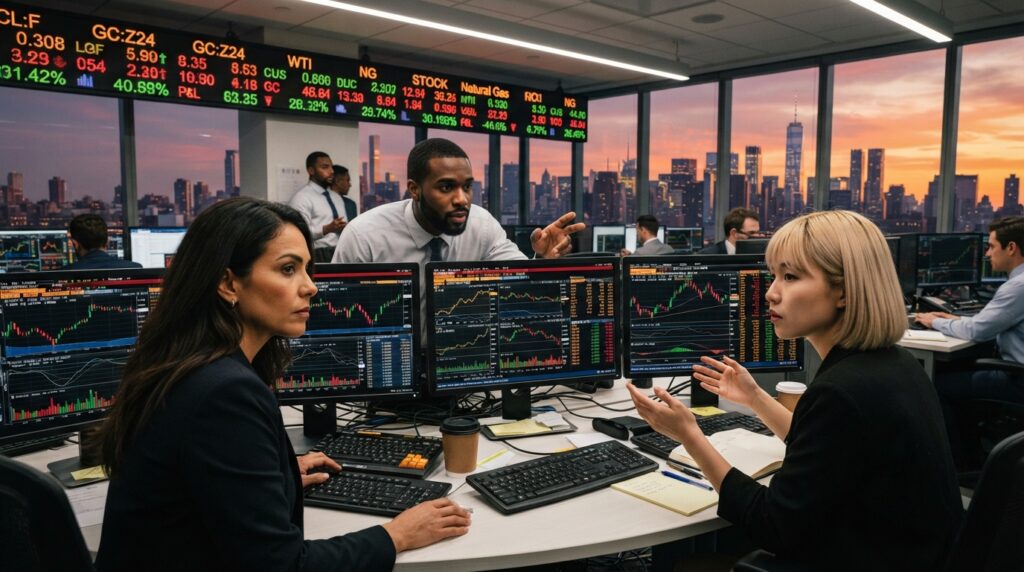
Understanding futures and options is essential for serious market participants. These tools belong to derivatives trading, which provides exposure to price changes without handling goods like oil or wheat.
Traders use these instruments to hedge price volatility or speculate on future market directions. However, these strategies require knowledge of leverage and contract specifications in real-time markets.
Futures contracts and margin
A futures contract legally sets a commodity quantity, price, and future date for buying or selling. Unlike stocks, these contracts have fixed expiration dates, so traders must close or roll positions before maturity.
To enter these positions, traders must post futures margin. This is not a down payment but a performance bond that helps cover potential losses.
Because these contracts use high leverage, small price moves can cause major gains or losses. Risk management is therefore critical when trading futures contracts.
Options on commodity futures
If you prefer flexibility, commodity options let you buy or sell futures contracts at a specific price, without obligation. This feature limits your potential risk to the option premium.
When you engage in this type of derivatives trading, you must consider the strike price and expiration date. If the market moves against you, the option may expire worthless.
Using commodity options supports complex strategies based on market volatility or sideways price action. The premium is the maximum loss on a long option position.
| Feature | Futures Contracts | Commodity Options |
|---|---|---|
| Obligation | Mandatory to fulfill | Optional (Right to exercise) |
| Risk Profile | High (Unlimited potential loss) | Limited (Premium paid) |
| Capital Required | Initial margin deposit | Premium payment |
| Primary Use | Direct price speculation | Hedging and volatility plays |
What moves commodity prices
Commodity markets change as physical conditions and macroeconomic trends interact. Identifying the primary commodity price drivers shows why values shift quickly on global exchanges.
Supply disruptions and production changes
Raw material availability is often the most immediate factor affecting price. When supply chains face unexpected hurdles, prices can react with significant volatility.
Geopolitical instability, mining strikes, and severe weather events can halt production overnight. Companies also adjust output based on current inventory levels, directly changing total market supply.
Consumer demand and economic growth
Business and consumer demand strongly influence prices. When economic growth accelerates, manufacturing and construction need more raw materials for rising output.
A slowdown in global industrial activity often reduces demand. This creates a feedback loop as market participants adjust expectations about the broader economy’s health.
Interest rates, inflation, and the U.S. dollar
Macroeconomic forces help determine the long-term direction of commodity values. Higher interest rates raise financing costs and often discourage large-scale inventory holding.
Inflation acts as a major catalyst because investors often choose physical assets to protect purchasing power. Most commodities use the U.S. dollar for pricing. A stronger currency makes goods more expensive for international buyers, reducing demand and pushing prices down.
Why investors add commodities to portfolios
Adding commodities to your holdings offers a different way to manage market cycles. Many investors seek portfolio diversification to reduce volatility affecting stocks and bonds at the same time. Assets that move differently from traditional securities can create a more balanced financial foundation.
Real assets can serve as a reliable inflation hedge when prices rise. As living costs increase, raw materials such as energy, metals, and grains often rise in value too. This feature can protect your purchasing power when paper assets cannot keep pace with the economy.
The return potential of commodities attracts many active market participants. These assets respond to global supply and demand gaps, so they can gain in certain economic conditions. Other investments may remain stagnant, but results vary greatly by sector and market cycle.
Effective asset allocation requires understanding how different classes interact within a portfolio. Commodities do not guarantee safety, but they offer a unique way to manage risk exposure. The following table shows how these assets generally compare with traditional investment vehicles.
| Asset Class | Primary Role | Inflation Sensitivity | Correlation to Stocks |
|---|---|---|---|
| Commodities | Diversification | High | Low |
| Equities | Growth | Moderate | High |
| Fixed Income | Income/Stability | Low | Moderate |
| Cash | Liquidity | Negative | Very Low |
Ultimately, adding commodities means building a stronger strategy instead of chasing short-term trends. By considering your goals carefully, you can decide whether these assets fit your long-term financial objectives. Always assess how new additions affect your overall risk profile before making significant changes.
What risks can commodity investing and trading bring
Commodity investing requires careful attention to risks that can affect your capital. These assets offer diversification, but understanding commodity investment risks is vital for every participant. Raw-material markets often differ from traditional stock markets, so use disciplined risk management.
Price volatility and market gaps
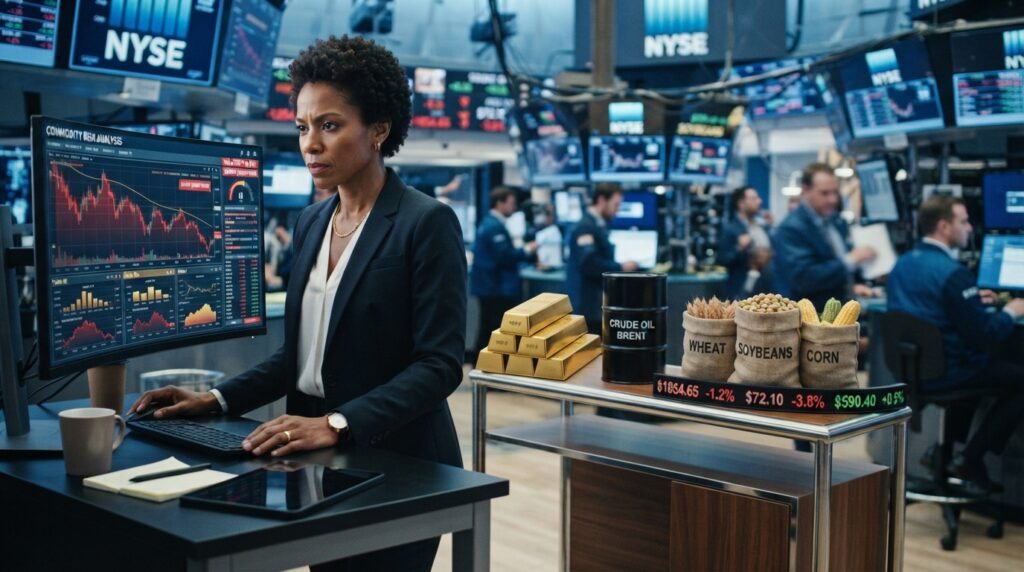
Commodity markets often experience intense price volatility. Supply shocks, geopolitical tensions, and weather events can quickly change values in unpredictable ways. These moves can create market gaps, when prices jump without trades between levels.
“The commodity market is not for the faint of heart; it is a place where supply and demand forces collide with extreme speed.”
Investors should prepare for these fluctuations. Because commodities respond to global events, calm markets can become turbulent within hours. During high stress, this environment can make trades difficult at desired prices.
Leverage, margin calls, and losses
Many traders use leverage to increase exposure to commodity price movements. It may raise gains, but it also magnifies significant losses. When a position moves against you, equity requirements can trigger margin calls.
A margin call requires you to deposit more funds or close your position immediately. If you fail to meet the requirement, your assets may be liquidated at unfavorable prices. Always remember that leverage is a double-edged sword and can deplete your account balance quickly.
Tracking errors, storage costs, and fund expenses
Financial products may create structural challenges that affect your returns. A common issue is tracking error, which occurs when an exchange-traded product’s performance differs from the underlying commodity’s actual spot price. You can learn more about these complexities in this customer advisory on commodity ETPs.
Beyond tracking issues, investors must consider these operational costs:
- Storage and Insurance: Physical commodities require secure facilities, which adds ongoing maintenance costs.
- Management Fees: Funds often charge annual expense ratios that slowly erode total returns over time.
- Roll Yield: The cost of selling expiring futures contracts and buying new ones can create a drag on performance.
These expenses may remain hidden within the investment vehicle’s structure. Review every fund prospectus to learn how these costs may affect your long-term objectives.
How to choose between investing and trading commodities
Choosing between commodities means choosing passive holding or active market participation. Base your choice on your financial goals, risk tolerance, and time for monitoring positions. Understanding these differences is essential for building a balanced portfolio.
A long-term investing approach
Investors who prefer a hands-off style often choose long-term commodity investing. This strategy uses diversified funds or exchange-traded products for broad exposure to raw materials over several years. Holding these assets can hedge against inflation or capture long-term growth cycles in global demand.
Many people choose commodity-related equities, such as mining or energy stocks, to gain this exposure. These companies connect to commodity prices but also face corporate risks, including management decisions and operating costs. These stocks often act more like traditional equities than physical commodities.
A short-term trading approach
If you enjoy analyzing market data and reacting to news, short-term commodity trading might suit you. This approach requires a disciplined trading strategy focused on price movements, technical indicators, or event-driven catalysts. Traders often use futures and options to profit from volatility instead of holding assets long term.
Success in this arena demands constant vigilance and quick decision-making. Markets can shift rapidly because of supply disruptions or economic reports, so you must exit positions quickly to manage risk. Unlike long-term investors, short-term participants focus less on asset value and more on the fluctuation of market prices.
How to research and start a commodity position
A successful commodity position begins long before your first trade. Thorough commodity research helps you understand supply and demand, which drive price changes. Good preparation helps you avoid common traps for inexperienced market participants.
Define your objective and acceptable risk
Before investing capital, decide whether you want long-term exposure or short-term speculative gains. Your goals determine the instruments you choose and how long you hold them. Always align your strategy with your personal financial situation.
“The essence of investment management is the management of risks, not the management of returns.”
You should also set your maximum acceptable loss for each position. Setting this limit early helps you stay calm when market volatility rises. If you need help, explore a best investment platform to organize your portfolio goals.
Compare the product, fees, and exposure
Commodity products differ, so assess the structure of your chosen vehicle. Watch investment fees, because high expense ratios can reduce long-term returns. Compare the underlying assets of ETFs with direct futures contracts to ensure the exposure matches your expectations.
Liquidity is another key factor in your analysis. Make sure you can enter and exit positions without excessive slippage. Review the fund’s prospectus or contract specifications to learn how the product tracks the spot price.
Use position sizing and an exit plan
Effective position sizing is your most important capital protection tool. Limiting each trade’s size helps prevent one market downturn from threatening your entire account. Never risk more than a small percentage of your total capital on one commodity trade.
Finally, create a strict exit plan before opening any position. Include predetermined stop-loss orders to guard against unexpected market gaps. Discipline is the bridge between your research and your actual results.
Conclusion
Navigating raw materials calls for disciplined risk management and a clear strategy. Mastering commodity investing basics can support successful portfolio diversification.
Your journey in this asset class should include ongoing commodity market education. Markets can shift quickly because of global events, weather patterns, and geopolitical changes. Tracking these trends helps you adjust positions with confidence.
Apply these principles to your own financial goals. Informed investing remains the most effective way to manage volatility in gold, oil, and agricultural products.
Review your risk tolerance before committing capital to new trades. Small, calculated steps often produce better long-term outcomes than impulsive choices. Monitor your performance and refine your strategy as you gain experience in these dynamic markets.