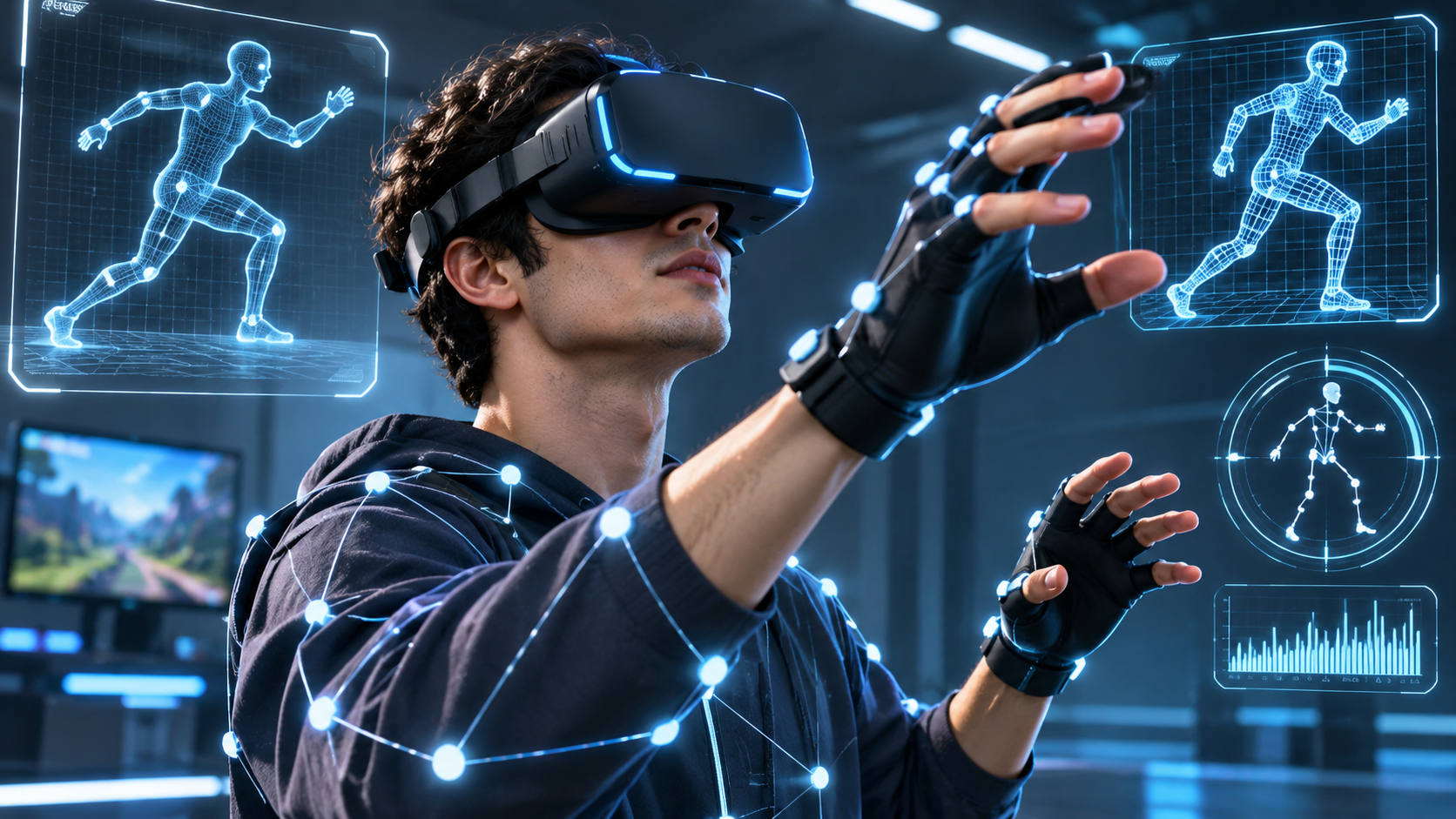
VR Motion Tracking Accuracy is a fascinating subject that delves into the intricate world of virtual reality technologies. As VR continues to grow, understanding how motion tracking works and its significance becomes crucial for both developers and users. The accuracy of motion tracking directly impacts user experiences, making this an essential area of exploration for anyone passionate about VR applications and advancements.
From the fundamentals of how motion tracking systems operate to the latest technological innovations, this discussion reveals the layers that contribute to achieving optimal tracking precision. Whether it’s through analyzing different technologies, examining user feedback, or investigating software improvements, each aspect plays a vital role in enhancing the overall VR experience.
Understanding the Fundamentals of VR Motion Tracking Technology
Virtual reality (VR) systems rely heavily on motion tracking technology to create immersive environments that respond accurately to user movements. The effectiveness of these systems is largely dependent on how well they can detect and interpret the physical movements of users in real time. Motion tracking allows users to interact with the virtual world in a natural manner, enhancing the overall experience and functionality of VR applications.
At its core, motion tracking technology involves detecting the position and orientation of a user’s body or specific body parts, translating those movements into digital data that the VR system can understand. This data is then used to manipulate the virtual environment in a seamless manner, enabling users to look around, move, and interact with virtual objects. Various methods and technologies exist to achieve this tracking, each with its own strengths and weaknesses.
Core Principles of Motion Tracking
The foundation of motion tracking technology encompasses several key principles that ensure accurate and responsive tracking. These principles include:
1. Positional Tracking: This principle focuses on determining the exact position of an object in three-dimensional space. It is crucial for translating user movements accurately within the VR environment.
2. Orientation Tracking: Orientation refers to the direction an object is facing. Combining positional and orientation tracking allows for full spatial awareness, essential for an immersive VR experience.
3. Latency Minimization: Reducing the delay between a user’s movement and the corresponding action in the virtual environment is vital. High latency can lead to a disorienting experience, detracting from immersion.
4. Calibration: Proper calibration of the tracking system is necessary to ensure that the movements of the user correspond accurately to the virtual representation. This often involves setting up the environment and the tracking devices in a specific way.
Types of Motion Tracking Technologies
Various motion tracking technologies are utilized in VR systems today, each offering distinct advantages and limitations. Below is an overview of the main types:
– Optical Tracking: This technology uses cameras to track markers placed on the user or objects within the environment. The system analyzes the data captured by the cameras to determine position and orientation. Optical tracking is known for its high accuracy but can be affected by factors like lighting conditions.
– Inertial Tracking: Utilizing accelerometers and gyroscopes, inertial tracking measures the acceleration and rotation of the tracked objects. This method is less dependent on external conditions, providing flexibility in tracking; however, it can suffer from drift over time, leading to inaccuracies.
– Magnetic Tracking: Magnetic sensors track the position and orientation of objects based on magnetic fields. This technology can be very precise but is susceptible to interference from metallic objects and requires careful calibration.
– Hybrid Tracking: Combining various tracking methods, hybrid systems aim to leverage the strengths of each technology while compensating for weaknesses. For example, a system might use both optical and inertial tracking to reduce drift and enhance accuracy.
Impact of Hardware Components on Tracking Accuracy
The accuracy of motion tracking in VR is significantly influenced by the hardware components used in the system. Key elements that affect tracking performance include:
– Sensors: The quality and type of sensors play a critical role in motion tracking accuracy. High-resolution sensors can detect even minor movements, improving the precision of the tracking system.
– Processing Power: The capabilities of the processing unit determine how quickly and efficiently the system can interpret sensor data. Faster processing minimizes latency and enhances the responsiveness of the virtual environment.
– Tracking Environment: The physical space in which the tracking occurs also impacts accuracy. Factors such as the layout, size, and presence of obstacles can affect how well tracking devices can operate.
– Calibration Tools: Advanced calibration tools help ensure that the system is set up correctly, which is essential for maintaining high levels of accuracy. Poor calibration can lead to drift and misalignment in the virtual world.
The interplay between these hardware components and the tracking technologies ultimately defines the user experience in virtual reality, making it essential for developers and designers to prioritize accuracy and responsiveness in VR applications.
Analyzing Factors That Influence Motion Tracking Accuracy
The accuracy of VR motion tracking is a critical element in ensuring a seamless and immersive virtual experience. Understanding the various factors that can influence this accuracy is essential for developers, users, and researchers alike. In this segment, we will delve into the environmental conditions, the impact of user anatomy and movement patterns, and the comparison between passive and active tracking systems.
Environmental Conditions Affecting Tracking Performance
Several environmental factors can significantly impact the performance of VR motion tracking systems. Lighting conditions, for example, play a vital role; excessive brightness or direct sunlight can hinder the effectiveness of optical tracking systems, while low light may impede tracking accuracy.
Additionally, the physical layout of the tracking area is crucial. Cluttered spaces with obstacles can obstruct sensors or cameras, resulting in lost tracking data.
Key environmental factors include:
- Lighting: Optimal lighting is essential, as varying light conditions can lead to tracking inaccuracies.
- Space Configuration: A clean and unobstructed tracking area enhances sensor performance.
- Surface Materials: Reflective or matte surfaces can affect sensor detection, altering tracking fidelity.
- Presence of Other Devices: Other electronic devices may emit signals that interfere with tracking systems.
User Anatomy and Movement Patterns
User anatomy and individual movement patterns are pivotal in determining motion tracking precision. Variations in height, limb length, and body proportions can cause differences in how effectively the system interprets movements. For instance, taller users may encounter difficulties with certain tracking setups designed for average heights.
Moreover, the way users move impacts tracking precision. Fluid, natural movements are generally easier for tracking systems to capture accurately compared to abrupt or erratic motions.
To illustrate these points:
- Body Size and Shape: Customized tracking setups may be necessary for users with atypical body dimensions.
- Movement Style: Smooth, consistent movements enhance tracking accuracy, while quick, jerky actions can lead to errors.
- Familiarity with VR: Experienced users often demonstrate better tracking performance due to their refined movement control.
Comparison of Passive and Active Tracking Systems
Motion tracking systems can be broadly classified into two categories: passive and active systems. Each type has its own set of advantages and challenges relating to accuracy.
Passive tracking systems, which rely on reflected light or infrared signals, may provide cost-effective solutions but can suffer from limitations under varying environmental conditions. Active tracking systems, on the other hand, use their own emitters to send signals, generally yielding higher accuracy and reliability.
When comparing the two:
- Accuracy: Active systems typically offer superior accuracy due to their ability to emit and detect signals independently.
- Cost: Passive systems tend to be more affordable but at the cost of potential tracking inconsistencies.
- Complexity of Setup: Active systems may require more sophisticated configurations and calibration than passive systems.
Evaluating Different VR Systems and Their Motion Tracking Capabilities
In the rapidly evolving world of virtual reality (VR), the effectiveness of motion tracking systems plays a crucial role in delivering an immersive experience. Each VR platform employs different tracking technologies, leading to varying levels of accuracy, responsiveness, and user satisfaction. Understanding these differences can help users select the best system for their needs while also shedding light on the ongoing advancements in VR technology.
The analysis of leading VR systems reveals a variety of tracking methods, including inside-out and outside-in tracking. Inside-out tracking uses cameras mounted on the headset to map the environment and track movement, while outside-in tracking relies on external sensors positioned around the play area to capture the user’s position. Each approach has its distinctive advantages and limitations, significantly impacting the overall VR experience.
Comparative Analysis of Leading VR Systems
A deeper look into the most prominent VR systems currently available will provide insights into their motion tracking capabilities. Below are some of the leading systems evaluated based on their tracking methods, strengths, and weaknesses.
- Oculus Quest 2
Utilizing inside-out tracking, the Oculus Quest 2 offers users a wireless experience with impressive tracking accuracy. The system is equipped with multiple cameras that effectively map the environment, allowing for six degrees of freedom (6DoF) movement.
One of the key strengths of the Oculus Quest 2 is its ease of use, providing a plug-and-play experience without the need for external sensors.
However, its reliance on camera-based tracking can sometimes lead to occlusion issues, where the user’s hands may lose tracking if blocked by the headset.
- HTC Vive Pro 2
The HTC Vive Pro 2 employs outside-in tracking through external base stations, enabling highly precise tracking across larger play areas. This setup supports a wide range of room-scale experiences.
Its strengths lie in its superior tracking accuracy and robust performance in diverse lighting conditions.
Nevertheless, the setup can be cumbersome, requiring a more complex installation process that may not appeal to casual users.
- Valve Index
Similar to the HTC Vive Pro 2, the Valve Index uses outside-in tracking with high-fidelity base stations. This system is known for its excellent refresh rates and field of view, contributing to a more fluid experience.
The Valve Index stands out for its precise hand tracking capabilities with finger-tracking controllers, enhancing user interaction.
On the downside, the initial investment for the hardware can be relatively high, limiting its accessibility for some users.
- Pico Neo 3
Another player in the VR space is the Pico Neo 3, which employs a hybrid tracking system combining inside-out tracking with advanced algorithms. This system is designed for both standalone and PC-connected VR.
The ability to switch between tracking modes allows for flexibility in various usage scenarios, appealing to different types of users.
However, its motion tracking performance may not match the precision found in dedicated external tracking systems, especially in complex environments.
User experiences and expert reviews often emphasize the importance of tracking accuracy in providing an engaging VR experience. According to many users, the fluidity of movement and responsiveness of the VR system significantly influence their overall enjoyment. For instance, while the Oculus Quest 2 is praised for its convenience and freedom of movement, some users report occasional tracking drops in more dynamic scenarios. Conversely, professional reviews often highlight the HTC Vive Pro 2’s unmatched accuracy and tracking capabilities, making it a preferred choice for VR developers and enthusiasts seeking high-quality performance.
In summary, the choice of a VR system should be guided by the specific needs and preferences of the user, taking into account the strengths and weaknesses of each system’s motion tracking capabilities.
Investigating the Role of Software in Enhancing Motion Tracking Accuracy
The advancement of motion tracking technology is heavily reliant on software innovations. Algorithms and machine learning techniques play a crucial role in refining the accuracy of motion tracking systems. By leveraging sophisticated software solutions, developers can significantly enhance the precision of motion tracking, making it more reliable and effective in various applications, from virtual reality to robotics.
Software Algorithms and Motion Tracking Precision
Software algorithms are fundamental to the improvement of motion tracking accuracy. These algorithms process data from sensors and translate it into meaningful motion cues. Key aspects of how they enhance precision include:
- Data Filtering: Algorithms can filter out noise from sensor data, isolating relevant motion information. For instance, Kalman filters are commonly used to predict and smooth motion paths, allowing for more accurate tracking.
- Sensor Fusion: By integrating data from multiple sensors—such as accelerometers, gyroscopes, and optical systems—software algorithms can create a more cohesive understanding of an object’s movement in space, thus minimizing discrepancies.
- Real-time Processing: Efficient algorithms enable real-time analysis of motion data, ensuring that updates are immediate and reflect the user’s actions without lag, which is particularly essential in gaming and VR applications.
Significance of Calibration Processes
Calibration processes are critical to achieving accurate motion tracking. Proper calibration ensures that motion tracking systems interpret sensor data correctly and consistently. Key points regarding calibration include:
- Initial Setup: Calibration establishes a baseline for the tracking system, aligning virtual models with physical environments. This initial step is vital for applications such as augmented reality, where accurate placement of digital objects is required.
- Ongoing Adjustments: Environmental changes, such as lighting or obstructions, can affect tracking accuracy. Regular calibration helps to readjust the system to maintain precision and reliability.
- User Customization: Different users may require personalized calibration to account for variations in body size or movement style, enhancing the overall experience and effectiveness of the motion tracking system.
Leveraging Machine Learning for Enhanced Motion Tracking
Machine learning introduces advanced techniques for improving motion tracking capabilities. By analyzing vast amounts of tracking data, machine learning models can refine and enhance tracking accuracy. Notable approaches include:
- Pattern Recognition: Machine learning algorithms can identify and predict motion patterns, enabling systems to anticipate user movements and adjust tracking accordingly, which is particularly useful in dynamic environments.
- Anomaly Detection: These algorithms can detect discrepancies or anomalies in motion data that could indicate inaccuracies, allowing for real-time corrections to ensure smooth tracking.
- Adaptive Learning: Machine learning models can adapt to new data over time, improving their accuracy as they learn from ongoing user interactions, making them increasingly effective in diverse applications.
“Precision in motion tracking is not merely about the hardware; it’s the intelligent software that transforms raw data into actionable insights.”
Exploring the Applications of Accurate Motion Tracking in Different Industries
The accuracy of VR motion tracking technology has opened up a multitude of applications across various industries, fundamentally transforming experiences and operational capabilities. As virtual reality continues to advance, its impact on fields such as gaming, training, simulation, and healthcare is becoming increasingly significant. Accurate motion tracking not only enhances user engagement but also provides tangible benefits that are reshaping how these industries function.
Impact of VR Motion Tracking Accuracy on Gaming Experiences
In the gaming industry, the precision of motion tracking is crucial for creating immersive and responsive gaming environments. With accurate tracking, players can enjoy a seamless interaction between their physical movements and in-game actions, leading to a more realistic and enjoyable experience. This accuracy allows for enhanced gameplay mechanics, where subtle movements are recognized and translated into the game, heightening the sense of presence and engagement. For instance, games like “Beat Saber” utilize precise tracking to ensure players’ movements are mirrored accurately, resulting in an exhilarating rhythm game experience.
Benefits of Accurate Motion Tracking in Training and Simulation Industries
Accurate motion tracking plays a vital role in the training and simulation industries, where realistic scenarios are essential for effective learning. Industries such as aviation, military, and emergency response training leverage this technology to create lifelike simulations that prepare individuals for real-world situations. The high fidelity of motion tracking enables trainees to practice skills in a safe, controlled environment, enhancing their performance and confidence.
The applications in training include:
- Aviation Training: Flight simulators use accurate tracking to replicate the cockpit experience, allowing pilots to practice maneuvers without the risks associated with real flights.
- Medical Training: Surgeons can refine their skills in simulated environments where their every movement is tracked, contributing to improved accuracy and outcomes in real surgeries.
- Military Simulation: Soldiers engage in virtual combat scenarios where their body movements and decisions are tracked, preparing them for actual missions.
Use of Motion Tracking in Healthcare for Rehabilitation Purposes
In healthcare, accurate motion tracking is proving to be a game-changer, particularly in the realm of rehabilitation. It enables therapists to monitor patients’ movements in real time, allowing for personalized treatment plans that can adapt based on the patient’s progress. Motion tracking technology offers insights into a patient’s range of motion, balance, and coordination, essential factors in rehabilitation programs.
Key aspects of motion tracking in healthcare include:
- Real-time Feedback: Patients receive immediate feedback on their movements, which can improve their understanding and execution of rehabilitation exercises.
- Data-Driven Insights: Healthcare professionals can analyze movement data to adjust treatment plans and track recovery over time, ensuring optimal outcomes.
- Motivational Engagement: Utilizing gamification elements in rehabilitation exercises through VR can enhance patient motivation, making recovery a more enjoyable process.
Future Trends in VR Motion Tracking Technology
As the world of virtual reality continues to evolve, the accuracy of motion tracking technology plays a pivotal role in enhancing user experiences. Emerging technologies and anticipated advancements in hardware and software promise to make VR environments more immersive and interactive than ever before. This section explores the exciting future possibilities in VR motion tracking.
Emerging Technologies for Enhanced Motion Tracking
Several groundbreaking technologies are on the horizon that could significantly improve motion tracking accuracy in VR. These advancements aim to provide users with more precise and responsive experiences.
1. Ultra-Wideband (UWB) Technology: This technology uses high-frequency radio waves to accurately locate devices in real-time. By enabling precise distance measurements, UWB could enhance spatial awareness in VR environments.
2. Machine Learning Algorithms: The integration of machine learning can facilitate predictive tracking, allowing for smoother transitions and more realistic interactions. These algorithms can learn from user movements, optimizing tracking performance over time.
3. Optical Tracking Systems: Advanced optical systems utilizing high-resolution cameras and advanced computer vision techniques can offer improved tracking fidelity, particularly in complex environments where traditional tracking methods struggle.
4. Haptic Feedback Innovations: Incorporating advanced haptic feedback systems can provide users with tactile responses that correspond to their movements, enriching the overall immersive experience in virtual settings.
Advancements in Hardware and Software
Future hardware developments and software enhancements are crucial for refining the VR motion tracking experience. The following innovations are anticipated to make a significant impact:
– Lightweight Wearable Sensors: New sensor designs are focused on being lightweight and unobtrusive, ensuring that users can enjoy VR experiences without feeling burdened by cumbersome equipment.
– Real-Time Data Processing: Advancements in processing power will allow for real-time data analysis, ensuring that motion tracking is instantaneous and reflective of the user’s actions without noticeable lag.
– Improved Calibration Techniques: Automated calibration methods will reduce setup time and enhance tracking reliability by adapting to different environments and user behaviors dynamically.
Implications of Higher Accuracy in VR Applications
The implications of achieving higher accuracy in motion tracking are vast and transformative across various sectors.
– Gaming Experience Enhancement: In the gaming industry, heightened accuracy can lead to more engaging gameplay, as users can interact with their environments in a fluid and realistic manner. This level of immersion could redefine gaming narratives and user engagement.
– Medical Training Simulations: In healthcare, precise motion tracking can revolutionize training simulations for surgical procedures, allowing trainees to practice with a level of realism that mimics real-life scenarios, thereby improving skills and outcomes.
– Virtual Collaboration Tools: Enhanced motion tracking could significantly improve remote collaboration tools, allowing users to interact more naturally in virtual meetings, thereby fostering a more effective collaborative environment.
The future of VR motion tracking holds promise for revolutionary applications, making experiences more immersive and impactful across various fields.
Creating a User Guide for Achieving Optimal Motion Tracking Performance
Optimizing your VR setup is crucial for obtaining precise motion tracking performance. This user guide provides essential steps and tips to ensure your VR experience is as immersive and accurate as possible. By following these guidelines, users can troubleshoot common issues and enhance their VR systems’ efficiency.
Optimizing Your VR Setup
To ensure optimal motion tracking performance, users need to make strategic adjustments to their VR environment and hardware configuration. Here are several steps to enhance tracking accuracy:
- Clear the Play Area: Make sure your VR space is free from clutter and obstacles. A clean area allows for unimpeded tracking and minimizes potential disruptions.
- Adjust Sensor Placement: Position your tracking sensors at appropriate heights and angles. Ideally, they should be placed above head level and face downward to capture motion better.
- Use Consistent Lighting: Maintain uniform lighting conditions. Avoid direct sunlight and harsh shadows, as these can interfere with tracking accuracy.
Maintaining Hardware for Consistent Performance
Regular maintenance of VR hardware is vital for ensuring long-term tracking excellence. Proper care can prevent performance degradation over time. Here are key tips for maintaining your devices:
- Clean Sensors and Lenses: Regularly wipe down sensor lenses and headset optics to remove dust and smudges that can obstruct tracking precision.
- Check for Updates: Keep your VR software and firmware up to date to benefit from the latest improvements and fixes released by manufacturers.
- Inspect Cables and Connections: Periodically examine all cables and connectors for wear and tear, as damaged components can disrupt connectivity and tracking.
Minimizing Disturbances to Tracking Accuracy
Several factors can hinder motion tracking performance in VR systems. Identifying and mitigating these disturbances is essential. Here are some strategies to consider:
- Limit Reflective Surfaces: Avoid placing mirrors or shiny objects within the tracking area, as these can create false readings for the sensors.
- Control Background Movements: Ensure no pets or people are moving within the tracking space during use. Even small movements can interfere with sensor reliability.
- Use Proper Tracking Mode: Select the appropriate tracking mode based on your specific VR equipment. Some systems offer different settings optimized for various environments.
Adhering to these guidelines can significantly enhance the accuracy of motion tracking, leading to a more immersive and enjoyable VR experience.
Reviewing Case Studies in VR Motion Tracking Accuracy Improvements
The evolution of VR motion tracking technology has been influenced significantly by various case studies that showcase the practical application of innovative techniques. These real-world examples illustrate how advancements in tracking precision have transformed user experiences and broadened the scope of virtual reality applications. By analyzing these cases, we gain insights into the effectiveness of different methodologies employed to enhance accuracy.
Implementing Optical Tracking Systems
One notable case study involved the integration of optical tracking systems in a VR simulation for training surgeons. By using high-resolution cameras and advanced algorithms, the surgical instruments’ movements were tracked with remarkable precision. The outcome revealed a substantial improvement in tracking accuracy, with error margins reduced to less than 1 millimeter. This advancement not only enhanced the realism of the training environment but also fostered more effective learning outcomes for participants.
Utilizing Inertial Measurement Units
Another prominent example is found in the gaming industry, where developers have utilized inertial measurement units (IMUs) to improve motion tracking in VR headsets. This technology allows for real-time data processing and immediate feedback on user movement. The case study highlighted that by incorporating IMUs, the tracking latency was minimized, resulting in a more immersive experience. Gamers reported a marked increase in responsiveness and realism, which directly contributed to user satisfaction and engagement.
Lessons Learned from Hybrid Tracking Approaches
The implementation of hybrid tracking systems, combining both optical and inertial technologies, has provided valuable lessons in enhancing motion tracking accuracy. One significant case study demonstrated how this dual approach effectively mitigated the limitations of each individual system. The optical system provided precise positional tracking, while the IMU compensated for any potential signal loss. As a result, the VR environment maintained a consistent and high-fidelity experience, even in scenarios with occlusion. This case emphasized the importance of redundancy in tracking systems to ensure reliability and performance.
Case Study on Environmental Adaptations
A different approach was taken in a VR application designed for architectural visualization. The developers focused on environmental adaptations, such as optimizing lighting and minimizing reflective surfaces that could interfere with tracking accuracy. Through meticulous adjustments and testing, the tracking performance significantly improved in complex, variable environments. Users reported less drift and more accurate representation of movements, which enhanced their ability to interact with virtual models effectively.
Case Study on User-Centric Design Adjustments
Lastly, a case study involving user-centric design adjustments in a VR fitness application revealed critical insights into enhancing motion tracking accuracy. By collecting user feedback and analyzing movement patterns, the developers fine-tuned the software algorithms to better adapt to individual user biomechanics. This led to an increase in tracking fidelity during high-energy activities, resulting in a more immersive and enjoyable experience. The implementation of personalized tracking settings allowed users to achieve their fitness objectives more effectively.
Outcome Summary
In conclusion, the journey through VR Motion Tracking Accuracy offers insights not only into the technologies that power our virtual adventures but also into the future possibilities that lie ahead. With continuous advancements and a deeper understanding of both hardware and software, the potential for improved accuracy is boundless, promising richer and more immersive VR experiences. As industry standards evolve, staying informed will empower users to harness the full potential of VR technology and its applications.
FAQ Section
What factors can affect motion tracking accuracy?
Environmental conditions, user movement patterns, and the type of tracking system used can all influence accuracy.
How does calibration impact motion tracking?
Calibration ensures that the system is correctly aligned to the user’s environment, enhancing tracking precision.
What are the differences between active and passive tracking systems?
Active systems use external sensors to provide real-time data, while passive systems rely on internal sensors, typically offering lower accuracy.
Can motion tracking be improved through software?
Yes, advanced software algorithms and machine learning techniques can enhance tracking precision significantly.
What industries benefit from accurate motion tracking?
Gaming, training and simulation, and healthcare are key industries where accurate motion tracking can greatly enhance outcomes.