More than 90% of all gold ever mined remains today as jewelry or in vaults. This remarkable durability draws investors to Precious Metals when traditional markets seem unstable. These assets can diversify portfolios beyond stocks and bonds.
Our guide explores the unique roles of gold, silver, platinum, and palladium. Although many people link these items with luxury, they also support modern technology and industry. Understanding the difference between ornamental use and industrial demand helps people make smart choices.
We explain how to track price trends and compare ownership methods. Precious Metals can help preserve wealth over time, but they do not guarantee returns. Careful risk management can help you add these valuable resources to a long-term financial strategy.
Key Takeaways
- Gold and other rare commodities act as a hedge against market volatility.
- Industrial demand significantly influences the price of silver, platinum, and palladium.
- Investors must distinguish between physical ownership and paper-based investment vehicles.
- These assets are excellent for wealth preservation but lack predictable income streams.
- Successful allocation requires a clear understanding of market drivers and risk management.
Gold, Silver, Platinum, and Palladium Explained
Gold, silver, platinum, and palladium have distinct traits that serious investors should understand. Although often grouped together, they serve different roles in the global economy. We classify them by historical value, monetary status, and modern industrial use.
Gold’s role as a monetary and defensive asset
Gold is widely seen as the ultimate store of value. During uncertain times, investors often choose gold bullion to protect their purchasing power. Use real-time price data to track market trends and see how gold hedges inflation.
Gold also remains a key part of central bank reserves worldwide. Many people begin investing in precious metals with a gold investment strategy. Its high liquidity and universal recognition make it a reliable asset for long-term wealth preservation.
Silver’s mix of investment and industrial demand
Silver stands out because it is both a precious metal and an important industrial commodity. Many investors prefer silver coins because they offer a lower starting price than gold. This lower cost makes them popular with people building a diversified collection.
Silver also plays an important industrial role. Manufacturers use it in electronics, solar panels, and medical equipment. Its two sources of demand mean silver prices react to economic shifts and manufacturing growth cycles.
Platinum and palladium in automotive and industrial markets
The platinum group metals matter mainly for their chemical properties, not their monetary history. These metals are key parts of catalytic converters that reduce harmful vehicle emissions. Therefore, palladium demand depends heavily on the global automotive industry’s health.
These metals are rarer than gold or silver, but their prices may be more volatile. Specific manufacturing sectors strongly influence their prices. Investors often seek these metals for exposure to technological advancements and industrial expansion. Knowing these drivers helps investors manage risk.
| Metal | Primary Use | Market Driver |
|---|---|---|
| Gold | Monetary/Store of Value | Economic Uncertainty |
| Silver | Investment/Industrial | Manufacturing Demand |
| Platinum | Industrial/Automotive | Emission Standards |
| Palladium | Automotive/Electronics | Vehicle Production |
How to Find and Read Precious Metals Prices
Learning how precious metals prices work helps you make informed choices in a complex market. When tracking your assets, you will see several prices with different purposes. Knowing these figures helps you avoid overpaying for physical metals.
Spot prices, bid prices, and ask prices
The spot price shows the current market value of one troy ounce available for immediate delivery. Traders worldwide use it as the basic value for raw materials. Most investors pay more because dealers must cover operating costs.
To navigate the market, you should know these three common terms:
- Spot Price: The global benchmark for the underlying metal.
- Bid Price: The amount a dealer is willing to pay you to buy your metal.
- Ask Price: The amount a dealer charges you to purchase metal from their inventory.
Troy ounces, grams, and other pricing units
Most precious metals use the troy ounce, which weighs slightly more than a standard household ounce. One troy ounce equals about 31.1 grams. Always verify the weight unit before calculating a coin or bar’s total value.
You must also consider an item’s bullion purity. Quoted prices often assume high fineness, such as .999 or .9999. Jewelry and older coins may have lower bullion purity, so calculate their actual metal content, not total weight.
Currency effects on U.S. precious metals prices
Global markets price precious metals almost exclusively in U.S. dollars. This links the dollar’s strength to the domestic spot price of gold, silver, and platinum. When the dollar weakens, buying the same amount of metal usually requires more dollars.
A strong dollar can make metals seem cheaper for American buyers. Watch currency trends because they drive much of each day’s price changes. Following the dollar index can help you anticipate spot price shifts before your next trade.
What Causes Precious Metals Prices to Change
Precious metals prices respond to global financial forces. Broad economic trends and market fundamentals can shift their value. These drivers help explain volatility in commodity markets.
Interest rates, inflation, and the U.S. dollar
When central banks raise rates, holding non-yielding assets like gold becomes less appealing. Lower rates can make metals more attractive stores of value. Thus, interest rates and precious metals often move in opposite directions.
Investors often buy metals as a hedge against the eroding purchasing power of fiat currency. The U.S. dollar leads global metal trading, so a stronger dollar makes metals costlier for foreign buyers. This can push prices down.
Investment demand and market sentiment
Market sentiment strongly influences price changes. Geopolitical instability or economic fear can trigger more safe-haven buying. This emotional response can raise prices despite industrial data.
Investment demand includes more than physical bars and coins. Large institutions can build momentum through exchange-traded products. In risk-off markets, moving capital into metals can quickly raise prices.
Mining supply and industrial consumption
The physical availability of metals depends on efficient mining supply chains. Disruptions in the mining supply цеп or at major extraction sites can cause immediate price spikes. Energy and labor costs for extraction also help set the commodity’s floor price.
Industrial needs create different price patterns for specific assets. For instance, platinum group metals serve catalytic converters in the automotive sector. Changes in palladium demand follow vehicle production cycles and emission regulations.
Gold is mainly monetary, while silver and other metals rely on electronics, solar panels, and medical devices for price stability.
Why Physical Precious Metals Cost More Than Spot Prices
When you buy physical bullion, the final invoice rarely matches the headline spot price. This market figure shows the metal’s raw value, but excludes costs of making a tradeable product.
Understanding these extra expenses matters when considering a silver investment or gold purchase. Look beyond the base market value to understand the true cost of ownership.
Dealer premiums on coins and bars
The main reason for this difference is the dealer premium. This fee covers the costs of fabrication, minting, and distribution. A mint pays for labor, machinery, and quality control when making coins or bars.
Dealers also add a margin for costs like rent, staff, and security. Therefore, expect to pay more than the spot price for physical items. Rare or collectible coins often cost more because of their numismatic value.
Spreads, shipping, and market liquidity
Another factor is the bid-ask spread. This means the difference between a dealer’s selling price and buyback offer. A wider spread may show lower liquidity or higher handling costs for certain products.
Shipping, insurance, and payment processing fees raise the final total. Liquidity matters because popular products are easier to trade and may have tighter spreads. Compare the total cost, not only the spot price, to make a more informed portfolio decision.
Ways to Invest in Precious Metals
The way you own metals affects potential returns and daily management needs. Your goals, experience, and risk tolerance help determine the right investment vehicle.
Physical bullion coins and bars
Direct ownership suits investors who value tangible assets. When you buy gold bullion, you hold a store of value without relying on a third party’s promise to pay. Likewise, collecting silver coins offers smaller, more liquid investments that are easy to trade or store.
“The desire for gold is the most natural thing in the world. It is the ultimate form of wealth that requires no counterparty.”
Precious metals ETFs and mutual funds
Investors who prefer convenience can use exchange-traded funds (ETFs) to track metal prices without storing metal. These funds provide high liquidity, so you can buy or sell shares through a brokerage account like stocks. Professional managers keep the underlying assets secure in vaults.
Mining stocks and royalty companies
For indirect exposure, consider shares in mining or royalty firms. These companies offer leverage to metal prices, so their stocks often rise faster than metal during bull markets. Still, consider operational risks, including labor disputes, management decisions, and geological challenges.
Futures and other leveraged products
Futures contracts and leveraged products suit sophisticated traders who understand market volatility. They let you control large positions with relatively little capital. They can magnify gains, but significant losses make them unsuitable for long-term wealth preservation.
How Investors Use Precious Metals in a Portfolio
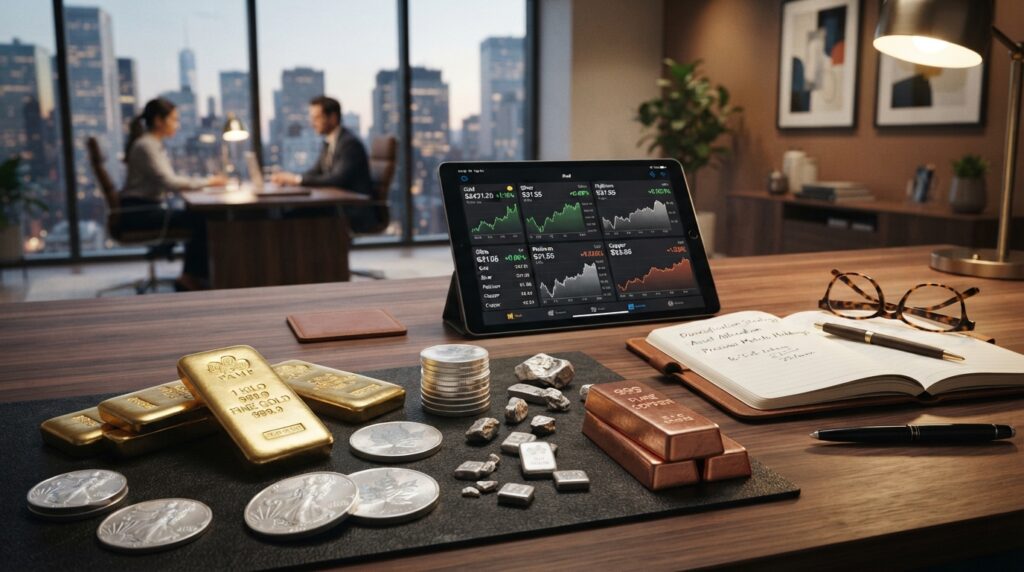
Precious metals can play a unique role in a well-rounded investment strategy and support portfolio diversification. Before investing, assess your risk tolerance, time horizon, and the opportunity cost of assets that produce little income. These metals offer benefits, but they cannot prevent losses during market downturns.
Preserving wealth during economic uncertainty
Many investors view gold as a defensive anchor that supports portfolio diversification during financial instability. During pressure on traditional markets, physical bullion may act as a store of value. Even defensive assets can lose value, so treat them as a long-term hedge, not a short-term profit vehicle.
“The primary role of precious metals in a portfolio is to provide a layer of protection that is not directly correlated with the performance of paper assets.”
Diversifying stocks and bonds
Effective portfolio diversification means holding assets that respond differently to economic events. Adding precious metals may reduce the overall volatility of your holdings. Reviewing precious metals as a place can help you understand how these assets fit your strategy and balance risk and reward.
Seeking exposure to industrial growth
Gold is often held for monetary value, while silver, platinum, and palladium depend heavily on industrial demand. These metals are essential to automotive, electronics, and green energy sectors. Investing in these materials gives exposure to global manufacturing trends, but prices remain more sensitive to economic cycles.
Costs and U.S. Tax Considerations
Managing physical assets requires a clear view of ongoing costs and tax duties. The spot price sets a baseline, but your net return depends on ownership costs.
Trading fees, storage, and insurance
Buying physical metals includes dealer commissions and shipping fees that raise your total cost. The bullion purity of a product often affects its premium, since refined items may have different markups than industrial-grade bars.
Storing assets away from home adds professional vaulting fees. These facilities provide essential security and insurance against theft or damage. Review these recurring charges so they do not reduce long-term gains.
Several factors affect your total ownership cost:
- Dealer Premiums: The difference between the spot price and the retail price.
- Storage Fees: Annual costs for secure, insured third-party vaulting.
- Shipping and Handling: Expenses related to the secure delivery of your assets.
- Product Type: How bullion purity and manufacturing complexity affect the initial purchase price.
Capital gains and reporting requirements
In the United States, the Internal Revenue Service (IRS) classifies precious metals as collectibles. This status may create different tax treatment than standard stocks or bonds. Selling holdings for a profit may create capital gains taxes based on your tax bracket.
Accurate records are crucial for calculating your cost basis. Keep receipts and documents for every transaction, including acquisition fees. Although bullion purity does not change the tax category, the metal’s form may affect reporting duties.
We strongly advise consulting a qualified tax professional about your unique financial situation. Tax laws can change, so current IRS guidelines can help you stay compliant while managing your portfolio.
Risks to Weigh Before Buying Precious Metals
We believe a balanced view of market risks is essential for investors considering precious metals. These assets are often marketed as a safe haven, but they do not guarantee gains during every economic cycle. Precious metals do not generate interest or dividends, unlike stocks or bonds.
Price volatility remains a major concern for people entering this market. Gold, silver, and platinum prices can change quickly because of global sentiment and economic shifts. Also, know that dealer spreads show the difference between your buying price and selling price.

Physical ownership brings challenges that digital assets do not. Investors must pay for secure storage and insurance, which help protect against theft or loss. Physical bullion can also include counterfeit products, so use reputable, established dealers.
Investors should consider the global mining supply цеп. Disruptions in extraction or refining can change availability and prices, especially for industrial metals like palladium. These supply chain variables can cause unpredictable price swings unlike traditional financial instruments.
It is important to distinguish between the risks of various investment vehicles:
- Physical Bullion: High security and storage costs, plus liquidity delays.
- ETFs and Mutual Funds: Management fees and tracking errors, though they offer higher liquidity.
- Mining Stocks: Exposure to operational, management, and geopolitical risks specific to the mining sector.
- Futures and Leveraged Products: High risk of total capital loss due to margin requirements and market volatility.
Success depends on knowing that no asset class is immune to loss. Assess your personal risk tolerance before allocating part of your portfolio to these commodities. Diversification is often the best way to reduce the dangers of any single market.
How to Buy, Store, and Sell Precious Metals
Managing bullion investments requires planning from purchase through final sale. A clear plan helps you control your assets and reduce avoidable costs and risks.
Choosing a reputable dealer and product
When buying physical metals, first choose a dealer with a proven record. Look for companies that belong to industry groups and show clear prices. Always verify the credentials of any seller before transferring funds.
Choose liquid products, such as government-minted coins or recognized bars. Prioritize bullion purity to meet international standards. Request documents or certificates of authenticity to confirm each item’s weight and fineness.
Protecting bullion in storage
After securing your assets, decide where to store them. Home storage gives quick access but needs strong security, including quality safes and alarm systems. Privacy is a significant advantage here, but you remain responsible for physical risks.
Professional vaults offer institutional-grade security and broad insurance coverage. This choice has annual fees, but it reduces risks from theft or environmental damage to your bullion purity. Consider this comparison to find the best fit for your needs.
| Storage Method | Security Level | Accessibility | Annual Cost |
|---|---|---|---|
| Home Safe | Moderate | Immediate | Low (One-time) |
| Bank Deposit Box | High | Limited | Moderate |
| Private Vault | Very High | Scheduled | High |
Comparing resale prices and buyback policies
Planning your exit matters as much as making the first purchase. Before buying, review the dealer’s buyback policy and learn how it calculates resale quotes. Most dealers charge a spread, the difference between their selling price and buyback price.
Keep original invoices and ownership records to make sale verification easier. Market timing affects your net proceeds, so watch spot prices when ready to sell. Understanding these details helps you manage precious metals throughout ownership.
Conclusion
Navigating gold, silver, platinum, and palladium requires understanding how these assets support your broader financial goals. Each metal has unique traits linked to industrial demand, monetary policy, and mining output. Adding these assets to your strategy requires focus on long-term stability, not short-term price swings.
Effective portfolio diversification remains a cornerstone of a resilient investment plan. Balancing physical bullion with other asset classes helps manage risk and gain exposure to different market cycles. Historical performance does not guarantee future results, and market volatility remains constant in the precious metals space.
Prioritize secure storage solutions and stay informed about current U.S. tax regulations. Comparing dealer premiums and buyback policies helps protect your capital over time. Research and careful product selection offer the best defense against uncertainty.
We hope this guide empowers you to make confident decisions as you build your holdings.