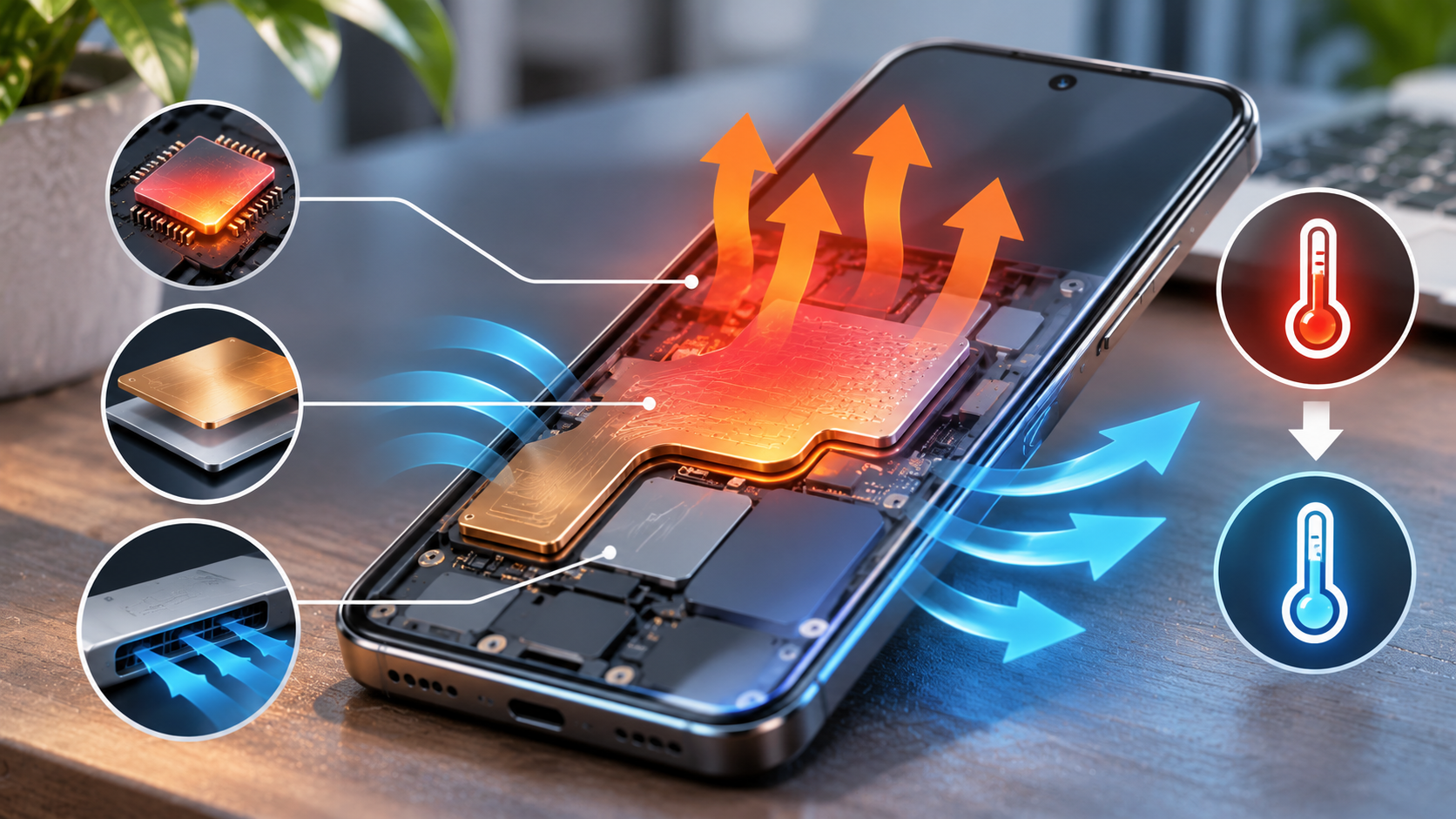
Mobile Device Heat Dissipation is often an overlooked aspect in the world of technology, yet it plays a pivotal role in ensuring the longevity and functionality of our devices. As smartphones and tablets become more powerful, the heat generated during operation increases, making effective heat management essential. Without proper heat dissipation, users may experience diminished performance, shorter battery life, and potential hardware damages, leading to an overall frustrating experience.
Understanding the mechanisms behind heat dissipation not only enhances device performance but also informs users about the importance of choosing suitable devices. From the materials used to the design strategies implemented, every element contributes to how effectively devices can manage heat, making this topic vital for both manufacturers and consumers alike.
Understanding the Importance of Heat Dissipation in Mobile Devices
In the modern world, mobile devices have become essential tools for communication, work, and entertainment. However, their efficient operation heavily relies on effective heat dissipation mechanisms. As mobile devices are pushed to their limits with powerful processors and high-performance features, the importance of managing heat cannot be overstated. Understanding heat dissipation is crucial not only for device longevity but also for maintaining optimal performance standards.
Heat dissipation is vital in mobile devices because excessive heat can lead to several performance issues. When a device operates at high temperatures, it can result in thermal throttling, where the device reduces its performance to avoid overheating. This can cause significant slowdowns, impacting user experience. Moreover, prolonged exposure to high temperatures can lead to hardware damage, affecting components such as the battery, which may swell or fail completely under extreme conditions. A compromised battery not only reduces the overall lifespan of the device but also poses safety risks, including the potential for fires or explosions.
Common Materials Used in Heat Dissipation Technologies
Effective heat management in mobile devices requires materials specifically designed to conduct and dissipate heat efficiently. Here are some of the most commonly used materials in heat dissipation technologies:
- Copper: Renowned for its excellent thermal conductivity, copper is often used in heat pipes and heat sinks. It effectively transfers heat away from sensitive components, ensuring they remain cool during operation.
- Aluminum: While not as conductive as copper, aluminum is lightweight and corrosion-resistant, making it a popular choice for various heat dissipation solutions. Its cost-effectiveness also contributes to its widespread use.
- Graphene: A newer material in the heat dissipation landscape, graphene boasts remarkable thermal conductivity and lightweight properties. Its potential applications in mobile devices are still being explored, but it holds promise for future innovations.
- Thermal Interface Materials (TIMs): These materials, such as thermal pastes and pads, are essential for filling microscopic gaps between components and heat sinks, enhancing the efficiency of heat transfer.
The choice of materials significantly affects the performance and durability of mobile devices. By integrating effective heat dissipation technologies, manufacturers can improve device reliability and user satisfaction. Thus, prioritizing heat management is not just a technical requirement but a crucial factor in ensuring the overall success of mobile devices in today’s competitive market.
Exploring the Different Heat Dissipation Techniques Used in Mobile Devices
As mobile devices continue to advance in performance and features, managing heat dissipation has become crucial for maintaining optimal functionality and user experience. The heat generated by processors, batteries, and other internal components can affect device performance, leading to thermal throttling and even hardware damage. To combat these challenges, various heat dissipation techniques have been developed, broadly categorized into passive and active methods. Understanding these techniques is essential for both manufacturers and consumers seeking to enhance device longevity and performance.
Passive Heat Dissipation Techniques
Passive heat dissipation refers to methods that do not require external power sources or mechanical components. These techniques rely on the natural flow of heat away from the device. The effectiveness of passive methods depends largely on the materials used and the design of the device. Common passive techniques include thermal conduction, convection, and radiation.
Thermal conduction takes place when heat transfers through solid materials. In mobile devices, metals like aluminum and copper are often employed due to their high thermal conductivity. For instance, many smartphones use aluminum chassis to disperse heat from internal components to the outer casing, which helps in moderating temperatures.
Convection occurs when heat is removed by the movement of air around the device. The design of many mobile devices includes vents or openings that facilitate airflow, allowing heat to dissipate more efficiently. Additionally, the use of heat pipes and vapor chambers, which utilize phase changes in liquids to absorb and distribute heat, can significantly enhance passive cooling efficiency.
Radiation is another passive method where heat is emitted as infrared radiation. While not as effective on its own, it complements other techniques by allowing heat to escape into the surrounding environment.
The advantages of passive methods include their simplicity, reliability, and lack of moving parts, which reduces the risk of mechanical failure. However, they can be less effective in high-performance scenarios, particularly in compact designs where airflow might be restricted.
Active Heat Dissipation Techniques
Active heat dissipation entails the use of powered components to enhance cooling. This approach generally provides more effective temperature management, especially in high-performance devices. Common active techniques include the use of fans, liquid cooling systems, and thermoelectric coolers.
Fans are often incorporated in larger devices like gaming laptops and tablets due to their effectiveness in improving airflow. However, their size and noise can be limiting factors in smaller mobile devices. Liquid cooling systems, while more complex, provide significant heat absorption and can maintain lower temperatures under heavy loads. This method involves circulating a coolant through the device, absorbing heat from critical components, and dissipating it through radiators.
Thermoelectric coolers, also known as Peltier devices, use electrical energy to create a temperature difference between two sides of the module. This method can be integrated into mobile devices to provide targeted cooling, albeit at a higher cost and complexity.
Active techniques tend to outperform passive methods in extreme use cases, ensuring devices remain within safe operating temperatures. However, they can introduce additional costs, weight, and potential points of failure due to their mechanical components.
In conclusion, the choice between passive and active heat dissipation techniques often depends on the specific requirements of the device and the intended use case. Both methods play vital roles in ensuring that mobile devices operate efficiently and effectively in today’s demanding technological landscape.
The Role of Thermal Interface Materials in Mobile Device Performance
Thermal interface materials (TIMs) are crucial in enhancing the performance and longevity of mobile devices by facilitating effective heat dissipation. In an age where mobile devices are becoming increasingly compact and powerful, managing heat has never been more vital. These materials play a significant role in bridging the thermal gap between components, ensuring optimal thermal conductivity and maintaining performance levels under various operational conditions.
Thermal interface materials are responsible for improving heat transfer between heat-generating components, such as processors or GPUs, and heat spreaders or heatsinks. Their primary function is to minimize thermal resistance, allowing heat to flow efficiently away from critical areas. By selecting appropriate TIMs, manufacturers can significantly improve device efficiency and enhance user experience by preventing overheating and ensuring stable performance during demanding tasks like gaming or video streaming.
Types of Thermal Interface Materials
Understanding the various types of thermal interface materials provides insight into how they affect mobile device efficiency. The most commonly used TIMs include:
- Thermal Grease: This is an oil-based compound that fills microscopic gaps between surfaces, significantly improving thermal conductivity. Its application is common in CPUs and GPUs, providing a reliable solution for heat transfer.
- Thermal Pads: These are solid materials that can be easily cut to size and placed between components. They are often made from silicone or polymer compounds filled with thermally conductive materials. Thermal pads are particularly useful for ensuring even contact and consistent thermal performance.
- Phase Change Materials (PCMs): These materials change state (from solid to liquid) at specific temperatures, allowing them to fill gaps more effectively as they become liquid. This property makes them excellent for high-performance applications, where variability in heat generation occurs.
- Graphene and Metal-Based TIMs: Emerging materials such as graphene or metal composites offer superior thermal conductivity compared to traditional TIMs. Their implementation can lead to enhanced cooling solutions, particularly for high-end devices that generate substantial heat.
The choice of thermal interface material directly impacts overall device efficiency. For instance, using high-performance TIMs can lead to lower operating temperatures, which not only contributes to system stability but also prolongs the lifespan of internal components. In contrast, subpar materials can result in thermal throttling, negatively affecting device performance during intensive tasks.
User experience is also affected, as devices equipped with effective TIMs tend to operate silently and efficiently, providing a smoother experience. Additionally, efficient heat dissipation can lead to longer battery life, as components that run cooler tend to consume less power. As mobile technology evolves, the role of thermal interface materials will remain pivotal in ensuring devices meet the demands of users while maintaining efficiency and performance.
Innovations in Heat Dissipation Technology for Next-Generation Mobile Devices
The rapid evolution of mobile devices has necessitated significant advancements in heat dissipation technologies. As smartphones and tablets become more powerful, with increasing processing capabilities and larger screens, effective thermal management is essential to maintain performance and user comfort. The latest innovations aim to not only enhance efficiency but also prolong device longevity and improve user experience.
Recent advancements have introduced a variety of new materials and techniques in heat dissipation. These innovations are paving the way for the next generation of mobile devices, ensuring that they operate efficiently even under heavy workloads. Manufacturers are increasingly focusing on integrating advanced thermal interfaces and innovative cooling solutions to address the challenges posed by high-performance components.
Emerging Materials and Techniques
The field of thermal management is seeing a surge in the development of advanced materials that can better manage heat. Notable among these are phase change materials (PCMs) and graphene-based composites.
– Phase Change Materials (PCMs): These materials absorb and release thermal energy during the process of melting and solidifying. They can effectively maintain a stable temperature in mobile devices, significantly enhancing user comfort during prolonged use.
– Graphene-Based Composites: Graphene exhibits remarkable thermal conductivity and is being integrated into heat spreaders and heat sinks. This allows for more efficient heat dissipation than traditional materials like copper or aluminum. The lightweight nature of graphene also contributes to reduced overall device weight.
– Metal Matrix Composites (MMCs): By combining metals with ceramics, MMCs offer enhanced thermal properties. They are particularly useful in high-performance devices where weight and thermal efficiency are critical.
These materials enable the creation of thinner devices without compromising on performance, allowing for sleeker designs in future mobile devices.
Potential Applications of Innovations
The advancements in heat dissipation technology have a wide range of potential applications in real-world scenarios. Understanding these applications can provide insight into how thermal management will shape the user experience in future mobile devices.
The following applications highlight the significance of these innovations:
- High-End Gaming Devices: Enhanced heat dissipation technologies will support advanced gaming features and graphics without overheating, providing a more immersive experience.
- Augmented Reality (AR) and Virtual Reality (VR): Devices equipped with superior thermal management can sustain longer usage times, essential for AR and VR applications which demand high performance.
- Wearable Technology: Improved thermal management allows wearables to operate efficiently while maintaining comfort on users’ skin, especially during prolonged use.
- 5G Devices: With increased performance demands from 5G technology, effective heat dissipation will be essential in keeping devices functioning optimally during high data usage.
- Electric Vehicles (EVs): Similar techniques in mobile devices can be applied to battery management systems in EVs, ensuring safety and efficiency during operation.
These innovations not only improve the current landscape of mobile devices but also set the foundation for future developments, ensuring that thermal management keeps pace with evolving technology demands.
Evaluating the Impact of Device Design on Heat Dissipation Efficiency
The design of mobile devices plays a crucial role in their ability to manage heat dissipation effectively. As technology advances, the demand for higher performance and increased functionality in mobile devices pushes internal components to operate at elevated temperatures. Thus, understanding how design influences thermal performance is essential for creating devices that not only perform well but also remain safe and comfortable for users.
The intricacies of device design directly influence heat dissipation through various factors, such as the internal layout, component placement, and external aesthetics. A well-thought-out internal layout can facilitate airflow and promote efficient heat transfer away from critical components. For instance, placing high-performance chips near the device’s edges, where heat can be dissipated more easily, can significantly enhance thermal management. Additionally, employing materials with high thermal conductivity, like copper or aluminum, for heat sinks and thermal interfaces can aid in drawing heat away from sensitive areas.
Influence of Internal Layout and Component Placement
The internal layout of mobile devices is a determining factor in their thermal efficiency. A compact design can lead to increased heat generation due to the proximity of components, necessitating effective heat management strategies. Key aspects of design that affect heat dissipation include:
- Component Arrangement: Strategically positioning components such as the CPU, GPU, and battery can help optimize airflow and cooling. Devices with a tiered or staggered layout may allow for better heat distribution.
- Thermal Pathways: Designing clear thermal pathways for heat to escape from components to the outer casing can improve heat dissipation. This can be achieved with the use of thermal pads and efficient routing of heat pipes.
- Material Selection: Using materials that enhance thermal conductivity and managing thermal resistance effectively ensures that heat is transferred efficiently. Non-metallic materials can insulate and should be minimized where heat dissipation is crucial.
In addition to internal layouts, external aesthetics play a vital role in thermal performance. Sleek and slim designs often compromise the ability to dissipate heat effectively. As a response, manufacturers are increasingly incorporating fins or vents into the design, which not only serve aesthetic purposes but also improve airflow.
Overall, thoughtful design practices that prioritize thermal management lead to enhanced heat dissipation outcomes. By focusing on optimizing component placement, utilizing superior materials, and incorporating effective thermal pathways, manufacturers can significantly improve device performance while maintaining user safety and comfort.
Investigating Real-World Case Studies of Mobile Device Heat Dissipation Failures
Mobile devices have become integral to our daily lives, but their susceptibility to overheating can lead to significant problems. Examining real-world case studies of heat dissipation failures offers valuable insights into the challenges manufacturers face, the impact on user satisfaction, and the broader implications for brand reputation. Understanding these issues helps to highlight the importance of effective thermal management strategies.
Case Study: Samsung Galaxy Note 7
The Samsung Galaxy Note 7 experienced one of the most infamous overheating incidents in recent history. Following its launch in August 2016, reports emerged of the device catching fire due to battery failures attributed to poor heat dissipation. Investigations revealed that the battery design was too tight, causing internal short-circuits. As a result, Samsung had to recall over 2.5 million units, a move that cost the company an estimated $5.3 billion.
The consequences of this failure extended beyond financial loss. Consumer trust plummeted, resulting in significant damage to Samsung’s brand reputation. The Galaxy Note 7 incident serves as a stark reminder of the importance of rigorous testing and quality control in mobile device design.
Case Study: Apple iPhone 6 Plus
The Apple iPhone 6 Plus faced overheating issues that affected user experience and device performance. Reports indicated that while using certain applications, the phone would heat up significantly, causing it to throttle performance to mitigate heat. This led to user frustration and complaints about diminished functionality.
The cause was linked to a combination of an outdated processor architecture and insufficient heat dissipation design, particularly in high-performance scenarios. Apple responded by issuing software updates that aimed to optimize performance and reduce overheating.
Case Study: OnePlus 5
The OnePlus 5 smartphone was another device that encountered heating issues, particularly during resource-intensive tasks such as gaming or video streaming. Users reported that prolonged use led to the phone becoming uncomfortably hot, which raised concerns about potential long-term damage to internal components.
The overheating was attributed to inefficient thermal management, as the device housed high-performance hardware without adequate cooling solutions. OnePlus addressed the issue by implementing improved thermal management techniques in subsequent models, highlighting the importance of a proactive approach to heat dissipation.
Lessons Learned and Preventive Measures
These case studies underscore critical lessons in mobile device design and manufacturing. To prevent similar failures, manufacturers have adopted several strategies, including:
- Enhanced thermal testing: Rigorous testing under various conditions to identify potential overheating scenarios before consumer release.
- Advanced materials: Utilizing heat-dissipating materials and innovative designs that facilitate better airflow within the device.
- Software optimizations: Implementing software solutions that monitor device temperature and adjust performance accordingly to avoid overheating.
- User education: Providing guidance on optimal device usage to mitigate heat generation, especially during intensive tasks.
Each of these measures highlights the importance of continuous improvement in design and engineering practices to enhance user satisfaction and maintain brand integrity.
“Effective thermal management is not just a feature, it’s a necessity for user safety and brand loyalty.”
Assessing the Future Challenges in Heat Management for Mobile Devices
As mobile devices continue to advance in technology, they are becoming more compact and powerful. However, this increase in capability brings about significant challenges in heat management that need to be addressed. With higher processing power and denser design, the potential for overheating is a concern that manufacturers must prioritize.
The future of heat dissipation technology presents a unique set of challenges. One of the primary issues is the miniaturization of components, which makes it increasingly difficult to implement effective cooling solutions. As devices become smaller, the space for heat sinks and cooling fans is limited. This trend is exemplified by the development of high-performance gaming smartphones, which require robust heat management solutions in a slim profile. In addition to design constraints, the demand for enhanced functionalities, such as 5G connectivity and advanced AI capabilities, compounds the heat generation issue.
Environmental Impacts of Heat Dissipation Technologies
The environmental implications of heat dissipation technologies are growing concerns. As the demand for mobile devices rises, so does the energy consumption associated with their cooling systems. The energy required to power these cooling solutions can lead to increased carbon emissions, especially if sourced from fossil fuels. Furthermore, the materials used in heat dissipation, like metals and plastics, can have detrimental effects on the environment if not sourced sustainably or disposed of properly.
The production of heat management components often involves processes that generate hazardous waste, which can pose risks to ecosystems if not managed effectively. For instance, the manufacturing of thermal interface materials and conductive pastes involves chemicals that may be harmful if released into nature. Additionally, as devices reach the end of their life cycle, improper disposal of heat management components can lead to e-waste problems.
In summary, the challenges faced today in heat management will significantly evolve as technology progresses. Manufacturers must balance performance and sustainability, ensuring that as mobile devices become more powerful, they do not come at the cost of environmental degradation. This will require innovative solutions and possibly a shift towards more eco-friendly materials and manufacturing practices to mitigate the negative impacts associated with heat dissipation technologies.
Ultimate Conclusion
In summary, Mobile Device Heat Dissipation is crucial for maintaining device efficiency and user satisfaction. As technology evolves, so do the challenges and innovations surrounding heat management. By staying informed about the latest advancements and understanding the implications of heat dissipation, consumers can make better choices, ensuring that their devices perform optimally while minimizing risks associated with overheating.
Detailed FAQs
What causes heat build-up in mobile devices?
Heat build-up in mobile devices typically results from intensive processes like gaming, app usage, and network activity, all of which consume significant processing power.
How can users minimize heat generation?
Users can minimize heat generation by reducing resource-intensive activities and ensuring that their devices are well-ventilated during use.
What are the signs of overheating in mobile devices?
Signs of overheating include excessive heat on the device’s exterior, sluggish performance, app crashes, or unexpected shutdowns.
Are there any long-term effects of inadequate heat dissipation?
Yes, inadequate heat dissipation can lead to hardware damage, reduced battery lifespan, and overall decreased device efficiency over time.
Can software updates help with heat management?
Software updates may optimize device performance, potentially improving heat management through better resource allocation and power efficiency.