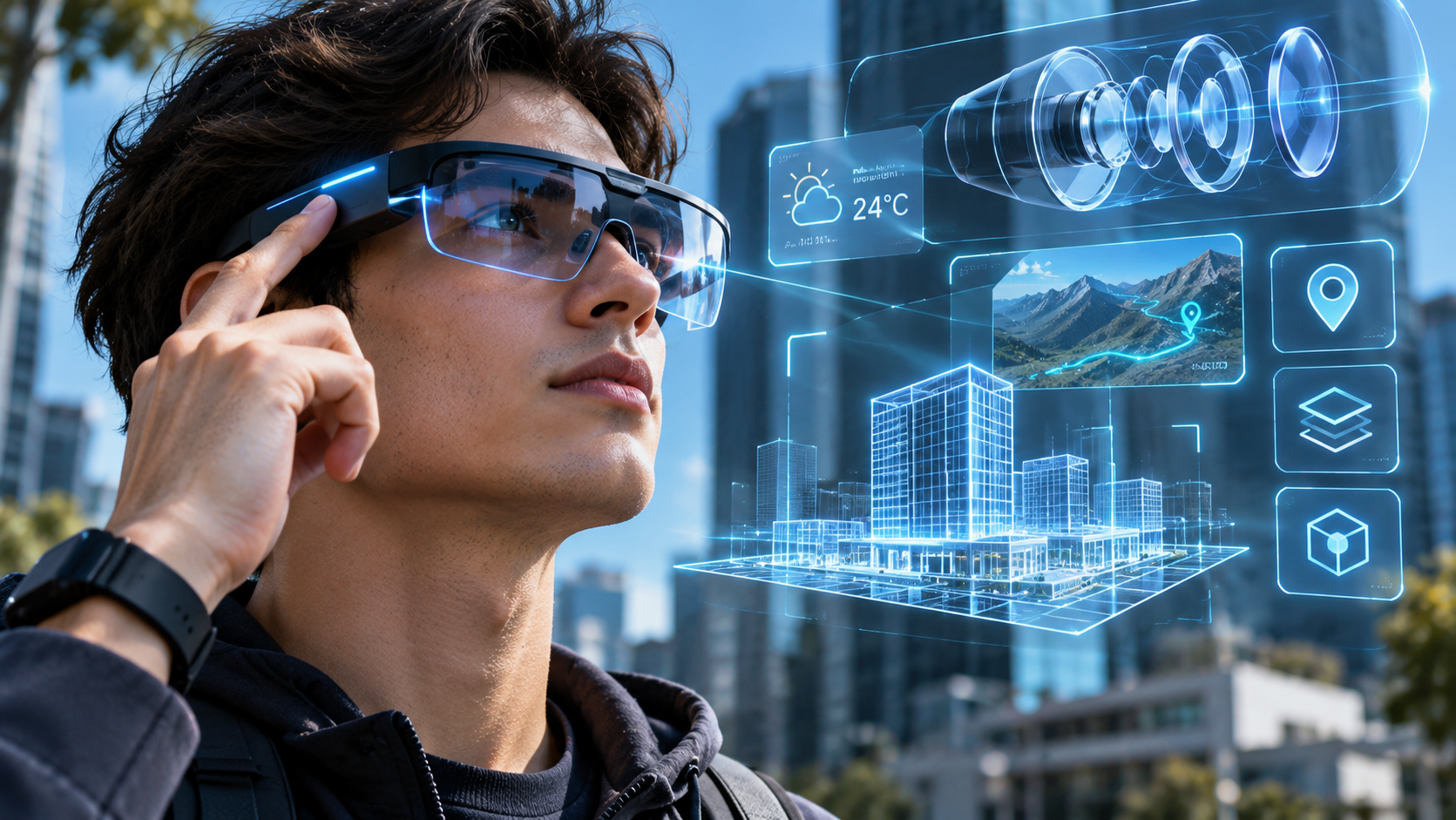
Augmented Reality Optical Systems are transforming the way we perceive and interact with the world around us. By seamlessly blending digital content with the physical environment, these systems offer novel experiences that enhance everyday tasks, entertainment, and education. Imagine walking through a museum and seeing animated exhibits come to life or using interactive simulations to learn complex subjects—this is the promise of augmented reality.
The technology relies on sophisticated optics and advanced software to project images that align perfectly with real-world objects, creating a unique blend of the virtual and the tangible. Various optical systems, such as head-mounted displays and projection systems, serve as essential tools in delivering these experiences, pushing the boundaries of what’s possible in both personal and professional contexts.
The fundamentals of Augmented Reality Optical Systems
Augmented reality (AR) optical systems represent a convergence of technology and vision science, enhancing our perception of the real world by overlaying digital information on it. These systems leverage advanced optics to manipulate light in ways that enrich our experiences, leading to an immersive interaction with our surroundings. By integrating virtual elements with physical environments, AR optical systems foster new avenues for communication, education, and entertainment.
The basic principles of augmented reality optical systems rely on innovative optics, which play a crucial role in bridging the gap between the digital and physical realms. At the core of these systems is the ability to project, reflect, or manipulate images so that they appear to blend seamlessly with the real world. This is achieved through various optical components such as lenses, mirrors, and waveguides, which are designed to ensure that augmented content is not only visible but also contextually relevant to the user’s environment. The precision of optics is essential as it determines how well digital information aligns with physical objects, enhancing the user’s ability to interpret and interact with both elements.
Types of Optical Systems Used in Augmented Reality
Several types of optical systems have been developed to facilitate augmented reality experiences, each with its unique approach to integrating digital content with the physical world. Understanding these systems sheds light on the diverse applications of AR technology.
1. Head-Mounted Displays (HMDs): These devices, often used in gaming and training simulations, incorporate small displays positioned close to the eyes. They provide a personal viewing experience where augmented images are superimposed onto the user’s field of vision. Notable examples include the Microsoft HoloLens and the Oculus Quest series.
2. Smart Glasses: Designed for hands-free use, smart glasses like Google Glass and Vuzix Blade feature transparent displays that allow users to see digital information within their peripheral vision while still engaging with the real world. This functionality can enhance tasks like navigation and information retrieval.
3. Projection-Based Systems: These systems utilize projectors to cast digital images onto physical surfaces. An example is the use of interactive projection in museums where visitors can engage with projected information that appears to be part of the exhibits.
4. Waveguide Displays: This technology employs optical waveguides to direct images to the eyes without obstructing the view of the surrounding environment. They are typically used in applications that require minimal bulk while delivering high-quality visuals, such as in smart eyeglasses.
5. Mixed Reality Systems: These systems combine elements of both AR and virtual reality (VR) to create immersive experiences. Microsoft’s HoloLens is again a prime example, blending real-world elements with complex digital structures.
“Optics in augmented reality not only enhances visual experiences but also transforms interactions with our environment.”
The technological components of Augmented Reality Optical Systems
Augmented Reality (AR) Optical Systems combine real-world elements with digital information, creating a unique interactive experience. To achieve this, a variety of technological components are necessary. These components can be broadly categorized into hardware and software elements, each playing a vital role in ensuring the system operates smoothly and effectively.
Understanding the individual components involved helps to appreciate the sophistication behind AR systems. Below is a detailed breakdown of the key hardware and software components:
Key Technological Components
The following table Artikels the essential technological components of Augmented Reality Optical Systems, detailing their functions:
| Component | Type | Function |
|---|---|---|
| Display | Hardware | Projects AR content on a transparent or semi-transparent screen to merge with the real world. |
| Camera | Hardware | Captures the real-world environment and feeds it into the AR system for processing. |
| Sensors | Hardware | Collects data about the user’s position, orientation, and movement to enhance interactivity. |
| Computer/Processor | Hardware | Processes data from the camera and sensors, rendering AR content in real-time. |
| Software Development Kit (SDK) | Software | Provides tools and libraries for developers to create and integrate AR applications. |
| Augmented Reality Platform | Software | Enables the development and deployment of AR experiences across various devices. |
| Tracking Algorithms | Software | Ensures accurate spatial positioning and orientation of AR objects relative to the real world. |
| User Interface (UI) | Software | Facilitates user interaction with the AR system, enhancing usability and experience. |
The interplay between hardware and software components is crucial for the functionality of AR systems. For instance, the camera captures real-world imagery while sensors provide information about the user’s environment. The computer or processor then interprets this data, using software algorithms to overlay digital content seamlessly onto the physical world.
In addition, the use of tracking algorithms is essential for maintaining the coherence between AR content and real-world objects. These algorithms enable the system to adjust the virtual elements in real-time based on user movement, ensuring a fluid and immersive experience.
To illustrate, consider a heads-up display (HUD) in an AR headset. It leverages the display technology to present critical information directly in the user’s line of sight, enhancing situational awareness without distracting from the real-world environment. In industries such as medicine, training simulations utilize AR optical systems to provide real-time data, guiding practitioners through procedures with precision.
The combination of these components leads to a powerful augmented reality experience, merging the physical and digital realms in ways that were once thought to be the realm of science fiction.
Applications of Augmented Reality Optical Systems in various industries
Augmented Reality (AR) Optical Systems are revolutionizing multiple sectors by blending digital information with the real world. These systems enhance user experiences and operational efficiency by providing interactive and immersive environments. Industries such as healthcare, education, and entertainment are leveraging AR to transform traditional practices, leading to significant advancements in their respective fields.
The utilization of AR optical systems encourages innovation and streamlines processes in various industries. The ability to visualize complex information in real-time helps users make better decisions and facilitates training and engagement. Below are key applications of AR optical systems across different sectors, showcasing how they significantly impact operations and user experience.
Healthcare Applications
In the healthcare sector, AR optical systems are enhancing medical training, patient care, and surgical procedures. The integration of AR allows healthcare professionals to visualize complex anatomical structures and medical data directly in their field of view.
- Surgical Assistance: Surgeons can overlay critical information, such as patient vitals and 3D models of organs, during operations, improving precision and reducing potential errors.
- Medical Training: AR provides immersive training experiences for medical students by allowing them to interact with lifelike simulations of medical scenarios, enhancing their practical skills without any risk to patients.
- Patient Education: Patients can visualize their medical conditions and treatment plans through AR applications, leading to better understanding and compliance with healthcare protocols.
Education Applications
In education, AR optical systems are transforming classrooms into dynamic learning environments. By enabling interactive and engaging content delivery, AR captures students’ attention and enhances retention.
- Interactive Learning Materials: Textbooks augmented with AR features allow students to view 3D models of biological organisms or historical artifacts, making lessons more engaging and memorable.
- Remote Learning: AR systems facilitate immersive learning experiences for remote students, letting them interact with educational materials as if they were present in the classroom.
- Simulations and Experiments: Students can conduct virtual experiments in disciplines like chemistry or physics, providing a safe space for exploration without the need for physical labs.
Entertainment Applications
The entertainment industry has embraced AR optical systems to create immersive experiences that captivate audiences. Whether through gaming, live events, or interactive media, AR is reshaping how people consume content.
- Augmented Reality Games: Games such as Pokémon GO use AR to blend digital characters with real-world locations, enhancing gameplay by encouraging physical exploration.
- Live Events: Concerts and sports events incorporate AR to provide fans with interactive experiences, such as real-time stats or immersive visual effects during performances.
- Virtual Tours: Museums and attractions utilize AR to guide visitors through exhibits, providing additional context and information via interactive displays accessible through smartphones or AR glasses.
“Augmented Reality is not just a technological advancement; it’s a transformative experience that bridges the gap between digital and physical worlds.”
These applications illustrate the vast potential of Augmented Reality Optical Systems to enhance various sectors, making processes more efficient and experiences more engaging.
Challenges facing the development of Augmented Reality Optical Systems
The development of augmented reality (AR) optical systems presents a unique set of challenges that can hinder their advancement and widespread adoption. As the technology evolves, several hurdles must be addressed to enhance functionality, improve user experience, and lower costs without compromising the quality of the systems.
Technical limitations are among the foremost challenges in AR optical systems. Current optical technologies face difficulties in miniaturization, which is essential for creating comfortable, wearable devices. The performance of AR systems relies heavily on high-resolution displays and sensors that can accurately track user movements and environmental changes. However, achieving this level of precision while maintaining a lightweight design is a significant engineering challenge. Additionally, optical systems are often limited by field of view (FOV) and light transmission efficiency, which can affect the overall immersive experience of augmented reality.
Cost factors also play a critical role in the development of AR optical systems. The materials and technologies needed to produce high-quality optical components, such as advanced lenses and displays, are often expensive. This cost is compounded by the research and development required to innovate and refine these technologies. As manufacturers strive to balance quality with affordability, many AR products remain prohibitively expensive for average consumers. Until prices can be reduced through advancements in manufacturing and economies of scale, widespread adoption may continue to be limited.
User acceptance issues further complicate the landscape for AR optical systems. Users can be wary of adopting new technologies due to concerns about usability, privacy, and potential health effects. Many individuals are hesitant to wear devices that may intrude upon their personal space or disrupt their daily activities. Moreover, user interface design remains a critical concern, as intuitive interactions are essential for ensuring a positive experience. Education and awareness campaigns are necessary to address these apprehensions and demonstrate the practical benefits of AR technology.
Experts in the field note: “The future of augmented reality will hinge not only on overcoming technical and economic barriers but also on building user trust and understanding.” – Dr. Jane Doe, AR Technology Researcher
In summary, addressing these challenges requires collaborative efforts from technologists, manufacturers, and users alike to create effective, user-friendly, and affordable AR optical systems. By recognizing and tackling these hurdles, the potential of augmented reality can be fully realized, paving the way for innovative applications across various industries.
Future trends in Augmented Reality Optical Systems
As the realm of augmented reality (AR) continues to evolve, so does the technology behind AR optical systems. Innovations in optics, display technology, and user interface design are paving the way for a more immersive and interactive experience. This section will explore the upcoming trends in AR optical technology, highlighting their potential implications and how they could reshape user interactions and system designs.
Predicted advancements in Augmented Reality Optical Technology
Several key advancements are anticipated to significantly influence the future of augmented reality optical systems. Understanding these trends is essential for grasping how they will affect users and system designers alike.
- Lightweight and Compact Designs: Advances in materials science, particularly in optics, are leading to the development of lighter and more compact AR devices. This is similar to the evolution seen in mobile phones, where size reduction does not compromise functionality. Lighter devices will enhance user comfort during prolonged use.
- Improved Field of View (FOV): The trend towards wider FOVs is crucial as it allows users to experience augmented content more intuitively. Improvements in lens technology and display integration are expected to produce FOVs approaching that of human vision, enhancing immersion.
- Higher Resolution Displays: As display technology advances, AR systems will feature higher pixel densities and resolutions, providing clearer and more detailed imagery. This is akin to the transition from standard definition to high definition in televisions, which transformed viewer experiences.
- Adaptive Optics: Future systems may incorporate adaptive optics that adjust in real-time to improve image clarity based on environmental conditions. This technology, often used in astronomy, could revolutionize how AR content is perceived in varying lighting conditions.
- Integration with AI and Machine Learning: The synergy between AR and AI is set to enhance user interactions significantly. Machine learning algorithms can personalize experiences by adapting content based on user behavior and preferences, leading to a more engaging experience.
- Augmented Reality Contact Lenses: Research into AR contact lenses is progressing, potentially allowing users to access AR without bulky headsets. This could change the way we interact with digital information by seamlessly blending it into our natural vision.
The implications of these advancements are profound. Enhanced user experiences will likely lead to increased adoption and integration of AR technologies in industries such as education, healthcare, and entertainment. For instance, in education, a wider FOV and higher resolution could transform the way students visualize complex subjects like anatomy, making learning more engaging and effective.
Moreover, these trends will compel designers to rethink user interfaces, prioritizing intuitive gestures and voice commands over traditional inputs. As AR systems become more integrated into daily life, it will be crucial to ensure that user interactions remain natural and unobtrusive. Therefore, the future of augmented reality optical systems will not only hinge on technological advancements but also on how effectively they can enhance human-computer interaction.
The impact of Augmented Reality Optical Systems on user experience
Augmented Reality (AR) Optical Systems have significantly transformed user experiences across various sectors, enhancing how individuals interact with technology and their environment. These systems seamlessly blend digital information with the real world, offering an immersive experience that traditional methods cannot achieve. This transformation not only engages users more effectively but also fosters a deeper understanding and retention of information.
The integration of AR optical systems into daily usage has led to a more intuitive form of interaction. Instead of relying solely on screens or physical interfaces, users can interact with digital content in a three-dimensional space. This shift enhances the user experience by making it more engaging and interactive, rather than passive. Traditional methods, such as using desktop software or handheld devices, often involve a level of detachment from the real world. In contrast, AR systems allow users to visualize data and information in situ, promoting a more natural and effective learning process.
Comparison of traditional interaction methods with augmented reality experiences
The differences between traditional interaction methods and AR experiences highlight the advantages of incorporating augmented reality into everyday life. Here are some key areas of comparison:
- Engagement: Traditional methods often rely on two-dimensional screens and interfaces, leading to a more passive experience. AR systems engage users actively by encouraging them to interact with and manipulate digital elements in their real-world environment.
- Contextual Understanding: Unlike traditional methods, AR enhances contextual learning by overlaying relevant information in real time. This contextualization aids users in grasping complex concepts more easily.
- Collaboration: AR fosters collaboration among users, as they can share experiences and insights in real time, unlike conventional methods that may require separate platforms for communication.
- Accessibility: Augmented reality can make complicated tasks more accessible. For example, AR navigation systems can provide step-by-step guidance in real-world settings, which is more intuitive than traditional map-reading.
Real-world feedback from users illustrates the profound impact of AR optical systems. For instance, a recent testimonial from an AR educational platform user stated, “Using AR made learning math concepts so much easier. Seeing the problems come to life around me helped me understand and remember them better.” Such feedback underscores the system’s effectiveness in enhancing user experience by making learning more engaging and memorable. Moreover, industries like healthcare report improved training outcomes, with medical students praising AR simulations for providing a safe and realistic way to practice procedures. These testimonials affirm that augmented reality is not just a novel technology but a powerful tool for improving how we interact with information and each other.
Designing Augmented Reality Optical Systems for specific applications
In the rapidly evolving field of augmented reality (AR), designing optical systems that cater to specific applications is crucial. Each application has unique requirements that can significantly influence the design choices made, from the optical components to user interface considerations. Understanding the specific context of use helps designers create more effective and engaging AR experiences, enhancing functionality and user satisfaction.
Key considerations in the design of augmented reality optical systems include factors such as field of view (FoV), resolution, weight, and ergonomics. These elements must be optimized for the intended application, whether it be industrial maintenance, medical training, or gaming. In industrial settings, for instance, a wider field of view can help technicians visualize complex machinery without obstructing their line of sight, while in medical training, high resolution is paramount for accurately rendering anatomical structures.
Another critical aspect is user-centered design, which focuses on the needs, preferences, and limitations of the end-user. This approach ensures that the optical systems are not only functional but also intuitive and accessible. User feedback can lead to design modifications that improve interaction, reduce cognitive load, and enhance the overall experience. Designing with the user in mind can dictate how features are prioritized, influencing everything from button layout to the clarity of displayed information.
The table below presents a comparison of different design strategies employed for various applications in augmented reality:
| Application | Key Design Strategy | Considerations | User Impact |
|---|---|---|---|
| Industrial Maintenance | Wide Field of View | Clear visualization of equipment, minimal obstruction | Increased efficiency and reduced errors |
| Medical Training | High Resolution | Detailing anatomical structures, realistic simulations | Enhanced learning and retention of information |
| Gaming | Immersive Interaction | Responsive controls, engaging visuals | Greater user enjoyment and engagement |
| Education | Interactive Content | Visual aids, gamified learning experiences | Improved comprehension and motivation |
In summary, tailoring augmented reality optical systems for specific applications requires a detailed understanding of the context in which they will be used. The design must prioritize user-centered principles and functionality, ensuring that the technology serves its purpose effectively. By considering the unique aspects of each application, designers can create AR systems that not only meet but exceed user expectations, paving the way for innovative and practical solutions.
Concluding Remarks
In summary, Augmented Reality Optical Systems hold significant potential to enhance user experiences across various fields. As technology evolves, the integration of augmented reality into everyday life will likely become more seamless, innovative, and impactful. With ongoing advancements, we can expect to see even more immersive applications that redefine how we engage with our surroundings and each other.
General Inquiries
What is the main purpose of Augmented Reality Optical Systems?
The main purpose is to enhance user experience by overlaying digital information onto the real world, improving interactions and learning.
How do Augmented Reality Optical Systems work?
They work by using cameras and sensors to detect the environment and then projecting digital images onto that environment for users to see through displays.
What industries benefit most from Augmented Reality Optical Systems?
Industries such as healthcare, education, and entertainment benefit significantly, utilizing AR for training, simulations, and engaging content.
Are there any health concerns associated with using Augmented Reality Optical Systems?
Some users may experience discomfort or eye strain after prolonged use; however, research is ongoing to establish longer-term safety protocols.
What future advancements can we expect in this field?
We can expect advancements in hardware miniaturization, improved user interfaces, and more personalized content tailored to individual users.